
Author: Site Editor Publish Time: 2026-03-16 Origin: Site


Chainmail armor gloves represent one of the oldest forms of personal protective equipment still in active use today. Originally developed for medieval warriors requiring hand protection in combat, these gloves have evolved significantly to meet the demands of modern industrial environments. Constructed from interlinked metal rings, chainmail armor gloves provide a unique combination of cut resistance, flexibility, and durability that synthetic materials cannot replicate.
This guide provides a detailed examination of chainmail armor gloves, exploring their historical origins, construction methods, material specifications, and contemporary applications across various industries. For businesses seeking to source reliable protective equipment, understanding these technical aspects is essential for implementing effective safety protocols.
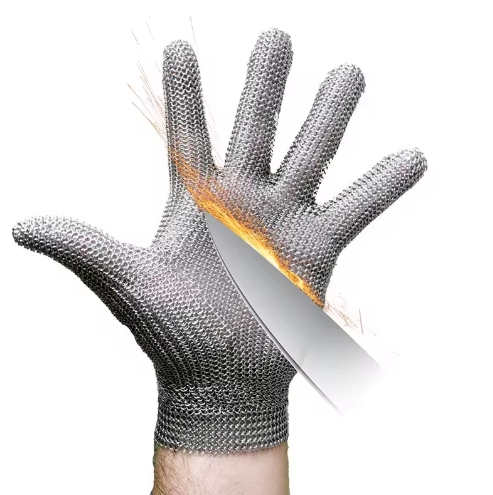
Chainmail armor gloves are protective hand coverings constructed from thousands of interlocking metal rings, forming a flexible mesh that shields the hands from cuts, slashes, and puncture wounds. The term "chainmail" historically refers to armor made from interlinked metal rings, a technology that has been used since at least the 4th century BCE. European soldiers relied on chainmail as their primary form of body armor for over a thousand years, with the chain hauberk being the most common configuration.
The design of chainmail armor gloves draws directly from this historical armor concept but has been refined for modern requirements. The interlinked ring construction creates a flexible yet continuous protective barrier that can deflect or absorb the force of a blade impact. Unlike solid metal armor, chainmail allows for significant freedom of movement while maintaining comprehensive coverage.
Today, chainmail armor gloves find application in both recreational historic pursuits, such as live-action role-playing and historical reenactment, as well as in critical industrial safety roles, including cut-resistant butchers gloves and shark-resistant diving suits.
The development of chainmail hand protection follows the broader evolution of armor technology throughout human history. Understanding this progression provides context for the design principles that inform modern industrial chainmail gloves.
Chainmail, historically referred to as maille, emerged as a significant innovation in personal protection during the ancient period. The earliest known examples date to approximately the 4th century BCE, with evidence of Celtic warriors employing maille construction techniques. Roman soldiers subsequently adopted and refined chainmail technology, incorporating it into their standard military equipment.
During the medieval period, chainmail reached its peak of sophistication. Armorers developed specialized techniques for ring manufacture and assembly, creating garments that balanced protection with mobility. The European 4-in-1 weave emerged as the dominant pattern, linking each individual ring into four others to provide an optimal balance of flexibility and defensive density.
Hand protection evolved alongside body armor during this period. Early medieval warriors often relied on the extended sleeves of their hauberks to provide basic hand coverage, but dedicated chainmail gloves and mittens later emerged as specialized components of full armor suits.
The decline of chainmail as military armor coincided with the Industrial Revolution, when manufacturers recognized its potential for workplace protection. Butchers, glass workers, and others handling sharp materials adopted chainmail gloves as essential safety equipment, adapting historical designs for industrial requirements.
The performance and durability of chainmail armor gloves depend significantly on how the individual rings are manufactured and assembled. Different construction methods produce gloves suited for different applications.
Riveted chainmail represents the historical standard for functional armor and remains the benchmark for heavy-duty protection. In this construction method, each ring is overlapped and secured with a metal pin or rivet. This creates what is known as a hybrid construction of solid and riveted rings that reduces overall weight while maintaining maximum structural integrity.
The primary advantage of riveted construction is its resistance to ring separation under tension. When subjected to impact or pulling forces, riveted rings maintain their closure much better than simple butted rings. This makes riveted chainmail the preferred choice for full-contact historical reenactment and applications where high forces may be encountered.
Butted chainmail represents a more economical approach to ring closure. In this method, wire is coiled into springs, then cut into individual rings. These rings are bent into circles until the ends meet, creating a closed ring without any permanent fastening.
While more affordable and easier to repair, butted rings can pull open under sufficient tension. This makes butted chainmail best suited for theater, costume use, or light-contact applications where extreme forces are not anticipated. For industrial safety applications requiring reliable cut protection, riveted or welded construction is typically preferred.
Modern industrial chainmail gloves often employ welded ring construction, where each ring is fully welded shut after forming. This creates a permanently closed ring that cannot separate under normal use conditions. The quality of the weld is a critical factor in glove performance, with high-quality welds reducing the likelihood of ring separation and extending the operational lifespan of the glove.
The European 4-in-1 weave serves as the industry standard for chainmail construction across both historical and industrial applications. This pattern links each individual ring through four neighboring rings, creating a fabric that can expand and contract with the wearer's movements while maintaining consistent protective coverage.
The 4-in-1 configuration provides an optimal balance of flexibility and defensive density, which explains its persistence as the dominant weave pattern for functional armor over many centuries.
The materials used in chainmail armor gloves significantly impact their performance characteristics, durability, and suitability for different applications.
The majority of industrial chainmail armor gloves are manufactured from stainless steel wire. This material is selected for its combination of strength, corrosion resistance, and suitability for hygienic environments. Stainless steel contains chromium, which forms a passive oxide layer on the surface, preventing rust and oxidation even when exposed to moisture, animal fats, blood, and cleaning agents.
Common specifications for stainless steel chainmail gloves include a wire diameter of approximately 0.53mm, formed into rings with an inner diameter of approximately 2.75mm and an outer diameter of approximately 3.81mm. These dimensions represent a balance between flexibility and protective coverage.
Stainless steel 316, also known as surgical steel, offers hypoallergenic properties suitable for individuals with metal sensitivities and provides enhanced corrosion resistance for demanding applications.
Historical and recreational chainmail armor gloves are often created in mild steel, a lighter and more flexible form of steel. Mild steel will still absorb impact and handle cuts and slashes while offering a more lightweight experience and keeping historically authentic appearance.
However, mild steel contains lower carbon content than other forms of steel, making it more susceptible to oxidation and rust. This requires active maintenance and proper storage to prevent corrosion. Users must wipe down rings after use to remove sweat and environmental moisture, and apply lanolin-based oil for long-term rust prevention.
For recreational applications where weight is a primary concern, aluminum chainmail offers significant advantages. Aluminum rings weigh approximately one-third of equivalent steel rings, allowing for extended wear during events without causing fatigue. However, aluminum provides less cut resistance than steel and is not typically specified for industrial safety applications.
Ring diameter and wire gauge significantly affect the performance of chainmail armor gloves. Smaller ring diameters increase cut resistance and puncture protection but reduce flexibility and increase weight. Larger ring diameters improve comfort and flexibility while reducing protective density.
Typical ring diameters range from 6mm to 10mm for most applications. The wire diameter, often specified at 0.53mm for industrial gloves, determines the strength of individual rings and the overall weight of the finished product.
The weight of chainmail armor gloves varies significantly based on materials, ring dimensions, and coverage area. Understanding weight characteristics helps users select appropriate gloves for their specific applications.
Wire gauge represents the primary factor in chainmail weight, with heavier wire producing correspondingly heavier gloves. Ring diameter also influences weight, as smaller rings require more rings per unit area to achieve coverage. Material selection dramatically affects weight, with aluminum offering significant reduction compared to steel.
While complete suits of chainmail armor can weigh between 10kg and 15kg for a standard steel hauberk, individual chainmail gloves weigh substantially less. A typical five-finger chainmail glove weighs between 200 grams and 400 grams depending on size and construction, with extended-sleeve versions adding proportionally more weight.
Proper weight distribution becomes important for extended wear of chainmail armor gloves. Gloves with secure strap systems transfer weight to the wrist and hand structure more effectively than loose-fitting designs. Extended wear periods may require periodic breaks to reduce hand fatigue.
For chainmail armor gloves intended for industrial safety applications, compliance with specific international standards provides assurance of performance and reliability.
The primary European standard for chainmail gloves used in occupational safety is EN 1082-1, which was developed specifically for metal mesh products used in applications involving hand knives. This standard specifies requirements for design, penetration resistance, ergonomic characteristics, straps, weight, material, marking, and instructions for use.
Key tests within this standard include dimensional assessments to ensure that probes of defined sizes cannot penetrate the glove, impact cut testing to evaluate the strength and cut resistance of the chainmail structure, and tensile strength testing on the individual rings.
Gloves that meet EN 1082-1 requirements are considered suitable for applications where workers face cut and stab hazards from hand knives. This standard is recognized throughout Europe and in many other regions that follow European PPE regulations.
For chainmail gloves used in food processing applications, certifications confirming they are safe for incidental food contact are necessary. These may include US FDA approval, German LFGB certification, or HACCP compliance documentation. Some chainmail products undergo nickel release testing to ensure they meet limits for prolonged skin contact, reducing the potential for skin irritation among wearers.
Chainmail armor gloves find application across a diverse range of industries where hand protection from sharp objects is required.
The meat processing industry involves tasks such as slicing, deboning, and trimming large cuts of meat using sharp knives and automated machinery. Workers in slaughterhouses and processing facilities are consistently exposed to laceration hazards, making hand protection essential.
Stainless steel chainmail gloves provide defense against accidental blade contact during these operations. The gloves contour to the hand, preserving tactile sensitivity for detailed trimming and portioning tasks. Their corrosion-resistant properties make them suitable for wet, high-hygiene environments with frequent washdowns.
Extended-sleeve chainmail gloves with 8cm, 15cm, or 20cm sleeves provide additional forearm protection for abattoir and slaughterhouse applications where the forearm is also at risk.
Workers in seafood facilities face dual hazards: sharp knives used for filleting and naturally sharp shells from crustaceans and mollusks. Chainmail gloves protect against cuts from knives and shell fragments during tasks such as shucking oysters, cracking crabs, or scaling fish. Their water-resistant and quick-drying properties prevent bacterial buildup in humid processing areas.
Workers in glass fabrication, installation, and recycling face exposure to sharp edges that can cause deep cuts or puncture wounds. Chainmail gloves provide a protective barrier when handling sheets, panels, or broken glass. The cut resistance of stainless steel mesh protects against glass shards while the snug fit ensures tactile sensitivity for precise alignment during installation tasks.
In the textile industry, workers use electric cutters and scissors to cut through multiple layers of fabric. Chainmail gloves protect against accidental contact with these sharp blades during the cutting process. Their flexible design allows workers to maintain control while handling materials, and the ambidextrous fit simplifies use across different workstations.
In metalworking environments, including sheet metal cutting, welding preparation, and CNC operations, sharp edges from stamped, sheared, or laser-cut metal pose hand injury hazards. Chainmail gloves help prevent injuries during material handling and assembly operations, protecting against burrs, slivers, and sharp edges on raw metal stock.
In the production and finishing of knives and cutlery, workers handle extremely sharp blades during polishing, sharpening, and assembly. Chainmail gloves shield hands from accidental slips during blade polishing or edge testing, and withstand repeated contact with metal edges without fraying or degradation.
Selecting the correct size for chainmail armor gloves is important for both safety and comfort. A glove that is too loose may shift during use, potentially exposing the hand to hazards, while a glove that is too tight can restrict circulation and contribute to hand fatigue during extended shifts.
Sizing is typically based on palm circumference and hand length. When measuring for chainmail gloves, the dominant hand should be measured across the knuckles, excluding the thumb, to determine the correct size. A properly fitted glove should be snug but not restrictive, allowing full finger movement while minimizing gaps that could expose skin to cuts.
| Size | Color Code | Palm Circumference | Palm Length |
|---|---|---|---|
| XXS | Brown | 5 - 5.5 inches | 200 mm |
| XS | Green | 6 - 6.5 inches | 200 mm |
| S | White | 7 - 7.5 inches | 215 mm |
| M | Red | 8 - 8.5 inches | 220 mm |
| L | Blue | 9 - 9.5 inches | 230 mm |
| XL | Orange | 10 - 10.5 inches | 240 mm |
Some chainmail glove models feature extended cuffs or sleeves for additional forearm protection. These may range from 8cm to 20cm in length, with some designs offering protection up to the shoulder. Extended-sleeve gloves are commonly used in slaughterhouse and abattoir applications where the forearm is also at risk.
Modern chainmail armor gloves utilize various strap systems to secure the glove to the hand and wrist. These straps are typically made from materials that do not absorb moisture or harbor bacteria.
Many chainmail gloves feature polypropylene or polyurethane straps with press stud fastenings. These materials are selected because they do not absorb water and are less likely to support bacterial growth compared to fabric alternatives. The straps are often color-coded to correspond with glove sizes for easy identification.
For heavy-duty applications, some chainmail gloves feature metal claw closures that provide secure fastening by wrapping around the cuff and sliding into rings to secure the fit. These closure types are designed for durability in demanding industrial environments.
Spring strap mechanisms offer another closure option, using tension to maintain secure positioning. These are particularly useful in applications requiring frequent donning and doffing of gloves throughout the work shift.
Traditional textile straps remain available for applications where hygiene considerations are secondary. However, in food processing environments, non-absorbent polypropylene or polyurethane straps are generally preferred for their enhanced cleanability.
Proper maintenance extends the life of chainmail armor gloves and ensures continued protection. Different materials require different care approaches.
Stainless steel chainmail gloves are resistant to greases, fats, and many cleaning chemicals. The recommended cleaning method involves brushing with hot, soapy water or a mild detergent to remove organic debris, followed by thorough rinsing with clean water. For disinfection, immersion in water heated to between 82°C and 90°C, or the use of disinfectants approved for food contact surfaces, is standard practice.
High concentrations of chlorine are generally not recommended as they can corrode stainless steel over time. Some chainmail gloves can be cleaned in washing machines, though they should not be cleaned by knocking them against hard surfaces, which can damage the ring structure.
Mild steel chainmail requires more intensive maintenance to prevent rust. After use, rings should be wiped with a dry cloth to remove sweat, salt, and environmental moisture. Lanolin-based oil provides effective long-term rust prevention by creating a natural, long-lasting barrier against humidity.
If light rust appears, placing the maille in a bucket with sand and tumbling it can scour the rings clean. This traditional method must be followed immediately by thorough oil application.
Chainmail gloves should be stored in dry, ventilated areas to prevent moisture accumulation. For carbon steel variants, applying light oil after cleaning and drying helps prevent rust and maintain flexibility. Stainless steel gloves require less rigorous storage conditions but still benefit from dry environments.
Chainmail armor gloves should be inspected regularly for damaged or broken links. Any glove showing signs of abnormal wear or missing rings must be replaced immediately to maintain protective integrity. Regular inspection is particularly important in high-use environments where glove damage may occur gradually.
Beyond industrial safety, chainmail armor gloves serve important functions in recreational and historical pursuits.
Live action role-playing participants require protective equipment that balances historical authenticity with safety and comfort. Chainmail gloves provide hand protection during combat encounters while maintaining the aesthetic appearance required for immersive experiences. Riveted construction is preferred for its durability during repeated use.
Historical reenactors seeking authentic medieval presentations rely on chainmail gloves that accurately reflect period construction techniques. Riveted maille with appropriate ring dimensions and materials provides the most historically accurate representation.
For costume applications where combat is not anticipated, butted chainmail offers an economical and lightweight option. Aluminum construction further reduces weight for extended wear during conventions and events.
For buyers seeking reliable chainmail armor gloves for industrial applications, the manufacturing source is an important consideration. Hebei Linchuan Safety Protective Equipment Co., LTD. operates as an experienced manufacturer in this field with established production capabilities.
Established in 2008, the company operates as an SGS-certified manufacturer, integrating production, sales, and export operations. With over a decade of experience in the industry, they specialize in stainless steel ring mesh products, offering a comprehensive range including gloves, aprons, and protective mesh for various industrial applications.
Hebei Linchuan's chainmail armor gloves are engineered with specific parameters, utilizing a wire diameter of 0.53mm to form rings with precise dimensions. They offer sizes ranging from XXS to XXL to accommodate various worker hand sizes across different industrial settings.
Their product line includes both standard five-finger gloves and extended-sleeve models for applications requiring forearm protection. Four distinct strap types accommodate different user preferences and application requirements: textile strap, plastic strap, metal claw, and spring strap configurations.
As an SGS verified supplier, Hebei Linchuan maintains a focus on quality control, with inspections conducted during production and before shipment. Their stainless steel chainmail products have passed European Union CE safety authentication, and they support OEM and customization orders, allowing businesses to source gloves that meet their specific requirements.
Hebei Linchuan's chainmail gloves are used across multiple industries including meat processing, poultry processing, fish and shellfish processing, garment manufacturing cloth cutting, and wood, glass, plastic, and leather processing operations. The gloves offer cut protection combined with hygienic properties that simplify sanitation procedures.
Chainmail armor gloves represent a unique intersection of ancient technology and modern industrial safety requirements. Their construction from interlinked metal rings provides cut resistance and flexibility that synthetic materials cannot replicate, making them essential protective equipment across multiple industries.
From their historical origins protecting medieval warriors to their contemporary applications safeguarding butchers, glass workers, and manufacturing personnel, chainmail gloves have demonstrated enduring utility. Understanding the materials, construction methods, and standards that define quality chainmail gloves enables informed purchasing decisions.
When selecting a supplier, it is useful to consider not only the compliance of the gloves with standards like EN 1082-1 but also the production capabilities and quality control processes of the manufacturer. Companies like Hebei Linchuan Safety Protective Equipment Co., LTD. offer products that meet these requirements, supporting businesses in their efforts to maintain worker safety across diverse industrial operations.