
Author: Site Editor Publish Time: 2026-03-16 Origin: Site


In professional butchery and food processing environments, the safety of workers is a primary operational concern. The consistent use of sharp knives, boning tools, and slicing equipment creates an environment where a single lapse in focus can result in significant injury. Among the various categories of personal protective equipment (PPE) available, the chainmail butchers glove is widely recognized for its cut protection capabilities. Unlike gloves made from synthetic fibers, chainmail provides a specific type of resistance to slashing and cutting forces that is difficult to achieve with textiles.
This guide provides a detailed overview of chainmail butchers gloves, exploring their construction, safety standards, applications, and maintenance. For businesses seeking to source reliable protective gear, understanding these elements is essential for implementing effective workplace safety protocols.
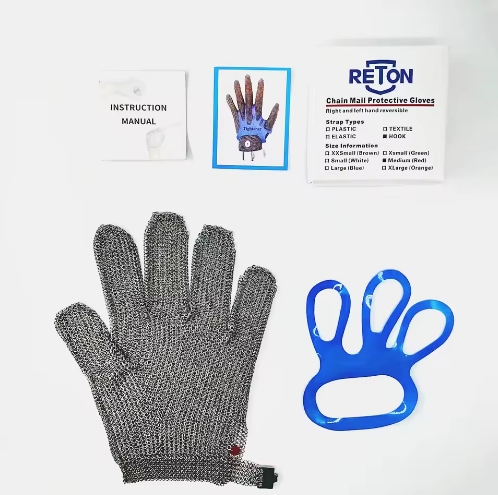
A chainmail butchers glove is a form of cut-resistant PPE constructed from interlocking metal rings, most commonly stainless steel. Its design draws from historical armor concepts, adapted for the specific requirements of the food processing and meat handling industries. The primary function of these gloves is to protect the hand that does not hold the knife—often referred to as the "holding hand"—from lacerations during cutting and trimming tasks.
These gloves are distinct from other types of cut-resistant gloves, such as those made from Kevlar or HPPE. While synthetic gloves offer cut resistance and are lightweight, chainmail provides a level of slash protection that is suited for tasks involving heavy-duty breaking and slicing where blade contact is more forceful.
The effectiveness of a chainmail glove is determined by its materials and construction methods. Manufacturers like Hebei Linchuan Safety Protective Equipment Co., LTD. produce these gloves with specific parameters to balance protection, durability, and wearer comfort.
The majority of butchers' chainmail gloves are made from stainless steel wire. This material is selected for its corrosion resistance, tensile strength, and suitability for hygienic environments. Stainless steel withstands exposure to animal fats, blood, and common cleaning agents without degrading. A common specification for the wire diameter used in these gloves is approximately 0.53mm, which is formed into rings with an inner diameter of approximately 2.75mm.
The rings are interlinked in a pattern that allows for flexibility while maintaining a continuous protective barrier. The quality of the weld on each ring is a critical factor; consistent, high-quality welds reduce the likelihood of ring separation and extend the glove's operational lifespan. Some glove designs include an extended cuff or gauntlet, often measuring around 80mm in length, which provides additional protection for the wrist and lower forearm.
Most chainmail gloves are manufactured to be ambidextrous. This means they can be worn on either hand by turning them inside out. This design feature simplifies inventory management for businesses, as they do not need to purchase and store separate left-handed and right-handed gloves.
For a chainmail glove to be considered suitable for professional use, it should comply with specific international safety standards. These standards provide a framework for testing cut, puncture, and impact resistance.
The primary standard for chainmail gloves is EN 1082-1. Unlike the general cut test used for textile gloves, EN 1082 was developed specifically for metal mesh products used in the meat industry. It includes tests for dimensional coverage to ensure probes cannot easily penetrate the glove, impact cut resistance to assess the barrier against a blade strike, and ring tensile strength to test the force required to break the individual rings.
Gloves produced by Hebei Linchuan are designed to be tested against this standard, ensuring they meet the requirements for PPE in Europe and other regions that recognize this certification.
EN 388: While designed for general-purpose gloves, this standard's updated cut test may also be referenced for materials used in conjunction with chainmail, such as liners.
Food Contact Certifications: For gloves used in food processing, certifications confirming they are safe for incidental food contact are necessary.
Nickel Release Testing: Some chainmail products may be tested for nickel release to ensure they meet limits for prolonged skin contact, reducing the potential for skin irritation.
While most commonly associated with red meat butchery, the utility of chainmail gloves extends across several sectors where sharp blades present a hazard.
In slaughterhouses and processing plants, workers perform repetitive cutting motions. A chainmail glove protects the non-dominant hand that holds the carcass or meat steady. They are commonly used during deboning and filleting to provide a barrier between the knife and the hand.
Opening oysters requires the application of significant force with a short, sharp knife, presenting a risk of the blade slipping and piercing the hand. Seafood processors rely on stainless steel mesh gloves to protect against puncture wounds from shucking knives.
In the textile industry, workers use electric cutters and scissors to cut through multiple layers of fabric. Chainmail gloves can protect against accidental contact with these sharp blades during the cutting process.
Workers handling sharp edges of cut glass or operating wood carving tools may also utilize metal mesh gloves to reduce the risk of severe lacerations.
One of the characteristics of stainless steel in a food environment is its hygienic properties. Unlike gloves with fabric linings that can absorb liquids and bacteria, chainmail has a non-porous surface that is relatively easy to clean.
Chainmail gloves are resistant to greases, fats, and many cleaning chemicals. The recommended cleaning method involves brushing with hot, soapy water or a mild detergent to remove organic debris, followed by thorough rinsing with clean water. For disinfection, immersion in water heated to between 82°C and 90°C, or the use of disinfectants approved for food contact surfaces, is standard practice. Gloves should be dried in a well-ventilated area before storage to prevent moisture retention.
Many modern chainmail gloves utilize polypropylene straps with press studs to secure the glove to the wrist. Polypropylene is often used because it does not absorb water and is less likely to harbor bacteria compared to fabric straps. Straps are sometimes color-coded to correspond with glove sizes for easy identification. For applications requiring the highest level of hygiene, some users prefer strap-less designs that consist entirely of metal.
Selecting the correct size for a chainmail glove is important for both safety and comfort. A glove that is too loose may shift during use, potentially exposing the hand, while a glove that is too tight can restrict circulation and contribute to hand fatigue.
Sizing is typically based on the circumference of the palm and the length of the hand. Manufacturers like Hebei Linchuan provide sizing charts to help buyers select an appropriate fit.
| Size (Metric) | Size (US Alpha) | Strap Color Code | Palm Circumference | Palm Length |
|---|---|---|---|---|
| Size 7 | Small | White | 7 - 7.5 inches | 215 mm |
| Size 8 | Medium | Red | 8 - 8.5 inches | 220 mm |
| Size 9 | Large | Blue | 9 - 9.5 inches | 230 mm |
| Size 10 | X-Large | Orange | 10 - 10.5 inches | 240 mm |
| Size 6 | X-Small | Green | 6 - 6.5 inches | 200 mm |
For businesses looking to purchase chainmail gloves, the reliability of the manufacturer is an important factor. Hebei Linchuan Safety Protective Equipment Co., LTD. operates as a manufacturer in this field.
Established in 2008, the company operates as an SGS-certified manufacturer, integrating production, sales, and export. With over a decade of experience, they specialize in stainless steel ring mesh products, offering a range of items including gloves, aprons, and protective mesh.
Hebei Linchuan's chainmail gloves are engineered with specific parameters, utilizing a wire diameter of 0.53mm to form rings. They offer sizes ranging from XXS to XXL to accommodate various worker hand sizes. The gloves are designed to meet CE standards and are available with factory repair programs to extend their usable life.
As an SGS verified supplier, Hebei Linchuan maintains a focus on quality control, with inspections conducted during production and before shipment. They support OEM and customization orders, allowing businesses to source gloves that meet their specific requirements.
Chainmail butchers gloves are a component of safety protocols in industries involving sharp blades. Their construction from stainless steel provides cut resistance suitable for many food processing tasks. When selecting a supplier, it is useful to consider not only the compliance of the gloves with standards like EN 1082-1 but also the production capabilities of the manufacturer. Companies like Hebei Linchuan Safety Protective Equipment Co., LTD. offer products that meet these requirements, supporting businesses in their efforts to maintain worker safety.