
Author: Site Editor Publish Time: 2026-07-20 Origin: Site


Hand protection remains a critical component of personal protective equipment in meat processing facilities. The use of sharp knives, bone saws, and specialized cutting tools creates a consistent risk of laceration injuries for workers in slaughterhouses, butcher shops, and food processing plants. Butcher safety gloves serve as the primary defense against these occupational hazards, with industry data indicating that lacerations account for a substantial portion of workplace injuries in meat processing operations. The selection of appropriate hand protection requires an understanding of material properties, performance standards, and application-specific requirements. Hebei Linchuan Safety Protective Equipment Co., LTD manufactures a range of stainless steel chainmail gloves designed for meat processing applications, with products certified to international safety standards.
The evaluation of cut-resistant gloves follows established international standards that provide quantifiable measures of protection. The European standard EN 388 evaluates mechanical risks for hand protection, rating gloves for abrasion, cut, tear, and puncture resistance. Under EN 388, cut resistance is rated on a scale that incorporates both the Coup Test and the TDM-100 test method for more accurate scoring. Gloves achieving the highest cut resistance levels demonstrate the capability to withstand significant forces before blade penetration occurs. The ANSI/ISEA 105 standard, used in the United States, classifies cut resistance across levels A1 through A9 based on the grams of cutting force required to penetrate the material. For meat processing applications, gloves rated A5 through A9 offer appropriate protection ranges for hand knife tasks. These two testing methodologies use different apparatuses and parameters, and their results are not directly interchangeable. Understanding which standard applies to a specific workplace is essential for proper glove selection. For chainmail gloves specifically, the EN ISO 13997 test method provides a more accurate assessment of cut resistance, measuring the force in Newtons required to cut through the material with a standardized blade. High-quality stainless steel chainmail gloves typically demonstrate resistance well above 20 Newtons, placing them at the highest levels of cut protection available.
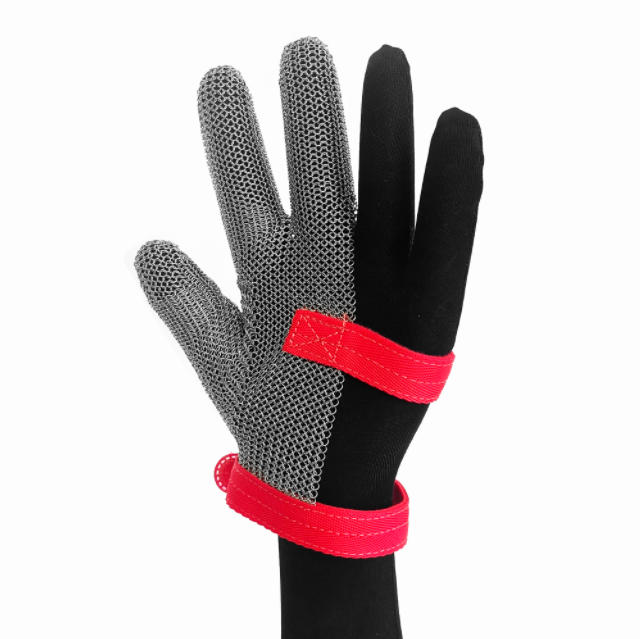
Butcher safety gloves are manufactured from various materials, each offering distinct performance characteristics for different applications.
Stainless steel chainmail gloves represent the traditional standard for maximum cut protection in meat processing. These gloves are constructed from thousands of interconnected stainless steel rings, typically using AISI 304 or 316 grade material. Each glove contains approximately 8,000 to 12,000 individual rings, assembled in weaves such as the European 4-in-1 or 6-in-1 pattern to create a flexible mesh. The wire diameter typically ranges from 0.53mm to 1.0mm, with ring configurations either welded or riveted. Riveted rings provide additional integrity under direct point pressure, making them particularly suitable for butchery applications. The stainless steel construction offers several operational advantages. The material resists corrosion from blood, fats, and cleaning chemicals. The non-porous surface prevents bacterial absorption, supporting hygiene requirements in food processing environments. These gloves can be sanitized using hot water, detergents, and sanitizing solutions without material degradation. Some models incorporate extended sleeves that provide protection extending from the wrist to the forearm, with sleeve lengths available in 8cm, 15cm, 20cm, or custom dimensions.
Advanced synthetic fibers provide an alternative to metal mesh construction, offering cut resistance with reduced weight and improved dexterity. Dyneema and Spectra fibers, made from ultra-high molecular weight polyethylene, are pound-for-pound significantly stronger than steel while remaining lightweight enough to float. These fibers are constructed through a unique gel-spinning process that creates long polymeric chains with high molecular orientation. When woven with fiberglass, cotton yarn, or other synthetic fibers, these materials provide substantial cut resistance while maintaining flexibility. Kevlar fiber, an aramid material invented by DuPont, offers another option for cut-resistant gloves. Kevlar is constructed from poly-paraphenylene terephthalamide, forming long polymeric chains with strong intra-molecular hydrogen bonds. This molecular structure creates a material that is strong, lightweight, and heat-resistant. Kevlar gloves perform effectively across a temperature range from -30°C to 160°C, making them suitable for various processing environments. Both synthetic fiber types provide cut resistance without the weight penalty of metal mesh, though they may not offer equivalent puncture resistance.
The effectiveness of butcher safety gloves depends on proper fit and ergonomic design. Modern chainmail gloves are available in sizes ranging from XXS to XXL, with color-coded straps for size identification. A properly fitted glove should provide secure coverage without restricting natural hand movement. Poorly fitted gloves can reduce dexterity, increase fatigue, and potentially create safety hazards. Cuff design represents another important consideration. Options include short cuffs for wrist protection, gauntlet-style long cuffs for forearm coverage, and knit-wrist designs that integrate cut-resistant textile to prevent debris entry. Long-sleeve gloves incorporate straps in various configurations, including textile straps, plastic straps, metal claw straps, and spring straps, each offering different benefits for specific applications. In practice, chainmail gloves are often worn over a cut-resistant base glove made from synthetic fibers for added comfort and hygiene. This combination approach allows workers to benefit from the maximum cut protection of metal mesh while maintaining comfort during extended wear. Some operations also use disposable nitrile gloves over chainmail for fluid resistance in specific processing tasks.
Different tasks within meat processing operations require different levels of protection. Understanding these distinctions helps optimize safety programs while maintaining operational efficiency.
Metal mesh butcher gloves offer the highest available cut and puncture protection, making them suitable for high-risk tasks where the non-knife hand is at risk of direct blade contact. During boning and breaking operations, the holding hand faces significant laceration risk from knife slips. Metal mesh gloves provide a physical barrier that prevents blade penetration, with the interlocked ring construction distributing force across multiple rings when contact occurs. The primary limitation of metal mesh gloves is their weight and reduced dexterity compared to synthetic alternatives. A standard stainless steel glove may weigh approximately 0.5 to 1.0 kilograms. For this reason, workers typically wear metal mesh gloves on the off-hand only, pairing them with lighter cut-resistant gloves on the knife hand for grip and dexterity.
Cut-resistant gloves made from high-performance synthetic fibers serve as the most common hand protection on processing floors. These gloves protect against knife blade contact during boning, trimming, and portioning while maintaining the grip and dexterity needed for efficient work. ANSI A5 through A9 rated gloves provide appropriate protection for most hand knife tasks. These gloves often incorporate antimicrobial treatments and meet USDA food handling requirements. They are machine washable, supporting practical cleaning programs between tasks.
Cotton knit gloves serve different roles compared to cut-resistant or metal mesh options. These gloves function as liners for warmth in cold processing environments and suit general handling tasks that do not involve knife contact. They may also be worn as a base layer under protective gloves for comfort during extended wear periods. In cold storage operations, a knit liner worn under protective gloves adds warmth without reducing protection.
Proper maintenance of butcher safety gloves directly impacts their protective performance and service life. Chainmail gloves require daily cleaning and sanitization to maintain hygiene standards. The cleaning process should include rinsing off particulate matter, washing with appropriate detergents, and sanitizing according to food safety protocols. Thorough drying after cleaning is essential to prevent corrosion, even with stainless steel materials. Pre-use inspection is a critical safety task. Each glove should be visually inspected and flexed to check for broken, cracked, or detached rings. A single broken ring compromises the integrity of the surrounding area and reduces protection. For knitted synthetic gloves, inspection should check for holes, fraying, or compromised fiber integrity. With proper care, a quality stainless steel chainmail glove can have a service life of several years. The actual lifespan depends on frequency of use, cleaning regimen, and the mechanical stress encountered during operations. Gloves showing signs of significant wear should be replaced promptly to maintain consistent protection levels.
Butcher safety gloves must comply with relevant safety standards and food contact regulations. CE certification under the PPE Directive requires gloves to meet specified performance levels. For chainmail gloves, compliance with EN 1082-1 establishes protection against cuts and stabs by hand knives. US FDA certification may also be required for gloves used in direct food contact applications. The marking system for protective gloves uses pictograms to communicate performance ratings. Under EN 388, gloves display ratings for abrasion, cut, tear, and puncture resistance. For metal mesh gloves, the abrasion rating receives an "X" designation, indicating the test method is not applicable to rigid metal mesh. Cut resistance remains the primary performance metric for these products.
While the initial investment in metal mesh butcher gloves may be higher than other options, their durability makes them cost-effective over time. A quality stainless steel glove can last for years with proper care, reducing replacement frequency. The enhanced safety they provide helps prevent costly workplace injuries, including medical treatment costs, lost productivity, and potential regulatory fines. When evaluating glove options, facilities should consider the specific tasks performed, the level of cut risk involved, worker comfort requirements, and cleaning protocols. A comprehensive hand protection program may utilize different glove types across different positions and tasks. The most effective approach matches protection levels to actual risk exposure while maintaining worker productivity and compliance with safety regulations. Hebei Linchuan Safety Protective Equipment Co., LTD manufactures chainmail safety gloves for meat processing and related industries. The company's products are constructed from corrosion-resistant stainless steel rings that are individually welded for strength and durability. Available sizes range from XXS to XXL with color-coded identification straps. Products carry CE certification and meet EN 1082-1 standards for cut and stab protection. Applications include meat processing, slaughterhouse operations, fish and shellfish processing, poultry processing, and various other industries requiring hand protection against sharp objects.