
Author: Site Editor Publish Time: 2026-08-10 Origin: Site


For safety managers and procurement professionals selecting hand protection for workers exposed to cut hazards, the range of available products can be confusing. Standard cut-resistant gloves made from high-performance fibers such as high-density polyethylene, aramid, or fiberglass composites are widely available and provide substantial protection for many applications. Chainmail gloves, constructed from interlocking stainless steel rings, offer a different approach to cut protection. Understanding the core differences between these two types of gloves is essential for selecting the appropriate protection for specific workplace hazards.
The fundamental difference between chainmail gloves and standard cut-resistant gloves lies in their protective mechanism. Standard cut-resistant gloves resist cutting through the tensile strength of the fibers and the friction between the blade edge and the fabric. When enough force is applied, the fibers separate and the blade passes through. Chainmail gloves resist cutting through the mechanical interlocking of metal rings. The blade must either break or deform the individual rings or force them apart to reach the skin beneath. This difference in mechanism creates distinct performance characteristics that make each type of glove appropriate for different applications.
Based on manufacturing data and product specifications from Hebei Linchuan Safety Protective Equipment Co., LTD, which produces both stainless steel chainmail gloves and other protective equipment, the choice between chainmail and standard cut-resistant gloves should be based on the specific hazards, usage frequency, and operational requirements of each application. This article examines the core differences between these two glove types across multiple dimensions, including protective mechanism, durability, application suitability, and total cost of ownership.
The protective mechanism of standard cut-resistant gloves relies on the inherent strength of the fibers used in their construction. High-performance fibers such as ultra-high-molecular-weight polyethylene, aramid, and fiberglass composites have high tensile strength, meaning they resist being pulled apart. When a blade contacts the glove, the fibers resist the cutting force through friction and tensile resistance. The blade must break individual fibers progressively to cut through the material. This mechanism is effective for many applications, particularly where the cutting force is moderate and the blade is not extremely sharp.
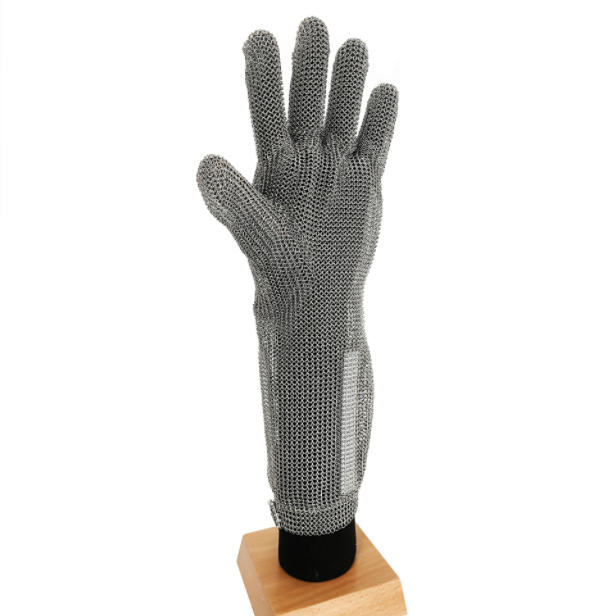
The protective mechanism of chainmail gloves is fundamentally different. Chainmail gloves use interlocking metal rings that create a physical barrier. The blade cannot cut through the rings without breaking or deforming the metal. Instead of relying on material strength to resist cutting, chainmail gloves rely on structural integrity to block the blade's progress. The blade must either break the metal rings, which requires significant force, or force the rings apart, which requires deforming the metal. This structural protection provides a higher level of resistance to cutting forces than fiber-based gloves can offer.
The difference in protective mechanism has practical implications for how the gloves perform in real-world conditions. Standard cut-resistant gloves perform best when the cutting force is applied in a consistent, predictable manner. The fibers provide consistent resistance across the glove surface, and the protection is relatively uniform. However, the fibers can be damaged by abrasion, heat, or chemicals, which reduces their protective properties. The protection of standard cut-resistant gloves degrades as the fibers are damaged or broken.
Chainmail gloves perform differently. The metal rings provide consistent protection that is not affected by abrasion or wear in the same way that fiber gloves are affected. The rings can withstand repeated blade contact without losing their structural integrity. However, chainmail gloves have gaps between the rings that allow pointed objects to pass through without cutting the rings. The protective mechanism is effective against blades but less effective against sharp points.
The thickness and construction of standard cut-resistant gloves affect their cut resistance. Gloves with higher cut ratings typically have thicker materials or denser weaves, which can reduce dexterity. The cut resistance of fiber-based gloves is directly related to the amount and density of the protective material. Chainmail gloves achieve high cut resistance through the ring material and weave pattern, with the ring gauge and density determining the protection level. The relationship between protection and dexterity exists for both glove types but operates through different mechanisms.
Standard cut-resistant gloves have a limited service life that depends on the frequency and intensity of use. The fibers in these gloves degrade over time through abrasion, flexing, and exposure to chemicals and heat. Each time the glove is used, the fibers experience wear that gradually reduces their protective properties. In demanding applications such as meat processing, standard cut-resistant gloves may need replacement after a few days or weeks of use. The service life is determined by the visible wear on the glove and the loss of protective properties.
Chainmail gloves have significantly longer service life than standard cut-resistant gloves in demanding applications. The metal rings do not degrade through abrasion in the same way that fibers do. While the rings experience wear from blade contact, the wear is gradual and the glove continues to provide protection for months rather than weeks. In meat processing applications, chainmail gloves typically provide eight to eighteen months of service life, compared to days or weeks for standard cut-resistant gloves. This extended service life is one of the primary advantages of chainmail gloves.
The durability difference is particularly significant in applications with high-frequency blade contact. In meat processing, where workers make hundreds or thousands of cuts per shift, the fiber gloves are subjected to repeated cutting forces that quickly degrade the material. The fibers break and separate, creating gaps in the protective structure. Chainmail gloves withstand this repeated contact without significant degradation. The rings may show wear over time, but the protective structure remains intact for extended periods.
The repair capability also differs between the two glove types. Standard cut-resistant gloves cannot be repaired when damaged. Once the fibers are cut or degraded, the glove must be replaced. Chainmail gloves can be repaired by replacing broken rings. This repair capability extends the service life of chainmail gloves and reduces the total cost of ownership. The ability to repair rather than replace is a significant advantage for chainmail gloves in demanding applications.
Both chainmail and standard cut-resistant gloves are tested and rated according to the same standards, including the ANSI/ISEA 105 standard and the EN 388 standard. The highest cut resistance levels available under both standards can be achieved by both glove types. A9-rated fiber gloves and A9-rated chainmail gloves both require at least 6,000 grams of cutting force to penetrate under the test conditions. The difference is not in the maximum protection level but in how that protection is maintained over time and under different conditions.
Chainmail gloves typically maintain their cut resistance more consistently over their service life than standard cut-resistant gloves. The metal rings do not degrade as quickly as fibers, so the cut resistance remains closer to the original level for a longer period. A chainmail glove that has been in service for six months may still provide protection close to its original rating, while a fiber glove that has been in service for the same period may have significantly reduced protection. This consistency is an important consideration for applications where the cut hazard is present throughout the glove's service life.
The cut resistance mechanism also affects how the gloves perform with different blade types. Chainmail gloves are effective against a wide range of blade types, including straight blades, serrated blades, and powered knives. The metal rings physically block the blade regardless of the blade geometry. Standard cut-resistant gloves may perform differently with different blade types. Serrated blades can catch on the fibers and create a sawing action that may be more effective at cutting through the material. The performance with powered knives is also different, with chainmail gloves providing the only practical protection against some powered knife hazards.
The EN 388 standard provides cut resistance ratings using both the Coup Test and the TDM Test. Chainmail gloves typically achieve the highest ratings on both tests. Standard cut-resistant gloves can also achieve high ratings, but their performance may vary depending on the specific material construction. The TDM Test, which measures the force required to cut through the material with a straight blade, is the basis for the ANSI cut level ratings. Both glove types are tested using the same methodology, allowing direct comparison of ratings.
The protection against puncture and pointed objects is one of the most significant differences between chainmail and standard cut-resistant gloves. Standard cut-resistant gloves, particularly those with dense fiber construction, provide some puncture resistance. The fibers resist the penetration of sharp points by requiring the point to push the fibers apart or break them. The puncture resistance of fiber gloves depends on the density of the weave and the fiber material. Some fiber gloves are specifically designed for puncture resistance and are used in healthcare and waste handling applications.
Chainmail gloves provide limited protection against puncture by small-diameter pointed objects. The gaps between the rings allow sharp points such as needles to pass through to the skin without cutting the rings. The ring gaps, which are necessary for flexibility, are larger than the diameter of many needles and sharp points. A hypodermic needle can pass through a ring gap without contacting the metal, reaching the skin beneath. This limitation is inherent to the chainmail structure and is not overcome by different ring sizes or weave patterns.
The protection against larger pointed objects differs. An awl or ice pick with a diameter larger than the ring gaps will contact the metal rings and be blocked. The ring structure provides effective puncture resistance for larger objects, as the point cannot pass through the gaps and must deform the rings. The puncture resistance of chainmail gloves against large-diameter pointed objects is comparable to or exceeds that of standard cut-resistant gloves.
For applications where both cut and puncture hazards are present, the choice between glove types depends on the specific hazard profile. If the primary hazard is cuts from blades, chainmail gloves are the preferred choice. If the primary hazard is punctures from needles or thin sharp points, standard cut-resistant gloves with puncture resistance are more appropriate. In applications with both hazards, a layered approach using both glove types may be necessary, with a puncture-resistant underglove and a chainmail outer glove.
Chainmail gloves are heavier than standard cut-resistant gloves. The metal construction adds significant weight compared to fiber-based gloves. A typical chainmail glove weighs approximately 200 to 400 grams per glove, depending on the ring gauge and glove size. A standard cut-resistant glove of the same cut level weighs substantially less, often less than 100 grams per glove. The weight difference is noticeable and can affect worker comfort, particularly during extended shifts.
The weight of chainmail gloves can contribute to worker fatigue, especially in operations where workers must hold their arms up for extended periods. The additional weight requires more energy to move and hold the hands in position. Workers may experience muscle fatigue more quickly with chainmail gloves than with lighter fiber gloves. This fatigue can affect productivity and may increase the risk of other types of injuries, such as musculoskeletal strain.
The flexibility of chainmail gloves also differs from standard cut-resistant gloves. Chainmail gloves are flexible but have a different feel than fiber gloves. The interlocking rings allow movement but create a specific tactile sensation that some workers find comfortable and others find limiting. Standard cut-resistant gloves provide more tactile feedback in most cases, allowing workers to detect small surface irregularities and handle delicate materials more effectively.
The fit of chainmail gloves is critical for comfort and protection. A properly fitted chainmail glove distributes the weight evenly across the hand and provides secure protection. An improperly fitted chainmail glove can cause discomfort, restrict circulation, or slip during use. Standard cut-resistant gloves are generally more forgiving in terms of fit, as the fiber material can conform to the hand shape more easily than metal rings.
Some workers prefer chainmail gloves for their specific feel and protection, while others prefer the lighter weight and better dexterity of standard cut-resistant gloves. The choice often depends on the specific work requirements and worker preferences. In applications where the highest level of cut protection is required, chainmail gloves are the appropriate choice despite the weight difference. In applications where dexterity is more critical than maximum protection, standard cut-resistant gloves may be preferred.
The core differences between chainmail and standard cut-resistant gloves make each type suitable for different applications. Chainmail gloves are indicated for applications where the cut hazard is severe, frequent, and involves direct blade contact. These applications include meat processing, glass handling, metal fabrication, and recycling operations. The durability of chainmail gloves and their consistent cut resistance make them appropriate for demanding environments where fiber gloves would need frequent replacement.
Standard cut-resistant gloves are appropriate for a wider range of applications where the cut hazard is moderate or where dexterity is a primary requirement. These applications include material handling, packaging, assembly, maintenance, and general warehousing. The lighter weight and better dexterity of fiber gloves make them suitable for applications where workers need to handle small parts, operate machinery, or perform tasks requiring fine motor control.
In applications with powered knives, chainmail gloves are typically specified because they provide the only practical cut protection against the high-speed blade. The EN 14328 standard specifically addresses gloves for protection against powered knives, and chainmail gloves are the only glove type that consistently achieves the required protection. Standard cut-resistant gloves are not recommended for powered knife applications because the high-speed blade can cut through the fibers more easily than through metal rings.
In applications with needle hazards, standard cut-resistant gloves with puncture resistance are preferred over chainmail gloves. The puncture resistance of fiber gloves is more effective against small-diameter needles than the limited protection provided by chainmail gloves. In applications with mixed hazards, such as waste handling with both cut and puncture hazards, a layered approach may be necessary, with chainmail gloves worn over puncture-resistant undergloves.
In applications with chemical exposure, standard cut-resistant gloves may be preferred for certain chemicals, while chainmail gloves may be preferred for others. Some chemicals can attack the fiber material, reducing the glove's protective properties. Other chemicals can corrode the metal rings in chainmail gloves. The choice depends on the specific chemicals present and the compatibility of the glove material with those chemicals.
Total cost of ownership is an important consideration when choosing between chainmail and standard cut-resistant gloves. The initial purchase price of chainmail gloves is significantly higher than standard cut-resistant gloves. A chainmail glove may cost fifty to one hundred dollars, while a standard cut-resistant glove of comparable cut level may cost ten to thirty dollars. This price difference is substantial and often leads to initial decisions favoring the less expensive option.
The extended service life of chainmail gloves often offsets the higher initial cost. A chainmail glove that provides twelve months of service life in a demanding application may be more cost-effective than standard cut-resistant gloves that require replacement every two to four weeks. The cost of multiple replacements over a year can exceed the cost of a single chainmail glove. In high-frequency cutting applications, chainmail gloves are often the more economical choice despite their higher initial price.
The repair capability of chainmail gloves further reduces the total cost of ownership. Broken rings can be replaced, extending the service life of the glove. Standard cut-resistant gloves cannot be repaired and must be replaced when damaged. The ability to repair chainmail gloves reduces the frequency of replacement and lowers the long-term cost of the glove program.
The cost of injuries is another factor in the total cost of ownership. A hand laceration requiring medical treatment costs more than the difference between chainmail and standard cut-resistant gloves. The additional protection provided by chainmail gloves in demanding applications can prevent injuries that would cost significantly more than the glove investment. Facilities should consider the injury prevention value of chainmail gloves when making purchasing decisions.
The core difference between chainmail gloves and standard cut-resistant gloves is the protective mechanism. Chainmail gloves use interlocking metal rings to create a physical barrier that blocks blades, while standard cut-resistant gloves rely on fiber tensile strength and friction to resist cutting. This fundamental difference creates distinct performance characteristics that make each glove type appropriate for different applications.
Chainmail gloves provide durable, consistent cut resistance with extended service life, but they are heavier and provide limited puncture protection. Standard cut-resistant gloves provide effective cut resistance with better dexterity and lighter weight, but they have shorter service life and cannot be repaired. The choice between these glove types should be based on the specific hazards, usage frequency, and operational requirements of each application.
For demanding applications with high-frequency blade contact, chainmail gloves are the appropriate choice despite the higher initial cost. The extended service life, consistent protection, and repair capability provide value that justifies the investment. For applications with moderate cut hazards or where dexterity is a primary requirement, standard cut-resistant gloves are often the appropriate choice.
Hebei Linchuan Safety Protective Equipment Co., LTD manufactures both chainmail gloves and other protective equipment. We recommend that safety managers conduct thorough hazard assessments and consider both the performance characteristics and total cost of ownership when selecting hand protection. Our technical staff can provide guidance on the appropriate glove type for specific applications based on the hazard profile and operational requirements.