
Author: Site Editor Publish Time: 2026-07-30 Origin: Site


Meat packers work in environments where hand protection is not optional. The frequency of blade contact in meat processing operations creates a measurable injury risk that requires consistent protective measures. Occupational injury data from beef slaughterhouse operations shows that hand and finger injuries account for a substantial portion of all reported workplace injuries in this sector. The same data indicates that use of metal mesh gloves is associated with a reduced risk of injury, making glove selection a critical safety decision for meat packing facilities.
Given the critical role of hand protection, the question of which chainmail gloves meat packers actually recommend carries significant weight for safety managers. This article examines the specific features, design characteristics, and performance criteria that meat processing professionals prioritize when selecting chainmail gloves for their operations. The recommendations presented are based on product specifications, industry standards, and documented performance data from the meat processing sector.
Hebei Linchuan Safety Protective Equipment Co., LTD manufactures stainless steel chainmail gloves specifically designed for meat processing applications. Our gloves are constructed from welded steel rings that provide both flexibility and cut resistance, and are among the products used in food processing facilities worldwide. This guide reflects our manufacturing experience and the feedback received from meat packing customers across multiple processing environments.
Meat packer recommendations for chainmail gloves are strongly influenced by regulatory standards that define minimum protection requirements. The EN 1082 standard was originally developed specifically for gloves used in the meat processing industry, intended for workers performing tasks such as cutting flesh from carcasses. This standard includes dimensional assessments, impact cut tests to evaluate the strength and cut resistance of the chainmail, and tensile strength tests on the individual rings that make up the chainmail structure.
Additionally, the EN 14328 standard addresses gloves and armguards providing protection against powered knives, which are commonly used in slaughterhouses and meat cutting plants. The standard notes that powered knives enable workers to cut rapidly through resistant materials, and their hands are always in the vicinity of the blade, creating significant potential for serious hand injuries. Meat packers typically specify gloves that meet both EN 1082-1 and EN 14328 certification requirements.
Products that meet these certifications are preferred in meat packing operations because the standards were designed with the specific hazards of this industry in mind. When safety managers ask meat packers which gloves to purchase, the first criterion is typically whether the glove carries these relevant certifications. Gloves meeting EN 1082-1 and EN 14328 standards have been tested for cut resistance against the blade types and force levels common in meat processing environments.
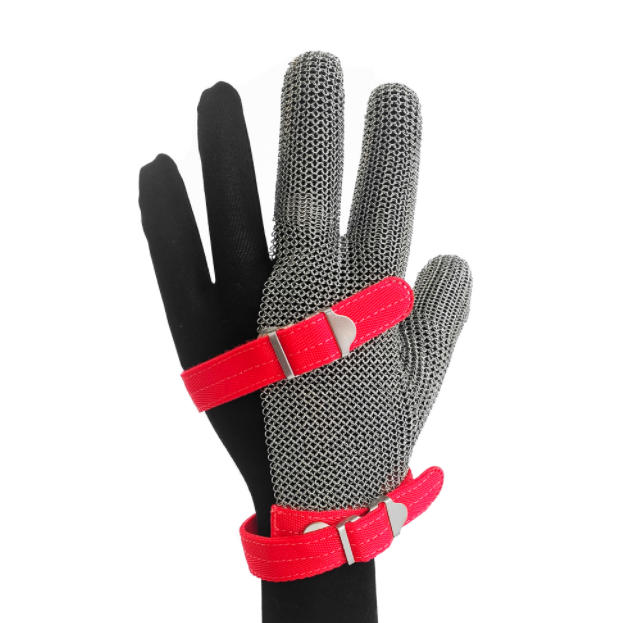
Meat packers consistently recommend chainmail gloves with high-quality ring construction. The durability of the glove depends on the integrity of the individual rings and the connections between them. Gloves with individually welded rings are preferred because welded rings resist separation under repeated cutting loads. Products with poor weld quality require frequent repairs and have shorter service lives, which increases operational costs and creates gaps in worker protection.
Chainmail gloves with exceptional quality of chain mesh welds are noted for reducing the number of repairs and increasing the glove's lifetime. This durability factor is central to meat packer recommendations because a glove that fails in service creates both a safety hazard and a production interruption. Meat packers who have evaluated multiple glove brands consistently identify weld quality as a key differentiator between products that perform well and those that require premature replacement.
Another construction feature that meat packers look for is the absence of straps or fabric components that can harbor bacteria. Chainmail gloves designed without straps which can harbor harmful bacteria are easier to clean with water and disinfectant. This hygienic design is critical in meat processing environments where cleaning and sanitization are conducted multiple times per shift. Gloves with complex strap systems or fabric components are more difficult to sanitize and may not meet food safety requirements.
Meat packers frequently recommend gloves that can be worn on either hand. Chainmail gloves that are ambidextrous to suit right and left-handed users make them suitable for workers who may change tasks or workstations. Similarly, products described as short reversible stainless steel mesh gloves accommodate both right and left-handed users, allowing the same glove to be used by different workers as staffing needs change.
The reversibility feature has practical benefits for meat packing operations. Glove inventory management is simplified because a single glove model fits both hand orientations. When a worker leaves a station, the glove can be reassigned to another worker regardless of their dominant hand. This flexibility reduces the number of glove models that must be stocked and allows for more efficient use of protective equipment.
Products with reversible design are also easier to put on and take off, which matters in meat processing environments where workers may need to remove gloves periodically during the shift. Chainmail gloves designed with an easy on and off system with a stainless steel spring mechanism for secure fit are preferred. Meat packers recommend gloves that balance secure fit with ease of use because workers who find gloves difficult to don may skip wearing them during short tasks.
Chainmail gloves used in meat processing must comply with food safety regulations and withstand frequent sanitization. Meat packers specify gloves that are resistant to cleaning and disinfectant products. Products with CE food-safe certification are preferred because they have been tested for materials that are safe for contact with food products.
Clip fastening systems are recommended over strap-based closures because they reduce bacteria buildup. Chainmail gloves with clip fastening for improved hygiene to reduce bacteria build up are described as suited for food processing plants and resistant to greases, animal fats, and oils. This resistance to fats and oils is important because meat processing environments involve continuous contact with animal fats that can degrade glove materials or create cleaning challenges.
Gloves with antimicrobial agents are also preferred by some meat packers. Chainmail gloves featuring detachable and interchangeable plastic straps with antimicrobial agents support hygiene compliance. Additionally, gloves with color-coded sizing allow for easier identification and ensure that workers receive correctly sized gloves, which is important for both comfort and protection.
A feature that meat packers increasingly recommend is individual glove identification. Chainmail gloves fitted with an identification tag that can be personalized by the wearer, with each glove identified by a unique number for traceability and record keeping, support glove management programs where gloves are assigned to specific workers and monitored for wear and replacement scheduling.
Individual glove identification also helps with hygiene compliance. If a worker is wearing a glove with a known history of cleaning and sanitization, the risk of cross-contamination is reduced. For meat packers operating under HACCP or other food safety management systems, traceable PPE is a valuable tool for maintaining compliance records and demonstrating due diligence in food safety practices.
Manufacturers offering gloves with individual serial numbers are preferred because this supports both safety management and food safety documentation requirements. The serial number allows the glove to be tracked from initial issue through inspection, cleaning, and eventual replacement, providing a complete history of the glove's service life.
Meat packers consistently recommend gloves with secure fit features that prevent the glove from slipping during use. The glove must stay in position on the hand to provide consistent protection. Products with heavy-duty adjustable straps and press stud fastening provide a secure fit every time, and designs without a side slit prevent a knife from entering at wrist level. This wrist security feature is emphasized by meat packers because the wrist area is a potential entry point for blades during cutting operations.
Gloves with a latex or other elastic band that adapts perfectly to the hand are recommended for maintaining fit during extended use. The band keeps the glove in position without requiring the worker to constantly adjust the glove, which reduces distractions and maintains focus on the cutting task. Meat packers who have used gloves with poor fit systems report that workers often modify the gloves or wear them improperly, which compromises protection and increases injury risk.
Fit also relates to glove size availability. Meat packers recommend suppliers who offer a full range of sizes because workers' hand sizes vary significantly. Gloves that are too large slip during use, and gloves that are too small restrict circulation and cause discomfort. Providing properly sized gloves supports both safety and worker acceptance of the protective equipment.
Meat processing operations frequently use powered knives to improve cutting efficiency. These tools create a specific hazard profile that influences glove recommendations. The EN 14328 standard notes that at the present time it is not known that any practical glove material other than metal chainmail provides significant protection against powered knives. Even chainmail is rapidly cut through and injuries will only be avoided by strict adherence to safe working practices.
Users of chainmail gloves note that the vibration and noise caused by contact of their glove with a powered knife blade often enables them to react in time to prevent an injury. This feedback mechanism is a unique benefit of metal chainmail gloves that meat packers value. The glove provides both tactile and auditory feedback when the blade contacts the glove surface, giving the worker a fraction of a second to withdraw the hand before the blade cuts through the material.
Meat packers recommend chainmail gloves for powered knife operations but also emphasize that the gloves are a secondary protection measure. The primary safety measure is proper cutting technique, blade maintenance, and safe work practices. The EN 14328 standard explicitly states that powered knife blade edges may be smooth, coarsely honed, finely serrated, or scalloped, but blades with saw-tooth edges above a certain height are generally unsafe to use with chainmail gloves. This distinction is important for meat packers selecting gloves for specific cutting tasks.
Products meeting both EN 1082-1 and EN 14328 standards are recommended for meat packing operations that use powered cutting equipment. The double certification indicates the glove has been tested against both hand knife and powered knife hazards, providing comprehensive coverage for the range of cutting equipment used in meat processing facilities.
Meat packer recommendations are influenced by the total cost of ownership of chainmail gloves. Gloves with higher initial cost may be recommended if they provide longer service life or require fewer repairs. Chainmail gloves with exceptional quality of chain mesh welds are noted for reducing the number of repairs and increasing the lifetime of the glove. For meat packers operating on thin margins, the service life of PPE is an important economic factor.
One hundred percent stainless steel construction of some gloves eliminates straps that can weaken the glove or harbor harmful bacteria. Gloves requiring minimum repairs have lower maintenance costs, which meat packers factor into their purchase decisions. Meat packers who track glove expenditures over time often recommend brands that have demonstrated longer service life in their specific processing environment.
Meat packers also consider the availability of replacement parts and repair services when recommending gloves. Gloves with detachable and interchangeable straps that can be changed quickly and easily are preferred because downtime for glove repair is minimized. Damaged straps can be replaced without replacing the entire glove, reducing long-term PPE costs. This repairability is a feature that meat packers evaluate when comparing different glove brands and suppliers.
Based on the product specifications, industry standards, and operational requirements reviewed in this article, meat packers recommend chainmail gloves with the following characteristics. First, the gloves must carry EN 1082-1 and EN 14328 certification for protection against both hand knives and powered knives. Second, the gloves should be constructed from welded stainless steel rings with exceptional weld quality to extend service life and reduce repair frequency. Third, the gloves should feature ambidextrous or reversible design to allow use by either hand and simplify inventory management. Fourth, the gloves must have hygiene-compliant features such as clip fastening, resistance to fats and oils, and the ability to withstand standard sanitization protocols. Fifth, the gloves should include individual identification for traceability and glove management. Sixth, the gloves must provide a secure fit without side slits at the wrist that could allow knife entry.
Meat packers consistently recommend products from manufacturers who have demonstrated understanding of the specific hazards and operational requirements of the meat processing industry. Hebei Linchuan Safety Protective Equipment Co., LTD manufactures stainless steel chainmail gloves that meet these recommended specifications, with construction from individually welded steel rings and application suitability for meat processing environments. Our gloves are used in food processing plants and are designed to provide the durability, hygiene compliance, and protection that meat packers require.
Safety managers evaluating chainmail gloves for meat packing operations should consult with their PPE supplier to select gloves that match the specific hazards of their facility. The recommendations presented in this article provide a framework for evaluating glove options based on the criteria that experienced meat packers use when making their selections.