
Author: Site Editor Publish Time: 2026-06-01 Origin: Site


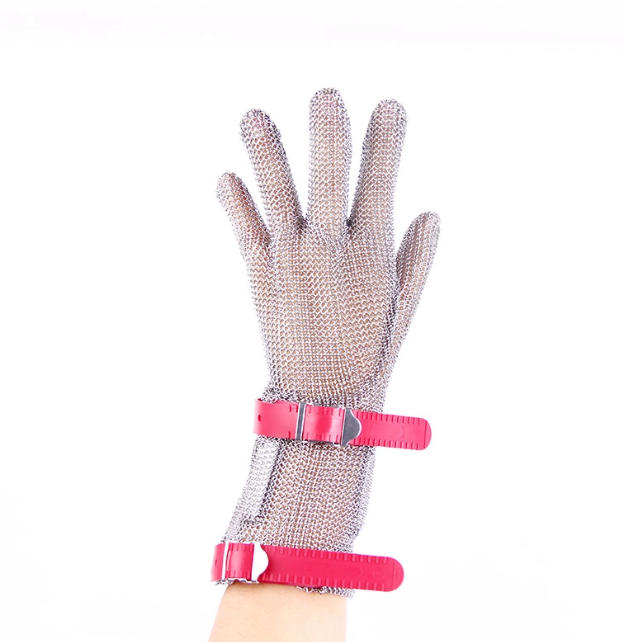
Stainless steel gloves are specialized hand protection gear constructed from interwoven stainless steel rings. Unlike traditional fabric or leather gloves, these gloves form a flexible metal mesh that resists cuts, punctures, and abrasions. The design originates from chainmail technology used historically in armor, now adapted for modern industrial and food processing environments.
The working principle relies on the physical barrier created by the metal rings. When a blade or sharp object contacts the glove surface, the force distributes across multiple rings rather than penetrating a single point. Each ring typically measures between 3 mm and 7 mm in diameter, with wire thickness ranging from 0.5 mm to 0.9 mm depending on the protection level required. The rings are welded or butted together, with welded construction offering higher tensile strength and durability.
The gloves function without relying on coatings or chemical treatments. The mechanical structure alone provides the protective capability. This means performance does not degrade with washing or repeated use, provided the rings remain intact. Users in meat processing plants, fisheries, glass handling facilities, and metal stamping operations commonly select stainless steel gloves where cut hazards exist.
The material selection determines corrosion resistance, tensile strength, and overall service life. Most manufacturers use stainless steel grades from the 300 series due to the balance between strength and rust resistance.
Grade 304 stainless steel appears frequently in food-grade applications. It contains approximately 18% chromium and 8% nickel, forming a passive oxide layer that resists oxidation from water, blood, and mild acids. Tensile strength for 304 wire typically reaches 515 MPa minimum, with elongation around 40%. This grade handles repeated washdowns and sterilization cycles without significant degradation.
Grade 316 stainless steel adds molybdenum content between 2% and 3%, improving resistance to chlorides and saltwater environments. Fishing vessels and coastal processing facilities often require 316 gloves where salt exposure accelerates corrosion. The pitting resistance equivalent number for 316 stainless steel exceeds 25, making it suitable for harsh cleaning chemicals.
Some manufacturers offer grade 430 stainless steel as a cost-effective alternative. This ferritic grade contains 16% to 18% chromium without nickel. Magnetic properties allow detection in food processing lines, reducing contamination risks. However, corrosion resistance sits below that of 304 or 316 grades, making 430 more appropriate for dry or low-moisture applications.
Cut resistance ratings follow standardized testing protocols that assign numerical values based on performance. The ANSI/ISEA 105 standard in North America uses a scale from A1 to A9, with higher numbers representing greater cut protection. The EN 388 standard used in European markets applies a similar approach with a 1-5 or A-F rating depending on the testing method revision.
Stainless steel gloves commonly achieve ratings from ANSI A5 through A9, with the exact level depending on wire diameter, ring size, and overall construction. A glove with 0.5 mm wire and 4 mm rings may achieve an A5 rating, offering cut protection suitable for general meat cutting and light metal handling. Moving to 0.7 mm wire with 3 mm rings can elevate the rating to A7 or A8, appropriate for heavy butchering and blade-intensive operations.
Testing involves a tomodynamometer machine that draws a straight-edge blade across the material sample under controlled load. The distance traveled before cut-through determines the rating. Stainless steel gloves typically require significantly higher loads to cut through compared to fiber-based gloves at the same rating level, due to the metal's inability to be sliced by blade edges.
Weight per glove increases with higher protection levels. A medium-sized A5-rated glove may weigh approximately 300 grams, while an A8-rated model can reach 500 grams or more. Users should balance protection requirements with manual dexterity needs when selecting the appropriate level.
Production begins with stainless steel wire drawing, where raw wire is pulled through progressively smaller dies until reaching the specified diameter. Consistent wire diameter across the entire spool remains critical, as variations exceeding 0.02 mm can affect ring uniformity and final glove strength.
Ring formation follows, using automatic winding machines that coil wire around a mandrel of precise diameter. Each ring is cut and the ends brought together for welding. Modern production lines employ laser or micro-plasma welding rather than simple butt joining. Welded rings demonstrate pull-apart strength exceeding 150 Newtons when properly executed, compared to 50-80 Newtons for un-welded rings.
Assembly technicians then interlink rings in a specific pattern, typically the European 4-in-1 pattern where each ring passes through four neighboring rings. This creates a dense mesh that maintains flexibility while closing gaps that could admit sharp points. The assembly direction accounts for hand anatomy, with thumb construction requiring separate attention due to its range of motion.
Quality control includes multiple inspection stages. Ring weld integrity testing samples random rings under tensile load. Finished gloves undergo visual inspection under magnification to identify gaps, sharp burrs, or incomplete closures. Cut resistance testing on production samples verifies that each batch meets the labeled protection level. Gloves leaving the facility should carry batch traceability codes linking to production date, material heat number, and inspection records.
Meat processing and slaughterhouse operations represent the largest market segment for stainless steel gloves. Butchers performing primal cuts on beef, pork, and lamb face significant laceration risks from band saws and hand knives. Industry data indicates that hand injuries account for a substantial portion of recordable incidents in meatpacking facilities, with lacerations being the leading type. Stainless steel gloves worn on the non-knife hand reduce cut frequency by providing a barrier that blades cannot easily penetrate.
Seafood processing introduces additional challenges from moisture, salt, and cold temperatures. Oyster shucking, fish filleting, and crustacean handling all involve sharp tools and shells. Stainless steel gloves resist the corrosive marine environment while maintaining dexterity sufficient for precise cutting motions. Workers can wear thin undergloves for thermal insulation while the steel outer layer handles the cut hazard.
Glass handling and manufacturing facilities use these gloves where workers move sheets of glass, load cutting tables, or handle broken fragments. The metal mesh prevents laceration from edges that would slice through leather or fabric gloves instantly. Weight considerations matter in this application, as extended overhead work demands lighter glove configurations.
Metal stamping and fabrication shops issue stainless steel gloves to workers handling stamped parts with sharp burrs and edges. The automotive parts supply chain, in particular, uses these gloves for unloading presses, sorting finished stampings, and performing quality checks where hand contact with sharp edges remains unavoidable.
Stainless steel gloves tolerate aggressive cleaning methods that would destroy leather or synthetic alternatives. Food processing environments require daily sanitization to control bacterial contamination, and the non-porous steel surface resists biofilm formation when properly maintained.
Standard cleaning involves pre-rinsing to remove visible debris, followed by wash-down with detergent solutions at temperatures between 60°C and 80°C. Pressure washing equipment delivering 500-800 psi removes trapped particles from between rings without damaging the metal structure. After washing, thorough rinsing prevents detergent residue accumulation that could cause localized corrosion over time.
Sanitization uses quaternary ammonium compounds or peracetic acid solutions at concentrations specified by food safety protocols. The metal surface tolerates these chemicals without degradation, unlike some polymer coatings that may break down with repeated exposure. Final drying matters significantly, as standing water in low-grade stainless steel can initiate pitting corrosion over extended periods.
Storage in ventilated areas away from direct contact with carbon steel prevents galvanic corrosion. Hanging racks allow gloves to drain and dry between uses. Monthly inspections should check for broken or deformed rings, worn areas at high-flex points, and any signs of corrosion. Individual damaged rings can sometimes be replaced, but widespread wear indicates replacement is needed.
Maintenance records tracking wash cycles, inspection results, and replacement dates help facilities manage glove inventory and anticipate replacement needs. A well-maintained glove can provide 12 to 24 months of service in typical processing environments, with actual lifespan depending on use intensity and care practices.
High-performance polyethylene fibers such as Dyneema and Spectra offer lightweight cut protection at lower protection levels. These engineered fibers typically achieve ANSI A2 through A6 ratings depending on gauge and construction. Fiber-based gloves weigh less than stainless steel options, often 50-100 grams per glove. However, fiber gloves eventually wear through with repeated blade contact, whereas stainless steel maintains its protective barrier indefinitely unless mechanically damaged.
Kevlar and other para-aramid fibers provide heat resistance alongside cut protection, making them suitable for applications involving hot parts. Stainless steel gloves transfer heat readily and require insulated liners for thermal protection. In pure cut resistance at levels A5 and above, stainless steel generally outperforms aramid fibers on a thickness-equivalent basis.
Chainmail gloves specifically address the risk of puncture from pointed blades that can separate fiber weaves. The metal rings resist penetration regardless of whether the threat is slicing, stabbing, or chopping motion. Fiber gloves excel at slicing resistance but may allow puncture from sharp points at angles perpendicular to the surface.
The weight penalty of stainless steel remains the primary tradeoff. Extended wear creates more fatigue compared to lightweight fiber gloves. Facilities often adopt task-specific approaches, using stainless steel for high-risk cutting operations and fiber gloves for general handling tasks where cut hazards remain lower.
Cost per use analysis favors stainless steel for long-term use despite higher initial purchase price. A stainless steel glove costing several times more than a fiber glove may deliver lower cost per month when service life reaches two years versus two weeks for disposable fiber alternatives in harsh environments.
Proper fit ensures that protective coverage extends across all vulnerable hand areas without compromising dexterity. Stainless steel gloves follow standard sizing conventions from extra-small through extra-large, with some manufacturers offering double extra-large for larger hands. Measurement around the palm at its widest point, typically across the metacarpal heads, determines the base size.
The glove should allow approximately 5 mm of space between the fingertips and the glove ends. Excess length creates snag hazards on machinery and reduces tactile feedback. Insufficient length exposes fingertips to laceration risks. Many users wear thin cotton or synthetic liner gloves underneath for comfort and moisture absorption, which requires accounting for in size selection.
Weight distribution matters for all-day wear. Well-designed gloves place the closure system at the wrist or forearm where the weight anchors comfortably. Elastic wrist closures or adjustable straps prevent the glove from sliding during use without constricting blood flow. Some models extend protection beyond the wrist to cover the forearm, adding protection for tasks where the arm enters cutting zones.
Ambidextrous designs simplify purchasing and inventory management, allowing the same glove to fit either hand. However, hand-specific designs with pre-curved fingers often provide better dexterity for precision cutting work. The thumb construction in hand-specific models accounts for the oppositional movement that ambidextrous patterns cannot fully address.
Break-in periods for stainless steel gloves are minimal compared to leather. The mesh conforms to hand shape within the first few hours of use as rings shift slightly under tension. Users should report any pinching or sharp edges immediately, as these indicate manufacturing defects rather than normal break-in characteristics.
Occupational safety regulations in most jurisdictions require employers to provide appropriate hand protection when workplace hazards cannot be eliminated through engineering controls. Cut hazards from knives, blades, glass, and sharp metal edges trigger this requirement across numerous industry sectors.
Personal protective equipment regulations in the European Union under Regulation 2016/425 categorize cut-resistant gloves as Category II or III depending on the risk level. Stainless steel gloves for meat processing and similar high-risk applications fall under Category III, requiring notified body certification and ongoing production surveillance. The CE marking accompanied by a four-digit notified body number indicates compliance.
In North American markets, OSHA's hand protection standard at 29 CFR 1910.138 requires employers to select and require employees to use appropriate hand protection when hand hazards exist. While OSHA does not directly approve specific products, compliance with ANSI/ISEA 105 testing standards provides evidence of due diligence in product selection.
Documentation requirements include maintaining certificates of compliance, test reports demonstrating achieved cut levels, and traceability records linking products to production batches. End-user facilities should retain this documentation for the duration of glove use plus any records retention period specified in their safety management system.
Workers must receive training on proper donning, doffing, inspection, and cleaning of stainless steel gloves before use. Training should cover the specific limitations of the assigned glove, including that no glove provides complete protection and that safe knife handling practices remain essential even while wearing protective equipment.
Stainless steel gloves present favorable environmental characteristics compared to disposable alternatives. The primary material, stainless steel, is infinitely recyclable without loss of properties. When gloves eventually reach end of life after years of service, the metal content enters existing scrap recycling streams rather than landfills.
The extended service life reduces consumption of raw materials and manufacturing energy compared to frequent replacement of disposable gloves. Lifecycle assessment comparisons between a stainless steel glove lasting two years and disposable cut-resistant gloves replaced weekly show significantly lower material throughput for the durable option.
Cleaning processes consume water and energy, representing the primary ongoing environmental impact. Facilities can optimize this by using efficient washing systems and proper loading to maximize throughput per cycle. The metal construction allows use of environmentally preferred cleaning agents without the compatibility concerns that affect polymer-based protective equipment.
Packaging reduction represents another sustainability benefit. A single stainless steel glove ships once, whereas the equivalent two-year supply of disposable alternatives generates packaging waste with each replacement shipment. Bulk packaging options and reusable shipping containers further reduce this impact.
End-user facilities increasingly include sustainability factors in procurement decisions alongside traditional criteria of protection, comfort, and cost. Stainless steel gloves align with waste reduction goals while maintaining the necessary protective performance for high-hazard cutting operations.
Manufacturing quality directly affects protection reliability. Facilities should evaluate potential suppliers based on demonstrated quality management systems, material traceability, and testing capabilities. ISO 9001 certification indicates structured quality processes, though many competent manufacturers maintain equivalent systems without formal certification.
Material certifications should identify the specific stainless steel grade used, with chemical composition analysis available upon request. Reputable manufacturers maintain incoming material inspection records and can provide heat numbers linking finished products to original mill certificates.
In-house or third-party testing capability for cut resistance, weld integrity, and dimensional consistency separates production-oriented manufacturers from resellers. A manufacturer with direct testing capability can address quality questions quickly and maintain tighter control over production variability.
Hebei Linchuan Safety Protective Equipment Co., LTD operates production facilities equipped for stainless steel glove manufacturing with integrated quality control processes. The company maintains material traceability systems and conducts regular testing to verify product performance against labeled protection levels.
Lead times, minimum order quantities, and customization options vary among manufacturers. Standard sizes and protection levels typically ship from inventory, while custom specifications require additional production time. Clear communication about expected delivery schedules and any relevant import documentation requirements helps avoid supply disruptions.
After-sales support including handling of warranty claims, technical questions about cleaning and maintenance, and guidance on appropriate product selection contributes to long-term supply partnership value. A manufacturer responsive to technical inquiries demonstrates the expertise that supports proper product use in the field.