
Author: Site Editor Publish Time: 2026-03-10 Origin: Site


Stainless steel ring mesh, a material constructed from interlocking metal rings, represents a convergence of historical design and modern material science. Often referred to as chain mesh or chainmaille, this material has evolved from its origins in protective gear to become a critical component in various industrial, architectural, and safety sectors. For companies requiring durable, flexible, and corrosion-resistant screening solutions, understanding the technical specifications and manufacturing nuances of this product is essential. Hebei Linchuan Safety Protective Equipment Co., LTD specializes in the production of high-quality stainless steel ring mesh, adhering to strict international standards to serve a global clientele.
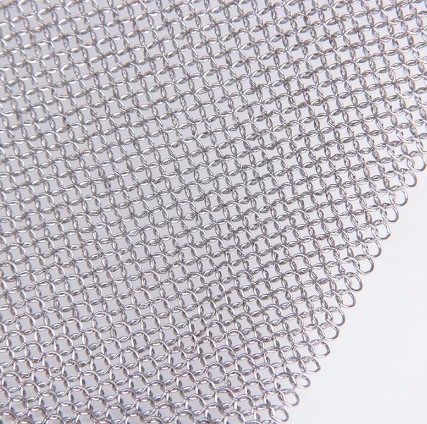
Stainless steel ring mesh is a type of fabric created by linking individual metal rings together to form a flat, flexible sheet. The fundamental structure consists of thousands of small rings, each interlinked with its neighbors—typically in a pattern where one ring passes through four others—to create a durable and uniform matrix. This construction method results in a material that is unique in its combination of properties: it possesses the strength and integrity of a metal sheet but retains the flexibility and drapability of a textile.
The aesthetic of the mesh is defined by its metallic luster and the texture of the rings. It can be produced in various specifications to alter its appearance, weight, and strength. The surface finish can be adjusted to a polished, matt, or even colored coating to meet specific design or functional requirements.
The production of stainless steel ring mesh involves precise engineering and quality control. At Hebei Linchuan Safety Protective Equipment Co., LTD, the process begins with the selection of raw materials and continues through to the final weaving and finishing stages.
The choice of raw material is the most critical factor determining the mesh’s longevity and performance. The primary material is stainless steel wire, with the most common grades being AISI 304 and AISI 316.
AISI 304 (1.4301): This is the most widely used grade of stainless steel. It offers excellent corrosion resistance for general-purpose applications, including indoor architectural features, industrial machine guarding, and standard safety barriers. Its cost-effectiveness and formability make it the default choice for many projects.
AISI 316 (1.4401): Often referred to as "marine grade" stainless steel, AISI 316 contains molybdenum (2-3%), which significantly enhances its resistance to chlorides and other corrosive elements. This grade is specified for applications in coastal environments, chemical processing plants, and marine aquaculture cages where exposure to saltwater or harsh chemicals is a concern.
Once the grade is selected, stainless steel wire is drawn to the precise diameter required for the project. Common wire diameters range from 0.6 mm to 3.0 mm. The thickness of the wire directly correlates with the tensile strength and weight of the final mesh. For instance, a mesh with a 1.1 mm wire will be significantly stronger and heavier than one made with 0.7 mm wire.
The wire is then coiled into rings, which are cut to a specific internal diameter—commonly ranging from 3.8 mm to 24 mm. The relationship between the wire diameter and the ring diameter dictates the mesh’s density and flexibility.
The assembly of the rings can be achieved through two primary methods, each suited to different performance requirements:
Standard Interlocking (Woven): In this method, the rings are opened, linked together, and then closed. This can be done by machine or by hand for very large rings or custom patterns. The result is a highly flexible mesh. In some configurations, the rings are left unsealed, while in others, the ends are pressed together or welded for added security.
Welded Ring Mesh: For applications demanding maximum strength and rigidity, each ring is welded shut after being interlinked. This process is more labor-intensive and time-consuming, as welding thousands of individual rings requires significant manual work or specialized machinery. The payoff is a mesh with superior structural integrity; welded joints ensure that the rings cannot pull apart under extreme stress, making this type ideal for high-security barriers and heavy-duty protective apparel.
To ensure that the mesh performs reliably in the field, manufacturers adhere to strict quality control protocols. Hebei Linchuan Safety Protective Equipment Co., LTD aligns its production with international standards, including ISO 9001:2015 for quality management systems and ASTM A853 for steel wire specifications.
Quality checks typically include:
Wire Composition Analysis: Verifying the chemical makeup of the stainless steel.
Mesh Opening Consistency: Ensuring the pitch (distance between ring centers) is uniform, with tolerances sometimes as tight as ±2% for precision applications.
Tensile Strength Testing: Confirming that the mesh can withstand specified loads, measured in kilonewtons per meter (kN/m).
The utility of stainless steel ring mesh is defined by its measurable physical and chemical properties. Understanding these data points is crucial for engineers and specifiers when selecting the right material for a project.
Stainless steel ring mesh exhibits high tensile strength due to the properties of the base wire and the interlocked structure.
Tensile Strength: The stainless steel wire itself typically has a tensile strength ranging from 500 to 800 MPa, depending on the alloy and temper. When formed into mesh, this translates to a material strength rating. For example, a ring mesh with a 7mm ring diameter made from 0.7mm wire can achieve a tensile strength of approximately 23 kN/m, while a heavier 12mm ring version with 1.1mm wire can reach 53 kN/m.
Load Capacity: In structural or protective applications, welded mesh variants can be rated for load capacity, with some industrial grades capable of supporting over 800 kg per square meter.
The primary advantage of using stainless steel is its resistance to oxidation and corrosion.
Corrosion Rate: In standard atmospheric conditions, Grade 304 stainless steel exhibits a corrosion rate of less than 0.002 mm per year. This extremely slow rate ensures a service life that can span decades with minimal maintenance.
Salt Spray Resistance: For applications in marine settings, material performance is often measured by salt spray testing. High-quality 316L mesh can withstand 1,000 hours or more in a salt spray chamber before showing signs of red rust, compared to standard steel which may rust in mere hours.
Weight: The weight of the mesh varies based on ring and wire diameter. A light decorative mesh might weigh around 800 g/m², while a heavy-duty industrial mesh can exceed 3,000 g/m².
Open Area: The percentage of open space versus metal coverage typically ranges from 60% to 65%. This high open area allows for excellent visibility, airflow, and light transmission while maintaining a physical barrier.
Fire Resistance: Being all-metal, stainless steel ring mesh is inherently non-combustible. It has a melting point above 1400°C (approx. 2550°F), far exceeding that of textile curtains or polymer screens, and will not emit toxic fumes when exposed to heat.
The versatility of stainless steel ring mesh allows it to serve a wide array of industries. Hebei Linchuan Safety Protective Equipment Co., LTD manufactures mesh suited for the following key sectors.
This is the most traditional application of ring mesh, tracing back to ancient armor. Today, it is utilized in modern industry.
Cut-Resistant Garments: In food processing (butchery and fish filleting), glass handling, and metal recycling, workers wear mesh aprons, gloves, and tunics. These garments protect against lacerations from sharp blades and materials. The mesh used in PPE often features very fine wire (e.g., 0.48 mm / .019 inches) to remain lightweight and comfortable while providing high cut resistance, compliant with standards like EN1082.
Stab-Resistant Vests: For law enforcement and security personnel, ring mesh is incorporated into vests to provide protection against puncture threats from edged weapons .
As a decorative material, stainless steel ring mesh offers architects a unique medium for creating dynamic spaces.
Metal Curtains and Room Dividers: The fluidity of the mesh allows it to be used as a modern, industrial-style curtain for storefronts, restaurants, and hotels. It can serve as a semi-transparent room divider that provides separation without completely blocking light or views.
Facades and Cladding: Exterior building cladding made from ring mesh can act as a solar shading device, reducing cooling costs by filtering sunlight. It also serves as a security feature, preventing access while maintaining ventilation.
Ceiling Treatments: Suspended mesh ceilings can conceal wiring and ductwork while adding a textural element to large spaces like atriums or auditoriums.
The precise and consistent openings of ring mesh make it suitable for mechanical separation processes.
Particle Separation: In mining, quarrying, and agriculture, the mesh is used to screen and size materials like gravel, sand, or harvested crops. The strength of the mesh allows it to withstand the impact and abrasion of heavy materials.
Liquid and Air Filtration: While sintered mesh is used for fine filtration, ring mesh can serve as a pre-filter or support layer for other media, or as a strainer for larger debris in water intake systems.
The enhanced corrosion resistance of Grade 316 stainless steel mesh makes it invaluable in saltwater environments.
Aquaculture: Fish farming cages are often constructed from large panels of stainless steel ring mesh. The material is strong enough to contain fish and resist predators, while its corrosion resistance ensures a long service life in the water.
Erosion Control: Gabions (wire baskets filled with rock) made from heavy-gauge ring mesh are used for shoreline protection and slope stabilization, holding up against wave action and chemical corrosion better than standard galvanized alternatives.
The difficulty of cutting through thousands of individual, hardened steel rings makes this mesh an effective security barrier.
Secure Storage: It is used to construct lockers and cages for tool cribs or evidence rooms, providing visibility of contents while preventing unauthorized access -3.
Anti-Intrusion Barriers: In sensitive areas like substations or libraries, ring mesh screens can be installed over windows or openings to provide splinter protection and prevent entry without completely blocking natural light.
Proper installation and minimal maintenance are key benefits of stainless steel ring mesh, but certain best practices should be followed.
The flexibility of the mesh requires careful handling during installation.
Tensioning: For flat installations like balustrades or facades, the mesh must be tensioned evenly to prevent sagging. This is typically achieved using a top and bottom bar, with turnbuckles or springs to adjust tension.
Cutting: The mesh can be cut with standard tools such as angle grinders or heavy-duty wire cutters. When cut, the edges should be inspected to ensure no rings have been left partially open -3.
Connection: Adjacent panels or sheets are usually joined using stainless steel lacing wire or specialized S-hooks that match the ring material.
One of the most practical advantages of this material is its low maintenance requirement.
Routine Cleaning: For most architectural and industrial applications, dirt and grime can be washed off using mild soapy water and a soft brush or a pressure washer. This is particularly beneficial in food processing environments where hygiene is paramount.
Passivation: Over time, stainless steel naturally forms a passive chromium oxide layer that protects it from corrosion. In harsh environments, a chemical passivation treatment during manufacturing can enhance this layer, ensuring the material maintains its appearance and integrity for decades. The life expectancy of the mesh is often described as "permanent" under normal conditions, as it does not rot, mildew, or UV-degrade like organic materials.
Choosing the correct specification is critical for performance and cost-effectiveness. Hebei Linchuan Safety Protective Equipment Co., LTD recommends that buyers evaluate the following parameters:
Environmental Conditions: Is the mesh for indoor or outdoor use? If outdoors, is it near a coast (requiring 316L grade)? If indoors, what is the humidity and temperature range?
Mechanical Requirements: What load must the mesh bear? For safety barriers or flooring, thicker wire and welded construction are necessary. For decorative curtains, lighter woven mesh is sufficient.
Aesthetic Preferences: What look is desired? A polished finish offers a bright, modern look, while a matt finish is more subtle. The ring size also affects appearance—small rings create a smooth, fabric-like texture, while large rings appear more industrial and open.
Compliance Needs: Does the application require specific certifications? Food processing may require FDA compliance (for direct contact), while construction projects may need material test certificates (MTC) to verify the steel grade.
Stainless steel ring mesh is a highly engineered material that offers a unique combination of strength, flexibility, and durability. From protecting workers in butchery facilities with cut-resistant gloves to creating stunning visual effects in modern architecture and withstanding the corrosive power of the sea in aquaculture, its applications are vast and varied.
As a manufacturer, Hebei Linchuan Safety Protective Equipment Co., LTD is dedicated to producing stainless steel ring mesh that meets precise technical specifications. By utilizing high-grade raw materials like AISI 304 and 316, employing skilled manufacturing techniques, and adhering to international quality standards such as ISO 9001, the company ensures that its products deliver reliable performance. Whether the requirement is for a heavy-duty industrial barrier or a delicate architectural curtain, the key to success lies in matching the mesh's technical data—wire diameter, ring size, material grade, and tensile strength—to the specific demands of the project.