
Author: Site Editor Publish Time: 2026-08-21 Origin: Site


For professionals in meat processing, butchery, and food service, maintaining a secure grip while handling slippery materials is as important as cut resistance. Wet surfaces, animal fats, and oils create conditions where tools and materials can slip, increasing the risk of accidents. Non-slip grip butcher gloves address this hazard by incorporating specialized coatings or materials that provide traction even in challenging conditions. The ability to maintain a steady grip directly affects both worker safety and operational efficiency.
Non-slip grip features in butcher gloves are achieved through several methods. Cut-resistant fabric gloves typically use foam nitrile, polyurethane, or latex palm coatings that provide grip on wet or oily surfaces. Chainmail gloves, traditionally smooth metal, are now available with rubber or polymer coatings applied to the palm and fingers to improve grip. These coatings are applied in patterns ranging from full coverage to dot patterns that maintain flexibility while providing traction at critical contact points.
Hebei Linchuan Safety Protective Equipment Co., LTD is a manufacturer of chainmail and cut-resistant butcher gloves based in Shijiazhuang, China. The company produces gloves with various grip-enhancing features and provides products suitable for meat processing, food service, and industrial cutting applications, with certifications including CE and FDA approvals. This guide examines the features, benefits, and selection criteria for non-slip grip butcher gloves.
The grip performance of butcher gloves is determined by the interaction between the glove surface and the materials being handled. In meat processing environments, surfaces are frequently coated with animal fats, blood, and moisture that reduce friction. Non-slip grip features are designed to maintain traction even when the glove contacts these substances, reducing the force required to hold tools and materials securely.
For cut-resistant fabric gloves, the most common grip technology is a foam nitrile coating applied to the palm and fingers. Foam nitrile provides a textured surface that channels liquids away from the contact area, maintaining grip on wet or greasy surfaces. This coating is typically applied to the palm area only, leaving the back of the glove breathable and flexible. The coating can be a full coverage pattern or a dot pattern that provides grip while maintaining flexibility at the finger joints.
For chainmail gloves, non-slip grip is achieved through rubber or polymer coatings applied directly to the metal mesh. These coatings are typically applied to the palm and fingertip areas, where grip is most critical. The coating may be a nitrile rubber or PVC that bonds to the metal rings, creating a textured surface that provides traction on wet surfaces. The coating extends the glove's functionality beyond cut protection to include slip resistance.
Some manufacturers incorporate grip-enhancing features through the glove's material construction rather than coatings. Cut-resistant fabric gloves may use specially textured yarns or weave patterns that increase friction. However, coatings remain the most effective method for achieving reliable non-slip performance in demanding conditions.
Different coating types are available for non-slip grip butcher gloves, each suited to specific applications and operating conditions. The choice of coating affects grip performance, durability, and compatibility with different materials.
Foam Nitrile Coating – Foam nitrile is one of the most common coatings for non-slip grip butcher gloves. The foam structure creates a textured surface with microscopic channels that wick liquids away from the contact area, maintaining grip on wet or oily surfaces. Foam nitrile coatings are durable and resistant to abrasion, making them suitable for applications involving repeated contact with rough surfaces. They also provide good resistance to oils and fats, which is essential in meat processing environments.
Polyurethane (PU) Coating – Polyurethane coatings provide a thinner, more flexible grip layer than nitrile. They offer excellent tactile sensitivity while maintaining grip on dry and slightly damp surfaces. PU coatings are often used for applications requiring fine manipulation, where thick coatings would reduce dexterity. However, PU coatings are less resistant to oils and fats than nitrile, making them more suitable for dry or light-duty applications.
Latex Coating – Latex coatings provide excellent grip on dry and wet surfaces and are highly elastic, conforming to the hand shape for comfort. However, latex can cause allergic reactions in some users, and latex-free options are increasingly preferred. Latex coatings also have lower resistance to oils and fats than nitrile, limiting their use in meat processing applications.
Rubber or PVC Coating for Chainmail – For chainmail butcher gloves, rubber or PVC coatings are applied directly to the metal mesh. These coatings provide a non-slip surface that improves grip on wet or oily materials. The coating is typically applied to the palm and fingertips, where grip is most critical. Rubber coatings also provide some additional abrasion resistance and protection against minor impacts.
Textured Surface Patterns – Beyond the coating material, the surface pattern affects grip performance. Some gloves feature a textured or embossed pattern on the coated surface, creating additional friction points. Diamond, dot, or honeycomb patterns are common. The pattern choice affects grip performance in different conditions and should be matched to the application requirements.
Non-slip grip butcher gloves are essential in several applications where wet or slippery conditions create additional hazards. The ability to maintain grip directly affects worker safety and operational efficiency.
Meat Processing and Butchery – In meat processing, workers handle meat cuts coated with blood, fat, and moisture, creating slippery conditions. Tools such as knives and cleavers must be held securely to prevent slips that could cause injury. Non-slip grip gloves enable workers to maintain control of both materials and tools, reducing the risk of accidents. The combination of cut protection and non-slip grip is particularly important in high-volume processing operations where workers make hundreds of cuts per shift.
Seafood Processing – Seafood processing presents unique challenges for grip. Fish and shellfish are coated with slime and moisture, making them difficult to handle. Workers processing fish or shucking oysters require gloves that provide traction on these slippery surfaces. Non-slip grip gloves improve handling efficiency and reduce the risk of injury from shellfish spines and oyster shells.
Commercial Kitchens – In commercial kitchens, workers handle meat, fish, and produce while using knives and mandoline slicers. Wet surfaces are common, and grip is essential for maintaining control during food preparation. Non-slip grip gloves allow workers to handle ingredients securely and operate cutting tools safely.
Glass Handling and Metal Fabrication – In glass handling and metal fabrication, workers handle smooth materials that can be slippery when wet or oily. The combination of sharp edges and slippery conditions creates a high risk of injury. Non-slip grip gloves provide traction that improves handling control and reduces the risk of dropping sharp materials.
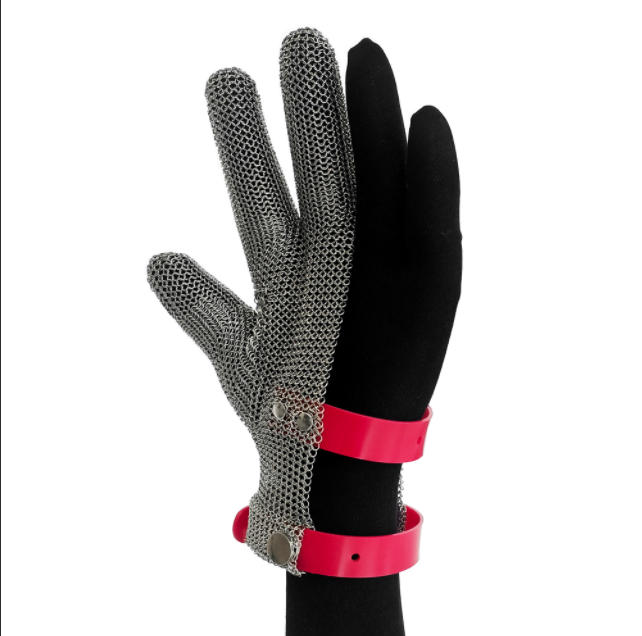
When selecting non-slip grip butcher gloves, several features should be evaluated to ensure the product meets the specific requirements of the application. The coating type, coverage area, cut resistance level, and glove configuration all affect performance and suitability.
Coating Material – The coating material should be matched to the operating conditions. For applications with heavy oil or fat exposure, foam nitrile coating is recommended for its resistance to oils and its ability to maintain grip on wet surfaces. For dry or light-duty applications, PU coating provides better tactile sensitivity. For seafood processing, the coating should resist degradation from salt exposure and frequent washing.
Coating Coverage – The area of the glove covered by the coating affects grip performance and dexterity. Full palm and fingertip coverage provides the most grip but may reduce breathability. Palm-only coverage maintains grip at critical contact points while allowing the back of the hand to breathe. Coating coverage should balance grip performance with comfort requirements for the specific application.
Cut Resistance Level – The cut resistance level should match the hazard assessment for the application. For high-risk boning and breaking tasks, A9-rated gloves provide maximum protection. For trimming and portioning, A5 through A7 gloves provide adequate protection while maintaining dexterity. Non-slip grip features are available across cut resistance levels, allowing selection of the appropriate protection.
Comfort and Fit – Proper fit is essential for effective protection. Gloves that fit poorly may compromise grip or cause discomfort during extended wear. Adjustable wrist closures help secure the glove in position, and breathable materials reduce moisture accumulation that can affect grip.
Non-slip grip butcher gloves are often used in combination with other personal protective equipment for comprehensive hand protection. In meat processing operations, the optimal approach is to use different glove types on each hand to match protection to the specific risks.
A cut-resistant fabric glove with non-slip grip is typically worn on the knife hand, where dexterity and grip are essential for controlling the cutting tool. A metal mesh glove is worn on the off-hand, where maximum cut protection is needed for holding materials and the risk of blade contact is higher. This combination provides protection without sacrificing the grip control required for efficient work.
Non-slip grip features on the knife-hand glove are particularly important because this hand requires the most control. The grip coating allows the worker to maintain a secure hold on the knife even when hands are wet or oily. Without proper grip, the knife can slip, increasing the risk of injury to both the worker and the material being processed.
For cotton knit liners worn under protective gloves, grip is less of a concern, as the primary function is warmth and comfort. However, some liners feature textured surfaces or grip-enhancing treatments to improve overall grip when worn under other gloves.
Proper maintenance extends the service life of non-slip grip butcher gloves and maintains grip performance. Coatings can degrade over time with exposure to chemicals, abrasion, and frequent washing. Following the manufacturer's care instructions helps preserve the coating and grip characteristics.
Non-slip grip gloves used in food processing must be cleaned and sanitized regularly. Cut-resistant fabric gloves with foam nitrile coatings can typically be machine washed, making cleaning efficient and consistent. The manufacturer's recommendations for wash temperature, detergents, and drying methods should be followed to prevent coating degradation.
Chainmail gloves with rubber or PVC coatings require careful cleaning to maintain both hygiene and grip performance. The coating should be inspected regularly for wear or damage, and gloves with significant coating wear should be replaced to maintain grip performance. The chainmail itself can be cleaned using standard food processing sanitation protocols, with attention to the coated areas.
Coating degradation is a sign that the glove is reaching the end of its service life. When the coating becomes smooth, cracked, or worn thin, grip performance is reduced. Workers should be trained to recognize signs of coating wear and to report any gloves that no longer provide adequate grip.
Non-slip grip butcher gloves are essential for maintaining control and safety in meat processing, seafood processing, and other applications involving wet or slippery conditions. Specialized coatings such as foam nitrile provide traction on oily and wet surfaces, enabling secure handling of both materials and tools. Different coating materials and coverage patterns are available to suit different applications, with foam nitrile being the most common choice for demanding meat processing environments.
When selecting non-slip grip butcher gloves, the coating material, coverage area, cut resistance level, and comfort features should be matched to the specific requirements of the application. The optimal approach in meat processing is to use non-slip grip cut-resistant gloves on the knife hand and chainmail gloves on the off-hand, combining dexterity with maximum protection.
Hebei Linchuan Safety Protective Equipment Co., LTD manufactures chainmail and cut-resistant butcher gloves with various features for meat processing and food service applications. The company's products are certified to applicable safety standards and are used in abattoirs, food processing, and the fish and oyster industries.