
Author: Site Editor Publish Time: 2026-06-01 Origin: Site


A butcher glove is a specialized hand protection device designed to prevent laceration injuries during meat cutting, deboning, trimming, and processing operations. The glove forms a protective barrier between the worker's hand and the sharp blades, knives, and cutting tools used continuously in butchering work. Unlike standard work gloves made from fabric or leather, butcher gloves are engineered with materials and construction methods specifically intended to resist cutting forces that would easily penetrate conventional hand protection.
The fundamental purpose of a butcher glove is to reduce the probability and severity of hand injuries in an environment where sharp blades are in constant use. Butchers, meat cutters, and processing plant workers handle knives for extended periods, often performing hundreds or thousands of cutting motions per shift. The non-knife hand frequently positions and stabilizes the meat product being cut, placing it directly in the potential blade path. A momentary lapse in attention, an unexpected movement of the product, or a blade deflection can result in contact between the knife edge and the stabilizing hand. A properly selected and worn butcher glove provides a mechanical barrier that can prevent the blade from reaching the skin.
Butcher gloves do not replace safe knife handling practices, proper tool maintenance, or ergonomic workstation design. They function as a critical layer within a systematic approach to hand safety that includes training, supervision, and engineering controls. The glove is worn on the non-dominant hand, the hand that holds and positions the meat, while the dominant hand operates the cutting tool. This configuration protects the hand most frequently exposed to blade contact during standard butchering techniques.
The importance of butcher gloves extends beyond injury prevention to include operational considerations. Hand lacerations are among the most common recordable injuries in meat processing facilities. Each injury represents lost work time, medical treatment costs, potential regulatory reporting requirements, and impacts on workforce morale and retention. Butcher gloves contribute to reducing these incident frequencies, supporting both worker welfare and operational continuity.
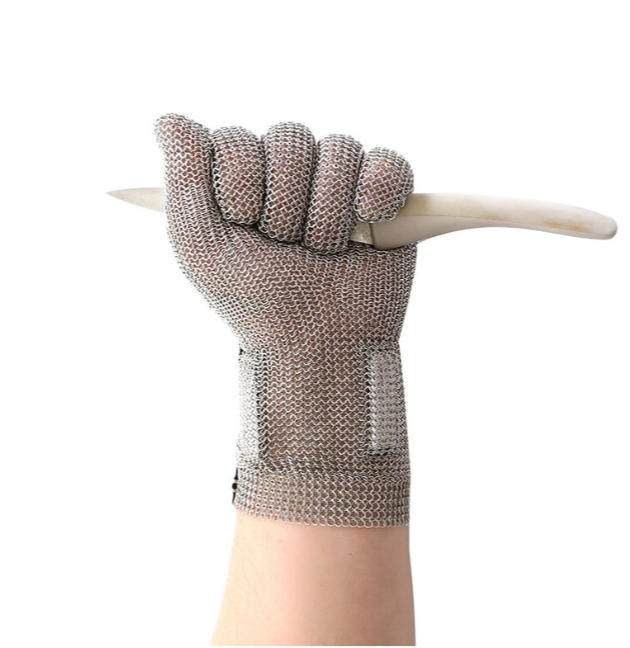
Butcher gloves are available in several material categories, each offering different balances of cut protection, durability, dexterity, and cost. Understanding the distinctions between these types supports informed selection for specific butchering tasks and work environments.
Stainless steel mesh butcher gloves represent the most durable category. These gloves are constructed from thousands of interlinked stainless steel rings, typically manufactured from grade 304 or 316 stainless steel. The rings are welded or joined into closed loops and woven together in a pattern that creates a flexible metal mesh covering the hand and wrist. Stainless steel mesh provides cut protection that does not degrade with washing, sanitization, or repeated blade contact. The mechanical structure of the metal rings resists blade penetration regardless of blade sharpness. These gloves can provide 12 to 24 months of service in typical processing environments when properly maintained. The tradeoff is weight; steel mesh gloves typically weigh between 300 and 500 grams depending on size and ring specifications, which is heavier than fabric alternatives.
High-performance polyethylene fiber gloves use gel-spun ultra-high-molecular-weight polyethylene to achieve cut resistance at substantially lower weight than steel mesh. These gloves typically weigh between 50 and 150 grams. The engineered fibers provide cut resistance through high tensile strength and low friction surfaces that cause blades to slide rather than cut. Cut resistance ratings for these gloves typically range from ANSI A2 through A6 in standard configurations. The primary limitation is durability; each blade contact can sever individual fibers, progressively reducing protection over time. These gloves are often replaced weekly or biweekly in high-use applications.
Para-aramid fiber gloves, including those made from Kevlar, provide cut protection combined with thermal resistance. These gloves suit applications where workers handle both sharp tools and hot surfaces or materials. The thermal protection capability is not necessary for ambient-temperature butchering but provides flexibility for facilities with mixed hot and cold processing areas.
Composite yarn gloves incorporate multiple materials including glass fibers, steel fibers, or ceramic particles within fabric constructions. These products achieve cut ratings from A3 through A7 while maintaining weights between 150 and 250 grams. They offer intermediate durability and dexterity characteristics between lightweight fiber gloves and heavy-duty steel mesh.
The selection decision involves balancing protection level requirements against dexterity needs, durability expectations, cleaning and sanitization compatibility, and total cost of ownership over the expected service life.
Stainless steel mesh butcher gloves deserve detailed examination because they represent the most durable and long-lasting option for sustained, high-frequency butchering operations. Their construction and material properties directly influence their protective performance.
The gloves are built from individual stainless steel rings, each measuring between 3 mm and 7 mm in diameter depending on the glove model and target protection level. Wire thickness ranges from 0.45 mm to 0.9 mm, with thicker wire providing greater tensile strength per ring but adding weight. The rings are typically joined by micro-plasma or laser welding, creating a continuous metal loop with pull-apart strength exceeding 150 Newtons. This welded construction provides substantially higher reliability than butt-joined rings that rely on spring tension for closure.
The rings are assembled in the European 4-in-1 weave pattern, where each ring passes through four neighboring rings. This pattern creates a dense mesh with approximately equal coverage in all directions while maintaining the flexibility needed for hand movement. The mesh allows natural finger flexion and grip formation while maintaining continuous metal coverage across all hand surfaces.
Stainless steel grade selection affects corrosion resistance and service life. Grade 304 stainless steel, containing approximately 18% chromium and 8% nickel, serves as the standard material for general butchering applications. It resists corrosion from water, blood, animal fats, and standard cleaning chemicals. Grade 316 stainless steel, with 2% to 3% molybdenum added, provides enhanced resistance to chloride-induced pitting corrosion and is appropriate for facilities using aggressive sanitizers or processing in salt-rich environments.
The mesh structure withstands the cleaning and sanitization protocols required in meat processing facilities. Hot water washing at temperatures between 60°C and 80°C, detergent cleaning, pressure spraying, and sanitizer application do not degrade the protective properties. This compatibility with rigorous hygiene requirements supports food safety compliance while maintaining worker protection.
Cut resistance ratings for stainless steel mesh butcher gloves typically range from ANSI A5 through A9, with the specific rating determined by ring diameter, wire thickness, and weave density. An A5 rating requires between 1,500 and 2,199 grams of cutting force, while an A9 rating requires 6,000 grams or greater. The high end of this range represents cut protection that few alternative materials can achieve.
Cut resistance ratings for butcher gloves follow standardized testing protocols that enable consistent comparison across products and manufacturers. Understanding these standards helps safety managers and purchasers select gloves appropriate for their specific hazard levels.
The ANSI/ISEA 105 standard used in North America defines cut resistance levels from A1 through A9. Testing uses a tomodynamometer equipped with a straight-edge blade that moves across the test specimen under controlled, increasing load. The instrument measures the distance traveled before the blade cuts through the material. The weight in grams required to achieve cut-through at a specified reference distance determines the assigned rating. Level A1 requires 200 grams or more of cutting force. Level A9 requires 6,000 grams or more. Each intermediate level represents a defined range of cutting force, with higher numbers indicating greater cut resistance.
The EN 388 standard used in European and many international markets evaluates multiple mechanical risks including abrasion, blade cut, tear, and puncture resistance. For materials with high cut resistance, the standard references ISO 13997 test methodology using a straight blade under variable load. Results report on a letter scale from A through F, with F representing the highest cut resistance at 30 Newtons or more of cutting force.
For butchering applications, the appropriate cut resistance level depends on the specific tasks performed. Heavy primal cutting with large knives and significant applied force benefits from higher protection levels, typically A6 through A9. Detailed trimming and deboning work with smaller knives and more controlled cutting motions may be adequately served by A5 through A7 gloves that provide better dexterity through smaller ring sizes and lighter construction.
The relationship between cut resistance rating and real-world protection warrants understanding. The standardized test measures cut-through under controlled laboratory conditions using a new, sharp blade at a specified speed and angle. Workplace blade contacts involve variables including blade sharpness, contact angle, impact velocity, and the specific area of glove contact. The rating provides a comparative measure of protection rather than an absolute guarantee of performance under all conditions. However, the mechanical nature of stainless steel mesh protection means that blade sharpness, which heavily influences cut-through on fiber-based materials, has limited effect on properly constructed metal mesh.
Proper fit directly affects both the protective performance and wearer acceptance of butcher gloves. A glove that fits incorrectly may leave hand areas exposed, create snag hazards, reduce dexterity, or cause discomfort that discourages consistent use.
Butcher glove sizing follows standard hand measurement conventions. The primary measurement is palm circumference at its widest point, typically across the metacarpal heads at the base of the fingers. This measurement in inches or centimeters corresponds to standard size designations from extra-small through extra-large, with some manufacturers offering double extra-large for larger hands. A properly sized glove allows approximately 5 mm of space between the fingertips and the interior end of the glove. Excess length creates material that can catch on machinery or interfere with fine motor control. Insufficient length exposes fingertips to laceration risk.
The wrist closure secures the glove and prevents movement during use. Adjustable closures using hook-and-loop fasteners or mechanical buckles accommodate different wrist sizes and allow workers to achieve a secure fit. The closure should hold the glove firmly without restricting blood circulation or creating uncomfortable pressure points. Some gloves feature extended wrist or forearm coverage for additional protection in applications where the arm may enter cutting zones.
Many workers wear thin liner gloves underneath butcher gloves. Cotton liners absorb moisture and provide thermal comfort. Synthetic moisture-wicking liners improve comfort in warm environments. The liner adds a small amount of bulk that should be accounted for in size selection. Workers should try on butcher gloves with the intended liner to verify proper fit.
Stainless steel mesh butcher gloves require minimal break-in time compared to leather gloves. The mesh adjusts to hand contours within the first hours of use as rings settle under tension forces. Workers should report any pinching, sharp edges, or uncomfortable pressure points immediately upon first wearing, as these indicate manufacturing defects requiring correction rather than normal break-in characteristics.
Regular fit verification should be part of the glove inspection process. Weight changes, different liner selections, or glove damage can affect fit over time. A glove that fit properly when issued may not maintain proper fit throughout its service life if the mesh becomes distorted or the closure system wears.
Butcher gloves used in meat processing environments must support food safety requirements through effective cleaning and sanitization. The cleaning protocols differ based on glove material, with stainless steel mesh offering the greatest compatibility with aggressive cleaning methods.
For stainless steel mesh butcher gloves, daily cleaning begins with removal of gross organic material. Blood, fat, tissue particles, and bone fragments should be removed promptly after use. Immediate pre-rinsing prevents organic material from drying and adhering to ring surfaces. Dried residues become progressively more difficult to remove and can harbor bacterial growth. Scraping tools or stiff-bristled brushes assist in dislodging material trapped between rings.
Automated washing systems in larger facilities process gloves through spray cabinets or continuous tunnel washers. These systems deliver heated water at temperatures between 60°C and 80°C combined with food-grade detergent formulations. Spray pressures between 500 and 800 psi force cleaning solution through the mesh structure, reaching all ring surfaces. Manual washing in smaller operations follows similar principles using sink basins, detergent solution, and systematic brushing.
Thorough rinsing after washing removes detergent residues that could cause localized corrosion on stainless steel surfaces. This concern increases with chlorinated water supplies, as chloride ions can initiate pitting corrosion given sufficient concentration and contact time. Final rinse water should meet potable water quality standards.
Sanitization uses approved food-contact sanitizers including quaternary ammonium compounds, peracetic acid solutions, or hot water immersion at temperatures above 77°C. Contact time must meet the sanitizer manufacturer's specified duration for effective pathogen reduction. Stainless steel mesh tolerates these sanitizers without material degradation.
Drying completes the hygiene cycle. Gloves should be hung on racks in ventilated areas to allow gravity drainage and air circulation. Forced-air drying accelerates the process. Storage on dedicated racks rather than in piles or enclosed containers prevents moisture entrapment that could initiate corrosion.
For fabric-based butcher gloves, manufacturer cleaning instructions should be followed carefully. Many fiber gloves can withstand limited washing cycles, but repeated high-temperature washing and chemical exposure may degrade both the base material and any protective coatings. This limited wash durability is a key distinction from stainless steel mesh options.
Regular inspection of butcher gloves supports worker safety by identifying damaged equipment before failure occurs. A systematic approach to inspection and replacement also supports budget planning and inventory management.
Pre-use inspection by the worker should become an automatic routine each time a glove is donned. For stainless steel mesh gloves, the worker should run the bare hand inside the glove to feel for broken rings, sharp edges, or irregularities. A visual scan of the palm, fingers, and thumb areas checks for visible gaps, distorted rings, or corrosion spots. The wrist closure should be tested for secure function. Workers who identify any damage should remove the glove from service immediately and obtain a replacement.
Scheduled detailed inspections at defined intervals, typically monthly, provide more thorough evaluation. These inspections use good lighting and magnification when needed to examine ring integrity in high-wear areas. The palm surface where most blade contact occurs, the index finger area, and the thumb crotch where movement concentrates stress receive particular attention. Weld quality may be checked on a sample basis. Gaps between rings are measured against original specifications. Inspection findings are documented in maintenance records.
For fabric-based butcher gloves, inspection focuses on visible cuts, frayed areas, worn coatings, and seam integrity. Any visible damage typically indicates the glove has reached end of service life and should be replaced.
Service life for stainless steel mesh butcher gloves varies by application intensity. Single-shift operations with daily cleaning and proper storage often achieve 12 to 24 months of glove service. High-volume, multi-shift operations may see replacement intervals of 6 to 12 months. Retail butcher shops frequently exceed 24 months. Fabric-based gloves in similar applications typically require replacement weekly or biweekly, though this varies with use intensity and glove quality.
Replacement triggers for stainless steel mesh gloves include multiple broken rings concentrated in one area, visible corrosion pitting that reduces wire cross-section, mesh distortion creating gaps larger than original specifications, wrist closure failure, or any damage causing wearer discomfort or reduced dexterity. Proactive replacement based on scheduled intervals provides more consistent protection than waiting for obvious failure.
Selecting butcher gloves based solely on initial purchase price can lead to higher overall costs when replacement frequency, durability, and operational factors are considered. Total cost of ownership analysis provides a more complete basis for procurement decisions.
The initial purchase price of a stainless steel mesh butcher glove is typically higher than that of a fabric-based cut-resistant glove. However, the stainless steel glove may provide 12 to 24 months of service in typical applications, while fabric gloves in the same environment may require weekly or biweekly replacement. Over a 12-month period, a single stainless steel glove replaces approximately 26 to 52 pairs of disposable fabric gloves.
The cost calculation should include the purchase price of all gloves consumed over the analysis period, plus associated costs. Shipping and freight charges apply to each replacement order. Procurement administrative time covers purchase order processing, receiving, and distribution. Inventory carrying costs include storage space and working capital tied up in glove stock. Disposal costs may apply, particularly if contaminated gloves require special handling.
Operational factors also affect total cost. Time spent by workers changing gloves represents productive time lost, though this is typically minimal for individual glove changes. More significantly, the consistent protection provided by a durable glove versus the potentially degrading protection of a fabric glove approaching replacement may affect injury rates and associated costs.
Indirect costs of hand injuries reinforce the value of reliable cut protection. A single hand laceration requiring medical treatment generates direct medical costs plus indirect costs including lost work time, reduced productivity during recovery, potential temporary staffing, incident investigation time, and regulatory reporting requirements. The total cost of a recordable hand injury can substantially exceed the cost of equipping an entire department with high-quality butcher gloves.
For operations with sustained, high-frequency cutting work, total cost of ownership analysis typically favors durable stainless steel mesh gloves despite their higher initial price. For operations with intermittent cutting tasks or lower cut hazards, the balance may shift toward fabric alternatives with lower initial cost and adequate durability for the usage intensity.
Butcher gloves operate within occupational safety regulatory frameworks that establish employer responsibilities for hand protection. Compliance with these requirements supports both worker safety and regulatory standing.
In the United States, OSHA regulations at 29 CFR 1910.138 require employers to select and require employees to use appropriate hand protection when workplace hazards are present. The employer must perform a hazard assessment to identify hand hazards and select gloves appropriate to those hazards. The general duty clause of the OSH Act extends employer obligation to all recognized hazards causing or likely to cause serious harm. Selection of butcher gloves tested to ANSI/ISEA 105 standards provides evidence of reasonable diligence.
European Union Regulation 2016/425 governs personal protective equipment. Butcher gloves providing cut protection against risks that may cause irreversible injury fall under Category III, requiring conformity assessment by a notified body. The CE marking with the four-digit notified body identification number indicates compliance. A declaration of conformity provides formal documentation.
Canadian provincial regulations reference CSA Z94.1 standards. Australian and New Zealand requirements operate under AS/NZS 2161. Employers should verify applicable requirements for their jurisdiction and maintain current documentation.
Documentation requirements include the written hazard assessment, specifications for selected gloves, manufacturer certifications and test reports, employee training records, and glove issuance and inspection logs. These records demonstrate program rigor during regulatory inspections and support incident investigations.
Training programs must address the specific butcher gloves provided to workers. Content should cover glove limitations, proper donning and doffing, pre-use inspection, cleaning and storage requirements, and the continued importance of safe knife handling practices. Workers should understand that gloves provide a last line of defense and do not substitute for safe work procedures.
The quality and reliability of butcher gloves depend on manufacturing standards that purchasers should evaluate when selecting a supply partner. A systematic supplier assessment supports consistent product quality and reliable supply.
Quality management systems provide the foundation for consistent manufacturing. ISO 9001 certification indicates structured processes for material control, production monitoring, inspection, and corrective action. Manufacturers should demonstrate material traceability connecting finished gloves to raw material sources, with certificates identifying the specific materials used.
Testing capabilities distinguish manufacturers who verify product performance from those who rely on supplier claims. Cut resistance testing to recognized standards, weld integrity testing for steel mesh gloves, and dimensional inspection should be performed on production samples. Manufacturers should provide test reports for purchased batches.
Hebei Linchuan Safety Protective Equipment Co., LTD maintains production operations for butcher gloves with quality control processes that support consistent product performance. Material traceability systems, testing protocols, and inspection procedures verify that products meet labeled protection levels.
Supply reliability factors include production capacity, lead time consistency, and ability to accommodate volume fluctuations. Buyers should understand typical order-to-shipment timelines and minimum order quantities. Clear communication about delivery schedules supports inventory planning.
Technical support after purchase contributes to long-term partnership value. Guidance on cleaning procedures, inspection criteria, expected service life, and proper sizing helps users maximize glove performance. Responsive handling of warranty claims and technical inquiries indicates commitment beyond the initial sale.
Customization options may include specific sizes, protection levels, closure types, and packaging configurations. Manufacturers with engineering capability to develop custom solutions provide value for operations with specialized requirements.