
Author: Site Editor Publish Time: 2026-08-13 Origin: Site


Selecting the correct size for a chainmail apron is essential for ensuring both effective protection and worker comfort. Unlike textile aprons that can stretch or adapt to the wearer, chainmail aprons are constructed from interlocking stainless steel rings with limited flexibility. An apron that is too small may leave parts of the torso exposed to cutting hazards, while an apron that is too large may be uncomfortable, interfere with movement, or create unnecessary weight burden during extended shifts. Understanding the sizing process is critical for safety managers and procurement professionals making purchasing decisions for their facilities.
Multiple manufacturers offer chainmail aprons in a range of sizes to accommodate different body types. However, sizing approaches vary across brands and product models, requiring careful attention to the specific measurement requirements for each product. This guide provides a comprehensive overview of chainmail apron sizing methods, including key measurements, size charts, weight considerations, and practical fitting recommendations.
Hebei Linchuan Safety Protective Equipment Co., LTD manufactures stainless steel chainmail aprons for industrial and food processing applications. Our aprons are available in a range of sizes and can be customized for specific body measurements upon request. This guide reflects our technical knowledge of chainmail construction and sizing to help customers select the appropriate apron for their workers.
Correct sizing of a chainmail apron requires accurate body measurements. The two primary measurements used by most manufacturers are the chest or waist circumference and the user's height. Secondary considerations include shoulder width and preferred apron length for specific applications.
Chest or Waist Circumference – This is the most critical measurement for determining apron width. Some manufacturers specify using the chest circumference at the widest point. Others recommend measuring the waist or chest at the widest point, whichever is larger. The measurement provides the circumference that the apron must accommodate across the torso. A measurement of 90 to 120 centimeters is typical for medium and large sizes.
User Height – Height determines the required apron length. Taller users need longer aprons to ensure adequate coverage of the torso and upper legs. Height ranges such as 158 to 190 centimeters for medium sizes and 165 to 220 centimeters for large sizes are common in sizing tables. Some manufacturers also provide a maximum user height for each size, with the understanding that the apron should cover the critical areas regardless of the user's exact height.
Waist/Chest Measurement – In addition to height, chest or waist circumference is the other critical measurement. For example, a size Small apron may be suitable for users with a chest or waist measurement under 88 centimeters, while size Extra Large accommodates measurements of 110 centimeters or more. These ranges vary by manufacturer, and customers should refer to the specific size chart for the product they are purchasing.
Shoulder Width – Shoulder width affects how the apron's shoulder straps fit. An apron that is too narrow at the shoulders may pull on the wearer's neck or cause the straps to dig into the shoulders. An apron that is too wide may not provide adequate coverage of the torso. Some manufacturers include shoulder width in their sizing specifications, while others assume that the apron's adjustable straps will accommodate different shoulder widths.
Preferred Apron Length – The desired coverage area affects the apron length selection. Some users may prefer longer aprons that extend to mid-thigh for additional protection of the upper legs. Others may prefer shorter aprons that terminate at the waist for better mobility. The user's height and the specific hazards present in the work environment should guide this preference.
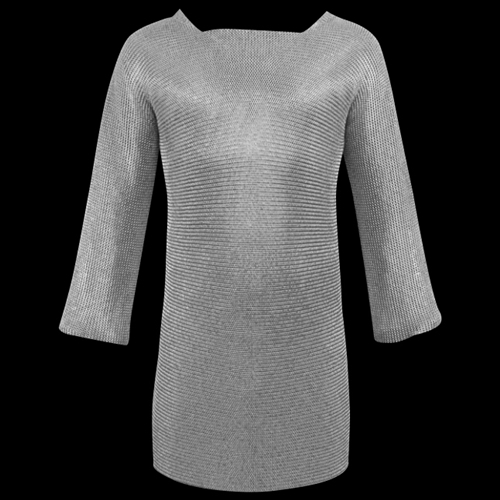
Chainmail aprons are available in standard size ranges that correspond to specific body measurements. While exact ranges vary by manufacturer, the following size classifications are common in the industry.
Small Size – Small chainmail aprons are typically suitable for users with a chest circumference up to 88 centimeters and heights up to 175 centimeters. These aprons offer the lightest weight and are appropriate for smaller-framed workers. In some product lines, size Small corresponds to a chest or waist measurement under 88 centimeters. The Small size is also suitable for users of average build.
Medium Size – Medium chainmail aprons accommodate chest circumferences of 88 to 100 centimeters and heights up to 185 centimeters. This size is the most commonly ordered and fits the majority of adult workers of average height and build. For example, one manufacturer's sizing table lists the Medium size as suitable for users with a chest or waist measurement from 88 to 100 centimeters and heights from 165 to 185 centimeters.
Large Size – Large chainmail aprons fit chest circumferences of 100 to 110 centimeters and heights up to 195 centimeters. These aprons are appropriate for taller or larger-framed workers. In one product line, size Large corresponds to a chest or waist measurement from 100 to 120 centimeters and heights up to 195 centimeters.
Extra Large Size – Extra Large aprons accommodate chest circumferences of 110 centimeters or more and heights over 195 centimeters. These aprons are designed for particularly tall or broad-shouldered workers. Some manufacturers offer even larger sizes or custom options for extreme measurements.
Weight Variation by Size – Apron weight increases with size due to the additional rings required for larger dimensions. A size Medium chainmail apron typically weighs approximately 2.5 kilograms, while a size Large may weigh 3.0 kilograms or more. Weight is an important consideration for extended wear, and some manufacturers offer lighter materials such as titanium for workers who need to reduce their load.
Taking accurate measurements is essential for selecting the correct chainmail apron size. The following guidelines should be followed to ensure that measurements are reliable and consistent.
Chest or Waist Circumference – The user should stand in a relaxed, upright position with arms at the sides. A flexible tape measure should be positioned at the widest point of the chest or torso. For users with a larger waist than chest, the waist measurement should be used. The tape measure should be snug against the body but not compressing the skin. The measurement should be recorded in centimeters at the point where the tape meets.
Height Measurement – The user should stand with feet flat on the floor and back against a wall or door frame. A straight edge or flat ruler should be placed on top of the head, perpendicular to the wall. The mark on the wall should be measured from the floor. The height should be recorded in centimeters. Shoes should be removed for a more accurate measurement.
Shoulder Width Measurement – If the manufacturer requires shoulder width, the user should stand with arms relaxed at the sides. The distance between the outer edges of the shoulders should be measured across the back. The measurement should be taken at the widest point of the shoulders, typically at the bone at the top of the shoulder joint.
Desired Coverage Area – The user should identify the desired apron length based on the work being performed. For tasks requiring maximum protection, the apron should extend to mid-thigh. For tasks with higher mobility demands, a shorter apron may be preferred. The desired length should be measured from the middle of the chest to the desired lower edge.
Many chainmail aprons include adjustable features that allow the fit to be customized for individual users. These features provide flexibility even when the standard sizing is not a perfect match.
Adjustable Shoulder Straps – Most chainmail aprons have adjustable shoulder straps that allow the user to modify the apron's position on the torso. The straps typically use fasteners such as buckles or clips to change the length. Proper strap adjustment ensures that the apron is positioned correctly and does not hang too low or too high on the body.
Waist Belts and Ties – Many chainmail aprons include waist belts or ties that secure the apron around the midsection. These belts help position the apron properly and distribute the weight more evenly across the waist and hips. The waist belt should be snug but not tight, allowing for comfortable movement while keeping the apron in place.
Customizable Length and Width – Some manufacturers offer custom sizing for chainmail aprons. Users with measurements that do not fall within standard size ranges can request aprons that are longer, wider, or adjusted in other ways. Custom sizing is particularly useful for large workers, workers with unusual body proportions, or applications with specific coverage requirements.
Additional Hanging Loops – Some chainmail aprons include additional hanging loops that allow the apron to be adjusted to the desired length. The loops can be moved to different rings in the upper section of the apron, changing the length of the apron without requiring custom manufacturing. This feature provides some flexibility for users who fall between standard sizes.
The sizing guidelines provided by manufacturers are based on average body proportions. Users with body types that differ from the average may need to make adjustments to their sizing selection.
Tall Users – Tall users should prioritize height measurements when selecting a chainmail apron. An apron that is too short will leave the lower torso and upper legs exposed to cutting hazards. For tall users, the length measurement should be the primary sizing factor, with width being a secondary consideration. Some manufacturers offer specific sizing categories for tall users with extended length.
Broad-Shouldered Users – Users with broad shoulders or a wide chest should prioritize width measurements. An apron that is too narrow at the shoulders will not provide adequate coverage and may cause the apron to sit incorrectly on the torso. For broad-shouldered users, the chest or shoulder width measurement should be the primary sizing factor.
Users with a Large Waist – For users with a waist measurement significantly larger than the chest measurement, the waist measurement should be used as the primary width dimension. The apron must fit comfortably around the waist for weight distribution and secure positioning. Some manufacturers recommend using the larger of the two measurements for sizing.
Shorter Users – Shorter users should ensure that the apron does not extend too far down the legs, as this could restrict movement and create a tripping hazard. If the apron length exceeds the user's height-to-leg ratio, it may be necessary to select a shorter apron or to adjust the shoulder straps to raise the apron higher on the torso.
Users of Different Builds – Users with athletic or larger builds may need to consider both the chest or waist circumference and the overall height when selecting a size. The fit should allow freedom of movement without compromising coverage. Adjustable features can help compensate for small variations between the user's measurements and the manufacturer's size ranges.
Women may require specific considerations when selecting chainmail aprons due to differences in body proportions compared to men. Women typically have a different chest-to-waist ratio and may have narrower shoulders relative to their height.
Chest Measurement – Women should measure the chest at the fullest point, typically around the bust. This measurement is used to determine the apron width and should be taken with the appropriate undergarments that will be worn while working.
Waist Measurement – For women with a larger waist than chest, the waist measurement may be more relevant for apron sizing. The waist measurement should be taken at the narrowest point of the midsection, typically around the navel.
Shoulder Width – Women may have narrower shoulders than men of the same height and may benefit from trying or adjusting straps to ensure the apron does not pull or slide. The shoulder straps should be positioned to rest comfortably on the shoulders without digging in.
Height – Height measurement for women follows the same procedure as for men. The apron length should cover the torso appropriately without extending too far down the legs. Some manufacturers offer women-specific sizes or unisex sizes that accommodate different body proportions.
Bust Adjustments – Some chainmail aprons are designed with additional coverage in the chest area or are available in women-specific cuts. These aprons provide a better fit for the user and may reduce the need for custom adjustments.
For critical applications, trying the apron on before purchase is recommended. When trying on a chainmail apron, the user should assess how the apron feels and whether it provides the intended coverage. Key adjustments that may be needed include strap modifications, length adjustments, or size changes. The apron should feel secure but not tight; there should be enough room to move comfortably but not enough for the apron to shift significantly during movement.
If there are any issues with the apron's fit, the user should check the size chart and consider whether a different size or alternative design might be more suitable. A chainmail apron that is too tight may restrict movement and can cause chafing. An apron that is too loose may shift during use, potentially exposing areas of the torso. The apron should stay in place during typical work movements such as bending, reaching, twisting, and lifting. If the apron shifts significantly during these movements, the fit or adjustment may need to be improved.
The following criteria should be evaluated for proper fit:
Comfort – The apron should not cause pressure points, chafing, or restricted movement. The weight should be distributed evenly across the shoulders and waist. The straps should not dig into the shoulders.
Coverage – The apron should cover the torso from the chest to the desired lower level. The sides should cover the area between the front and back of the body. The apron should not leave gaps when the user moves.
Weight Distribution – The weight of the apron should be supported primarily by the waist belt, with the shoulder straps providing secondary support. The weight should not be concentrated on the shoulders alone.
Mobility – The user should be able to move the arms freely and bend comfortably without the apron restricting movement. The apron should not catch on equipment or furniture during normal movement.
The apron sizing may vary depending on the specific task and required protection level. Food processing applications may require longer aprons for complete coverage, while maintenance or fabrication tasks may prioritize lighter weight and mobility. Users who will wear the apron for extended periods should prioritize comfort, which may require a larger size with better weight distribution or a lighter material such as titanium.
Meat Processing Applications – In meat processing, the apron must provide full coverage of the torso and upper legs to protect against knife slips. The apron should extend to at least mid-thigh to cover the upper leg area where slips may occur. The apron should also fit securely around the waist and shoulders to prevent shifting during cutting operations. The weight of the apron is an important consideration, as workers may wear the apron for entire shifts.
Glass Handling Applications – In glass handling, the apron protects against cuts from sharp glass edges rather than knife blades. The apron should cover the torso and upper legs, but the coverage requirements may be less extensive than in meat processing. The apron may be used intermittently rather than continuously, allowing for lighter-weight options.
Metal Fabrication Applications – In metal fabrication, the apron protects against cuts from sharp metal edges and burrs. The coverage requirements are similar to glass handling, with the apron protecting the torso from sharp edges that may be contacted during handling operations. The apron should be durable and resistant to abrasion from rough metal surfaces.
Research and Laboratory Applications – In research settings, the apron may be used for specific procedures rather than continuous wear. The sizing should prioritize comfort and flexibility for the specific tasks being performed, with the understanding that the apron may be worn for shorter periods.
Avoiding common sizing mistakes ensures that workers receive the protection they need without unnecessary cost or discomfort.
Mistake 1: Choosing Based on Height Alone – Relying solely on height is insufficient because it does not account for body width or shoulder size. A tall but slender worker may need a different size than a tall but broad-shouldered worker. Both height and width measurements should be considered together.
Mistake 2: Choosing Too Large for Comfort – Selecting a larger size than needed may seem comfortable initially, but the apron may shift during work, creating gaps in protection. A larger apron also carries additional weight, which can cause fatigue over time. A snug but not tight fit is preferred.
Mistake 3: Choosing Too Small for Weight Savings – Opting for a smaller size to reduce weight may leave the torso exposed to cutting hazards. The apron must cover the intended area and cannot be smaller than the user's torso width. Proper protection must not be sacrificed for weight reduction.
Mistake 4: Ignoring Adjustable Features – Failing to adjust the shoulder straps and waist belt can result in poor fit and discomfort, even if the correct size is selected. Users should adjust the straps and belt to achieve a secure and comfortable fit before assuming that a different size is required. The apron should be positioned correctly before evaluating the fit.
Mistake 5: Not Measuring with Worn Clothing – Measurements should be taken wearing the clothing that will be worn under the apron. Different thicknesses of clothing can affect the fit, so the measurement should be taken with the workwear that will be used. The apron should accommodate the user's typical layers.
Selecting the correct size for a chainmail apron requires accurate body measurements and careful attention to the manufacturer's sizing guidelines. The two primary measurements are chest or waist circumference and user height. Secondary considerations include shoulder width and desired apron length. Users should measure carefully, following the manufacturer's guidelines, and consider their body type and work requirements when selecting a size.
When fitting a chainmail apron, the user should evaluate comfort, coverage, weight distribution, and mobility. The apron should fit securely but not tight, with adjustable straps and belts used to achieve a comfortable and protective fit. If the standard sizes do not provide a suitable fit, users should consider custom sizing options, which are available from some manufacturers.
Hebei Linchuan Safety Protective Equipment Co., LTD manufactures stainless steel chainmail aprons in a range of standard sizes and offers custom sizing for users with specific measurement requirements. Our technical staff can assist with sizing selection and provide guidance on achieving a proper fit for workers in various applications.
>