
Author: Site Editor Publish Time: 2026-08-24 Origin: Site


For professionals in meat processing, butchery, seafood handling, and food service, protecting the hands is often the primary focus of personal protective equipment. However, the torso—including the chest, abdomen, and upper legs—faces significant cut and stab hazards during cutting operations. A chainmail apron addresses this gap by extending cut protection beyond the hands to cover the body's vital areas. Made from interlocking stainless steel rings, these aprons provide a physical barrier against knife slips and blade contact that can cause serious injuries during food processing work.
When working with knives and sharp tools, hand protection alone is often not sufficient. Chainmail aprons provide reliable torso protection in food processing environments, safeguarding vulnerable areas such as the chest, abdomen, and upper body against cut and stab injuries. In food and meat processing operations, these protective solutions are a key component of a holistic safety concept, helping reduce the risk of serious injuries while ensuring controlled and safe workflows.
Hebei Linchuan Safety Protective Equipment Co., LTD is a manufacturer of chainmail aprons based in Shijiazhuang, China. The company produces stainless steel chainmail aprons for meat processing, food service, and industrial applications, with products certified to EN 1082-1 and EN ISO 13998 standards. Our aprons are made from SS 316 stainless steel with a ring size of 3.81 millimeters, providing extensive coverage of the chest, torso, and legs. This guide examines the features, applications, and selection criteria for chainmail aprons.
A chainmail apron is a protective garment constructed from interlocking stainless steel rings that form a flexible metal mesh. The apron is designed to be worn over clothing or workwear and provides cut and stab protection for the torso during cutting operations. Unlike textile aprons that rely on material strength, chainmail aprons use a structural barrier that a blade must either break or deform to penetrate.
The term chainmail apron encompasses different coverage configurations. Standard aprons protect the chest and abdominal area, while chainmail boleros provide additional shoulder and upper arm protection. Some aprons extend to cover the upper legs, providing protection for the crutch area where major blood vessels are located.
Chainmail aprons are distinguished from leather aprons by their superior cut protection. A leather apron provides minimal resistance against a sharp knife, while a chainmail apron can achieve ANSI cut protection ratings from A3 through A9 depending on the ring gauge and weave density. The apron's metal construction provides protection that does not degrade over time, unlike leather which can dry out, crack, or become stiff.
Key features of chainmail aprons include stainless steel construction for resistance to cuts and corrosion, flexible design allowing freedom of movement, adjustable straps and harness for a secure fit, and easy cleaning with full washability and suitability for sterilization processes.
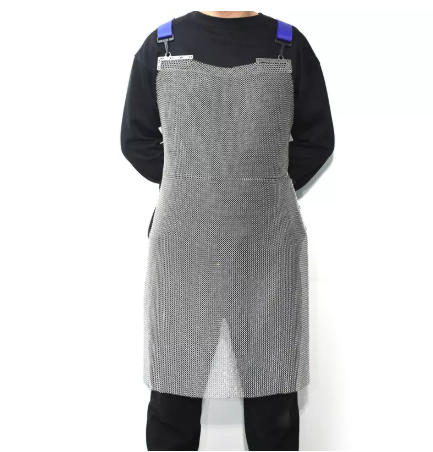
Chainmail aprons are manufactured with specific technical parameters that determine their protective properties and suitability for different applications. Understanding these specifications is essential for selecting the appropriate product.
Material Composition – Aprons are manufactured from stainless steel grades 304 or 316. Grade 304 provides standard corrosion resistance and strength for general applications in meat and food processing. Grade 316 offers superior corrosion resistance, particularly against chlorides and acids, making it suitable for seafood processing and environments with salt or chemical exposure. Aprons may also be made from galvanized carbon steel as a cost-effective alternative for applications where corrosion is not a primary concern.
Ring Specifications – The protective properties of a chainmail apron depend on the ring dimensions and weave density. Standard ring dimensions include wire diameter, inner diameter, and outer diameter. Smaller ring diameters and tighter weaves provide higher cut resistance because there are fewer gaps for a blade to penetrate. Aprons with welded ring construction provide greater strength and durability than butted rings.
Coverage Area – Chainmail aprons are available in various coverage configurations. Standard aprons cover the chest and abdomen. Extended length aprons provide additional coverage for the upper legs and crutch area. Boleros provide coverage for the shoulders and upper arms. The coverage area should be matched to the specific hazards present in the application.
Weight – The weight of a chainmail apron varies by size, coverage area, and ring gauge. Standard aprons typically weigh between 2.5 and 3.5 kilograms, while larger aprons with extended coverage may weigh up to 5 kilograms. The weight should be considered in relation to the worker's physical capabilities and the duration of wear.
Harness and Straps – Aprons are equipped with adjustable shoulder straps and waist belts that distribute the weight across the body. The harness system should allow the worker to adjust the fit for comfort and security. Some aprons feature quick-release buckles for easy removal in emergency situations.
Chainmail aprons must meet recognized safety standards to be classified as personal protective equipment. The primary standards for chainmail aprons are EN ISO 13998 and EN 1082-1.
EN ISO 13998 – This is the international standard for aprons, trousers, and vests protecting against cuts and stabs from hand knives. The standard specifies requirements for design, penetration resistance, and coverage. Aprons meeting EN ISO 13998 have been tested for their ability to resist penetration by knife blades under standardized test conditions. The standard includes a Level 2 classification for aprons providing the highest level of cut and stab protection.
EN 1082-1 – This standard applies to chainmail gloves and arm guards protecting against cuts and stabs from hand knives. While primarily for gloves, the principles of construction and testing are directly applicable to aprons. Many chainmail aprons are certified to EN 1082-1 as well.
ANSI/ISEA 105 – For the US market, the ANSI/ISEA 105 standard provides cut resistance ratings from A1 to A9. Chainmail aprons typically achieve ratings in the A7 to A9 range, placing them at the highest level of protection.
Food Safety Certifications – For aprons used in food processing, FDA and LFGB certifications confirm that materials are safe for contact with food. These certifications are essential for facilities operating under food safety management systems such as HACCP.
Hebei Linchuan Safety Protective Equipment Co., LTD offers aprons that meet these certification requirements. Our chainmail aprons are approved according to DIN EN ISO 13998:2003 (Protection Level 2) and EN 1082-1, with additional FDA and LFGB food safety approvals.
Chainmail aprons provide several advantages for workers in meat processing, butchery, and food service applications. These features contribute to both worker safety and operational efficiency.
Cut and Puncture Protection – The interlocking ring structure provides reliable protection against cuts and stabs from hand knives and sharp materials. The metal rings create a physical barrier that blades cannot cut through without breaking or deforming the rings. This protection is consistent across the covered area, providing peace of mind for workers in high-risk operations.
Durability – Stainless steel construction provides resistance to tearing, abrasion, and degradation from exposure to fats, oils, and many chemicals. A chainmail apron can last for years with proper maintenance. The ability to repair damaged rings extends the service life further.
Cleanability – The metal construction provides a hygienic surface that can be thoroughly sanitized. Aprons are easily cleaned with hot water and soap and can be washed in industrial washing machines. The open ring structure allows for complete drying, reducing the risk of bacterial growth. Cleaning protocols include scrubbing with hot soapy water, rinsing, and disinfection with approved products.
Flexibility – Despite the metal construction, chainmail aprons allow freedom of movement during work. The interlocking rings flex and move with the wearer, providing comfort during extended wear. The open structure also provides breathability, reducing heat accumulation in warm working environments.
Integration with Other PPE – Chainmail aprons are designed to integrate with other personal protective equipment, including chainmail gloves and sleeves. When worn together, these components create a continuous protective barrier that eliminates gaps where blades could enter. Some apron designs include press studs or clips that attach to shoulder-length gloves, ensuring seamless coverage.
Chainmail aprons are used across a range of industries where torso cut hazards are present. The primary applications include meat processing, butchery, seafood processing, and food service.
Meat Processing and Butchery – In meat processing, workers handle animal carcasses using hand knives for boning, trimming, and portioning operations. The combination of sharp blades, force, and bone surfaces creates a high-risk environment for torso injuries. Chainmail aprons provide essential protection for the chest, abdomen, and upper legs against accidental knife slips.
Seafood Processing – In seafood processing, workers handle fish and shellfish with sharp spines and shells. The risk of stab injuries from fish spines and shell fragments, combined with knife use, creates a need for comprehensive torso protection. Chainmail aprons provide protection against both cut and puncture hazards.
Glass Handling – In glass manufacturing and recycling, workers handle sharp glass edges and fragments. Torso injuries from glass contact can be severe, and chainmail aprons provide protection against cuts from glass edges during handling operations.
Metal Fabrication – In metal fabrication, workers handle sheet metal with sharp edges. Chainmail aprons provide protection for the torso against cuts from metal edges during handling and processing.
Other Applications – Chainmail aprons are also used in textile cutting, leather processing, and paper manufacturing where sharp tools and materials create torso cut hazards. They are also used in security and law enforcement applications where cut protection is required.
Selecting the right chainmail apron requires consideration of several factors, including the specific hazards present, the user's body size, and the expected duration of use.
Hazard Assessment – The frequency and severity of cut hazards should guide the selection. For high-risk boning and breaking operations, aprons with maximum coverage and the highest cut resistance are recommended. For lighter trimming tasks, aprons with standard coverage may provide sufficient protection.
Coverage Requirements – The apron should cover all areas at risk of blade contact. Standard aprons protect the chest and abdomen, while extended aprons also protect the upper legs and crutch area. Boleros provide additional shoulder and upper arm protection for tasks involving cutting at or above chest level.
Comfort and Fit – The apron should fit properly without restricting movement. Adjustable shoulder straps and waist belts should be used to achieve a secure and comfortable fit. The weight should be distributed evenly across the shoulders and waist to reduce fatigue during extended wear.
Maintenance Considerations – The apron should be easy to clean and maintain. Stainless steel construction provides the best cleanability and resistance to corrosion. The apron should be compatible with the facility's cleaning and sanitization procedures.
Compatibility with Other PPE – The apron should be compatible with other protective equipment worn by the worker, including chainmail gloves, sleeves, and safety footwear.
Proper maintenance extends the service life of chainmail aprons and maintains their protective properties. Regular cleaning is essential for food processing applications and helps prevent corrosion.
Cleaning – Chainmail aprons should be cleaned after each use using standard food processing sanitation protocols. Recommended cleaning includes scrubbing with hot soapy water at 50 degrees Celsius, rinsing at a minimum of 82 degrees Celsius, and disinfection with an approved product. The apron should be thoroughly dried before storage to prevent corrosion.
Inspection – Aprons should be inspected regularly for signs of wear or damage. Broken rings, stretched rings, or corrosion should be addressed promptly. Any apron with significant damage should be removed from service for repair or replacement.
Repair – Broken rings in chainmail aprons can be replaced, extending the service life of the product. Factory repair programs are available from some manufacturers, providing professional repair services using original replacement rings and proper welding equipment.
Storage – Aprons should be stored in a dry, well-ventilated area when not in use. Storage in damp conditions can promote corrosion and reduce the apron's service life.
Chainmail aprons provide essential torso protection for workers in meat processing, butchery, seafood processing, and other applications involving cut and stab hazards. Constructed from interlocking stainless steel rings, these aprons offer a physical barrier against knife slips and blade contact that can cause serious injuries.
When selecting a chainmail apron, consider the specific hazards present, the coverage requirements, the user's body size, and the expected duration of use. Look for aprons that meet EN ISO 13998 and EN 1082-1 certification requirements and, for food processing applications, FDA and LFGB approvals. Proper maintenance through regular cleaning, inspection, and timely repair extends the service life of the apron.
Hebei Linchuan Safety Protective Equipment Co., LTD manufactures stainless steel chainmail aprons for meat processing, food service, and industrial applications. Our aprons are made from SS 316 stainless steel with welded ring construction, meeting EN ISO 13998 (Protection Level 2) and EN 1082-1 certification requirements with FDA and LFGB approvals. We recommend that customers consult with our technical staff to select the appropriate apron for their specific application requirements.