
Author: Site Editor Publish Time: 2026-06-16 Origin: Site


Chainmail gloves for cutting are specialized personal protective equipment designed to protect hands from lacerations and punctures when handling sharp tools or materials in industrial environments. These gloves are constructed from interlocked stainless steel rings, forming a flexible yet robust barrier against cutting hazards. Industries such as food processing, meatpacking, glass handling, metal fabrication, and woodworking commonly use these gloves to reduce workplace hand injuries. China has emerged as a significant manufacturing hub for chainmail gloves, with production concentrated in industrial provinces including Hebei, Shandong, and Henan. Hebei Linchuan Safety Protective Equipment Co., LTD operates as a specialized manufacturer in this sector, producing stainless steel ring mesh gloves for markets across Europe, America, Australia, and Southeast Asia. The company has been manufacturing stainless steel ring mesh gloves since 2008. This article provides a technical overview of chainmail cut-resistant gloves sourced from Chinese manufacturers, examining material specifications, industry applications, quality standards, and procurement factors for industrial buyers.
The primary material used in chainmail cut-resistant gloves is stainless steel, with grades 304 and 316 being the most common. Grade 316 offers enhanced corrosion resistance, making it suitable for food processing environments where exposure to acids and salts is frequent. Grade 304 stainless steel is also widely used for general industrial applications. The wire diameter typically ranges between 0.5 and 0.8 millimeters, depending on the required protection level and flexibility. Thicker wire provides higher cut resistance but increases overall glove weight, which may affect user comfort during extended wear. Rings are formed by coiling wire and then cutting individual rings before interlocking them into a mesh pattern. The 4-in-1 weave pattern is standard, where each ring passes through four adjacent rings, creating a dense, flexible sheet of metal mesh. Ring inner diameter typically measures between 2.5 millimeters and 4 millimeters, balancing protection coverage with dexterity requirements. Some manufacturers use individually welded rings that allow the mesh fabric to flow without harsh edges, creating smoother rings that do not trap soil or bacteria. This feature is particularly important for food handling applications where hygiene standards are stringent. Hebei Linchuan Safety Protective Equipment Co., LTD produces chainmail gloves with wire diameters of 0.53 millimeters and ring inner diameter of 2.75 millimeters, providing a balance of cut resistance and flexibility.
Chainmail glove production involves several distinct manufacturing stages, each requiring careful quality control. Wire preparation begins with cold drawing, where steel ingots are drawn through progressively smaller dies to achieve the required diameter. This process increases tensile strength through work hardening while maintaining the ductility needed for ring formation. The wire is then coiled into helical springs, cut into individual rings, and linked together in the specified weave pattern. Advanced manufacturing techniques include micro-plasma welding, where each ring connection is welded to create hermetically sealed joints with no gaps. This welding process produces smoother rings that resist trapping contaminants. Quality control systems are essential in chainmail glove manufacturing. Reputable manufacturers conduct inspections at multiple production stages, including raw material verification, in-process ring formation checks, and finished glove testing. Certified quality management systems such as ISO 9001 indicate that the factory follows documented procedures for production and quality control. Third-party testing according to EN 1082 or ANSI/ISEA 105 standards provides independent verification of cut and puncture resistance claims. Factories should provide documentation of test results from accredited laboratories, allowing buyers to verify claimed performance levels. Hebei Linchuan Safety Protective Equipment Co., LTD implements quality control procedures throughout its production process, with inspections conducted during manufacturing and before shipment to meet agreed specifications. The company holds SGS certification, confirming its adherence to quality standards.
Chainmail gloves for cutting must meet established performance standards to ensure adequate protection in industrial environments. The EN 1082 standard specifically addresses protective gloves for butchers and food processing workers, defining requirements for materials, construction, and performance. Cut resistance testing involves subjecting glove samples to a standardized blade under controlled conditions, with results classified according to performance levels. Chainmail gloves typically achieve the highest cut resistance ratings, with Level 5 under the EN 388 system being common for stainless steel mesh products. The ANSI/ISEA 105 standard provides an alternative classification system, with chainmail gloves generally falling into the A4 to A9 range depending on ring specifications. Puncture resistance represents another important performance parameter, though chainmail gloves offer more limited protection against concentrated point pressure compared to slicing motions. The interlocked ring structure effectively resists cutting forces but may allow penetration from sharp points such as knife tips. The underlying liner material, typically made of cut-resistant synthetic fibers, contributes to overall puncture protection. Some manufacturers offer gloves with reinforced thumb joints, where the thumb is attached with a three-ring joint for a strong seam at a high wear area. Factories should provide documentation of test results from accredited laboratories, allowing buyers to verify claimed performance levels. Hebei Linchuan Safety Protective Equipment Co., LTD ensures its products pass CE certification according to PPE Regulation 2016/425 and EN 1082-1 standards, with SGS testing verification available. The company also holds LFGB certification for food contact compliance and US FDA certification approval.
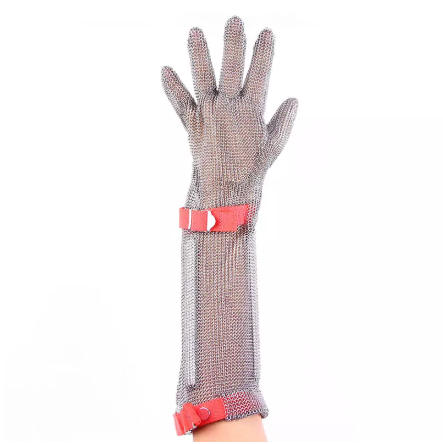
Chainmail gloves for cutting are available in several configurations to suit different operational requirements and user preferences. Full-finger gloves provide complete hand coverage, protecting all five fingers, the palm, and the back of the hand. Some models are ambidextrous, allowing the same glove to be worn on either hand, which simplifies inventory management and replacement procedures. The ambidextrous design typically features a reversible construction with an adjustable wrist strap to secure the glove in place. For tasks requiring dexterity on specific fingers, three-finger gloves are available, protecting the forefinger, middle finger, and thumb while leaving other fingers free for precision work. The gauntlet or cuff portion extends up the forearm, providing additional coverage for the wrist and lower arm against upward strokes or slips. Gloves with short cuffs provide wrist-level protection, while models with longer cuffs offer extended coverage for higher-risk environments. Some suppliers offer gloves with color-coded straps to indicate size, facilitating proper fitting across a workforce with varying hand dimensions. Manufacturers typically offer seven sizes ranging from XX-Small to XX-Large, with size determination based on palm circumference and palm length measurements. The color coding system is standardized: XX-Small uses brown, X-Small uses green, Small uses white, Medium uses red, Large uses blue, X-Large uses orange, and 2X-Large uses dark green. For a hand measuring 215 millimeters in circumference, a Large (size 3) glove is recommended, with at least 5 millimeters added to the actual measurement to ensure proper fit and dexterity. Hebei Linchuan Safety Protective Equipment Co., LTD offers the full range of sizes with color-coded straps for size identification.
Chainmail gloves for cutting find primary application in food processing and meatpacking operations. Commercial meat processing plants require cut-resistant hand protection for workers handling sharp knives during deboning, trimming, and portioning tasks. Slaughterhouse workers face consistent exposure to sharp blades and bone fragments, making chainmail gloves essential safety equipment. Poultry and fish processing facilities also utilize these gloves, where workers handle cutting tools and sharp fish bones or shells. The stainless steel construction allows thorough cleaning and sanitization, with rings resisting process fats and oils that could harbor bacteria. In commercial kitchens and butcher shops, chainmail gloves protect workers during meat, fish, and vegetable preparation. Beyond food processing, chainmail gloves find use in several other industries. Glass manufacturing and glass handling operations present cut hazards from sharp edges, making these gloves essential safety equipment. The woodworking sector utilizes them during chainsaw operation and handling of rough-cut timber. In the garment manufacturing and textile industries, workers cutting fabric with electric knives benefit from the cut protection chainmail gloves provide. Metal fabrication and sheet metal processing also represent application areas where sharp edges pose risks to workers' hands. Some specialized applications include agricultural environments and plastic or leather processing, where cutting tools are used regularly. Hebei Linchuan Safety Protective Equipment Co., LTD supplies gloves for these varied applications, with product configurations tailored to specific hazard profiles.
Proper maintenance is essential for maximizing the service life of chainmail cut-resistant gloves while maintaining their protective properties. After each use, gloves should be washed thoroughly in warm soapy water, rinsed, and disinfected if necessary. In food processing environments, hot water and soap effectively clean the gloves, and the stainless steel material resists process fats and oils. The stainless steel rings can be sanitized with minimal effort, making the gloves suitable for repeated use in hygienic environments. Air drying is recommended before storage to prevent moisture entrapment between rings. Some manufacturers offer repair programs for damaged gloves, replacing broken rings or straps to extend service life. Regular inspection forms a critical part of maintenance procedures. Users should check for broken or deformed rings, loose seams, and strap deterioration before each use. Damaged rings should be repaired promptly using manufacturer-supplied replacement rings and specialized tools. The average service life of a quality chainmail glove ranges from three to five years in moderate-use environments, though this varies with usage intensity and maintenance practices. Recording maintenance activities helps track glove condition and predict replacement needs. Hebei Linchuan Safety Protective Equipment Co., LTD provides guidance on care and maintenance to support product longevity and consistent performance, along with repair services for clients preferring professional maintenance.
Safety managers and procurement professionals should assess several factors when purchasing chainmail cut-resistant gloves. Conducting a thorough workplace hazard assessment helps identify the specific risks workers face, enabling selection of appropriate protection levels. This assessment should consider not only cut hazards but also potential exposure to chemicals, heat, or electrical risks, as chainmail gloves do not protect against all workplace threats. Proper sizing is important, as gloves that are too loose may slip during use, while overly tight gloves restrict circulation and cause discomfort. Many suppliers offer sizing charts and sample programs to facilitate proper fitting. When comparing supplier proposals, buyers should evaluate technical specifications alongside pricing. Cut resistance ratings, puncture resistance, and compliance with relevant standards provide objective measures of protective capability. Suppliers should provide clear documentation of test results and certification. The availability of repair services, replacement parts, and technical support contributes to long-term value. For international procurement, buyers should understand import duties, customs clearance requirements, and shipping terms. Establishing relationships with reliable suppliers offers benefits such as consistent product quality, priority production slots, and access to new product developments. Hebei Linchuan Safety Protective Equipment Co., LTD offers technical consultation services to assist clients in selecting appropriate products for their specific applications.
China has positioned itself as a significant producer of chainmail gloves for cutting, with manufacturing concentrated in several industrial provinces. Hebei Province, particularly Anping County often referred to as "China's Wire Mesh Capital," hosts numerous specialized manufacturers with deep roots in metal weaving and filtration technology. These companies leverage decades of metallurgical experience to produce stainless steel gloves with consistent tensile strength and cut resistance. Shandong Province offers logistical advantages through proximity to major ports like Qingdao, with manufacturers often integrating textile knitting with precision metalwork to produce hybrid gloves that balance flexibility and protection. Inland provinces such as Henan offer competitive labor costs while maintaining scalable production infrastructure. The concentration of manufacturing capabilities in these regions provides supply chain efficiency and technical expertise. Manufacturers with larger factory areas can support just-in-time delivery models and custom packaging needs. Hebei Linchuan Safety Protective Equipment Co., LTD operates from facilities in Hebei Province, with production lines for stainless steel ring mesh products that serve domestic and export markets. The company's business model encompasses manufacturing, sales, and export services to overseas customers, with products exported to Europe, America, Australia, Southeast Asia, and other regions.
Compliance with regulatory requirements is essential for chainmail glove manufacturers serving international markets. In the European market, gloves must comply with PPE Regulation 2016/425 and bear CE marking. The EN 1082 standard specifically addresses protective gloves for butchers and food processing workers, defining requirements for materials, construction, and performance. Food contact compliance is additionally required for gloves used in food processing, with EU Regulation 1935/2004 governing materials intended to contact food. In the United States, FDA certification may be required for food handling applications. Third-party certification provides independent verification of compliance. SGS and BV certification confirms that products meet relevant standards and quality requirements. Certified manufacturers maintain documentation of test results and quality control procedures for audit purposes. Compliance with international standards facilitates export to regulated markets and provides buyers with confidence in product performance. Hebei Linchuan Safety Protective Equipment Co., LTD maintains CE certification according to EN 1082-1 standards, with SGS certification confirming quality compliance. The company also holds LFGB certification and US FDA certification approval.
Selecting appropriate chainmail gloves for cutting applications requires consideration of material quality, manufacturing standards, protection ratings, and supplier reliability. Stainless steel construction with welded rings offers optimal cut and puncture resistance, particularly for demanding food processing and industrial environments. Compliance with EN 1082, PPE Regulation 2016/425, and food contact regulations provides assurance of tested performance levels. Proper sizing and ergonomic design contribute to worker acceptance and consistent use. Regular maintenance and inspection extend glove service life and maintain protective properties. Manufacturers with established quality management systems, documented testing protocols, and responsive customer service offer greater reliability than those without such capabilities. Suppliers offering multiple size options with color-coded identification, ambidextrous designs, and adjustable straps accommodate diverse user populations. Maintenance support, including repair services and replacement parts, extends product service life and optimizes protective equipment expenditures. China's manufacturing capabilities, particularly in Hebei Province, provide access to a range of chainmail glove options for industrial buyers. Hebei Linchuan Safety Protective Equipment Co., LTD represents a manufacturer with experience in stainless steel ring mesh glove production, serving international markets with products that meet applicable safety standards and regulatory requirements.