
Author: Site Editor Publish Time: 2026-06-01 Origin: Site


A steel cut resistant glove is a hand protection device engineered to prevent lacerations from knives, blades, sharp edges, and pointed objects encountered in industrial and food processing environments. The glove achieves cut resistance through a construction of interlinked stainless steel rings that form a flexible metal mesh barrier around the hand, fingers, and wrist. Unlike fabric-based gloves that depend on fiber tensile strength or applied coatings, the steel cut resistant glove relies on the mechanical properties of metal to stop blades from reaching the skin.
The protective mechanism operates through force distribution. When a blade edge contacts the glove surface, the cutting force spreads across multiple interconnected rings rather than concentrating at a single point. Each ring in the network bears a fraction of the total load, and the collective strength of the linked steel structure prevents the blade from penetrating. This mechanical approach means blade sharpness, which heavily influences cut-through performance on fiber-based materials, has limited effect on a properly constructed steel glove. The blade cannot sever the steel rings with the manual force available during industrial cutting operations.
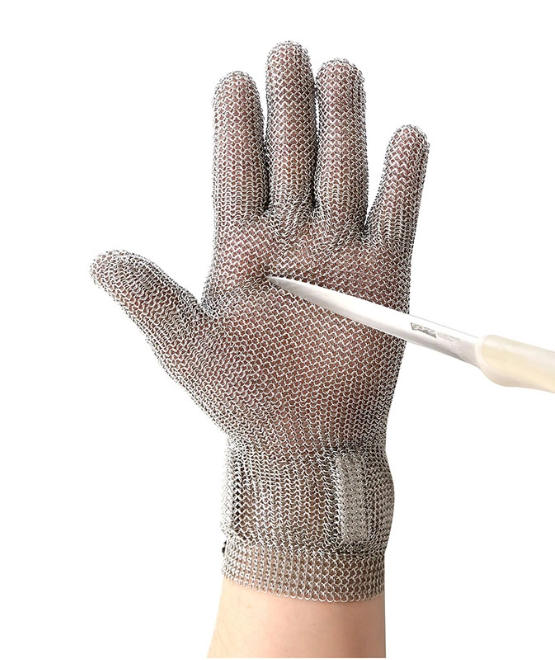
Steel cut resistant gloves serve as one component within a systematic hand safety program. They do not replace safe knife handling techniques, proper tool maintenance, machine guarding, or ergonomic workstation design. Workers typically wear the glove on the non-dominant hand while operating knives or handling sharp materials with the dominant hand. The glove provides a barrier when engineering and procedural controls cannot fully eliminate the possibility of hand contact with cutting hazards.
The durability characteristics of steel construction distinguish these gloves from alternatives. Protection does not degrade with washing, sanitization, or repeated blade contact. As long as the individual rings remain intact and properly connected, the glove maintains its protective capability through extended service measured in months or years. This structural approach to cut resistance provides a service life that fabric-based gloves cannot match in high-frequency cutting applications.
The protective performance and operational lifespan of a steel cut resistant glove depend substantially on the stainless steel alloy selected for ring production. Different grades offer distinct balances of corrosion resistance, mechanical strength, and cost that suit various operating environments.
Grade 304 stainless steel is the most widely used material for steel cut resistant gloves. This austenitic alloy contains approximately 18% chromium and 8% nickel by weight. The chromium component reacts with atmospheric oxygen to form a passive oxide layer on the metal surface that measures only a few atoms thick yet effectively blocks oxidation. This layer reforms spontaneously if scratched, providing self-healing corrosion protection. The nickel addition stabilizes the austenitic crystal structure, contributing the ductility needed for wire drawing and ring forming without cracking. In wire form, 304 stainless steel exhibits tensile strength exceeding 515 MPa with elongation above 40% before fracture. The material resists corrosion from water, blood, animal fats, mild organic acids, and standard cleaning and sanitizing chemicals used in food processing environments.
Grade 316 stainless steel builds on the 304 composition by adding molybdenum at concentrations between 2% and 3%. The molybdenum significantly improves resistance to pitting corrosion caused by chloride ions. Pitting creates small cavities in the metal surface that can grow over time and act as stress concentrators, potentially reducing ring strength. Applications that justify 316 grade gloves include seafood processing with continuous salt water exposure, operations using chlorine-based sanitizers at elevated concentrations, facilities in coastal regions with atmospheric salt exposure, and any process involving brine solutions. The pitting resistance equivalent number for 316 stainless steel exceeds 25, compared to approximately 18 for 304 grade.
Grade 430 stainless steel offers a ferritic alternative containing 16% to 18% chromium without intentional nickel addition. The ferritic crystal structure makes this alloy magnetic, which facilitates detection by metal detection systems and magnetic separation equipment used for foreign body control in food processing lines. Corrosion resistance sits below the austenitic grades, limiting appropriate application to environments with controlled moisture exposure or where the magnetic property provides a specific operational advantage.
Wire diameter further differentiates glove models. Thinner wire in the range of 0.45 mm to 0.55 mm produces lighter gloves with improved dexterity and tactile feedback. Thicker wire from 0.6 mm to 0.9 mm increases individual ring tensile strength and overall cut resistance but adds weight and may reduce finger mobility. Manufacturers select wire diameter alongside ring diameter and weave pattern specifications to achieve target protection levels for specific applications.
The manufacturing quality of individual rings and their assembly into the mesh structure determines how a steel cut resistant glove performs under cutting forces. Each step in the production process contributes to the reliability of the finished protective equipment.
Ring formation begins with precision coiling of stainless steel wire around a mandrel of specified diameter. The mandrel diameter establishes the internal ring dimension, which typically ranges from 3 mm to 7 mm depending on the glove model and intended protection level. Automatic coiling machines maintain consistent tension and pitch throughout the production run. Variations in either parameter produce rings with dimensional inconsistencies that complicate assembly and may create weak points in the finished mesh structure.
The cutting operation sections the continuous coil into individual rings at high speed. Blade sharpness and cut angle critically influence ring quality. Clean, perpendicular cuts produce ring ends that align precisely, enabling strong connections in the subsequent joining step. Dull cutting blades create burred or angled ends that result in weak joints and may leave sharp edges uncomfortable for the wearer. Production facilities monitor blade condition and follow preventive maintenance schedules to maintain consistent ring quality.
Ring joining is the most critical quality control point in the manufacturing sequence. Welded construction uses micro-plasma or laser welding technology to fuse ring ends into a continuous metal loop. The welding process creates a localized melt zone at the ring ends that solidifies into a joint with strength approaching that of the parent wire material. An inert gas shield, typically argon, prevents oxidation during the molten phase. Destructive pull testing of welded rings demonstrates failure loads exceeding 150 Newtons. Alternative butt-joined construction, where ring ends are brought together relying solely on the formed ring's spring tension for closure, typically achieves pull-apart strength between 50 and 80 Newtons. For cut resistant gloves subject to forceful blade contact, welded construction provides measurably higher reliability and represents the industry standard for quality protective products.
Assembly into glove form follows the European 4-in-1 weave pattern. In this pattern, each ring passes through four neighboring rings, creating a dense mesh with approximately equal coverage in all directions. Assembly technicians work from detailed specifications, beginning at the fingertips and adding rings row by row toward the wrist. The thumb section requires specialized shaping because the thumb's range of motion and oppositional position create complex geometry. Proper thumb construction maintains continuous ring coverage through the full range of natural movement without creating gaps or restricting mobility.
Standardized testing provides the basis for quantifying and comparing the cut resistance of steel gloves. These standards establish consistent methodologies that enable meaningful comparison across products from different manufacturers.
The ANSI/ISEA 105 standard prevalent in North America defines cut resistance levels from A1 through A9. Testing uses a tomodynamometer equipped with a straight-edge blade that moves across the test specimen under controlled, increasing load. The instrument records the distance traveled before the blade cuts through the material sample. The weight in grams required to achieve cut-through at a specified reference distance determines the assigned rating level. Level A1 corresponds to cutting force of 200 grams or more, while level A9 requires 6,000 grams or more. Steel cut resistant gloves typically achieve ratings from A5 through A9, placing them among the highest levels of cut protection available. An A5 rating requires between 1,500 and 2,199 grams of cutting force, while an A9 rating demands 6,000 grams or greater.
The EN 388 standard used in European and many international markets evaluates multiple mechanical risks including abrasion, blade cut, tear, and puncture resistance. For materials with high cut resistance such as steel mesh, the standard references ISO 13997 test methodology using a straight blade under variable load. Results report on a letter scale from A through F, with F representing the highest cut resistance at 30 Newtons or more of cutting force. Steel cut resistant gloves commonly achieve EN 388 cut ratings of E or F.
Several construction variables influence the cut resistance rating. Ring diameter affects mesh density; smaller rings create less open space and make blade penetration more difficult. Wire thickness determines how much metal the blade must cut through at each contact point. Weave density influences how many rings the blade must sever to create an opening large enough for passage. Manufacturers adjust these variables in combination to produce gloves with different protection levels suited to different hazard severities.
Certified laboratories perform testing on samples drawn from production batches. Manufacturers provide test reports to customers as documentation of achieved protection levels. End-user facilities may conduct periodic verification testing on in-service gloves to confirm continued protection, though the frequency of such testing varies by industry and company policy.
Meat and poultry processing operations represent the largest application sector for steel cut resistant gloves. The constant presence of sharp cutting tools, high production speeds, and the physical nature of the work create sustained hand laceration risks that require reliable protection.
Slaughter floor operations involve carcass breakdown using heavy knives, hooks, and powered cutting equipment. Workers making initial cuts on beef, pork, or lamb carcasses apply significant manual force to drive blades through thick tissue and around bone structures. The non-knife hand stabilizes the carcass section being cut, placing it directly in the blade path. A miscut that would cause severe laceration to an unprotected hand can be prevented by the steel mesh barrier. Modern facilities operate at speeds that may handle hundreds of carcasses per hour in large plants. At these production rates, reliance on operator technique as the sole control measure becomes insufficient. Steel cut resistant gloves worn on the non-knife hand provide a mechanical backup that functions regardless of momentary lapses in attention.
Deboning and trimming stations involve precise, repetitive knife work. Workers remove bones and trim excess fat using controlled cutting motions executed thousands of times per shift. The repetitive nature creates conditions where even experienced workers may experience blade contact with the non-knife hand. Steel cut resistant gloves configured with smaller ring diameters provide the dexterity needed for detailed work while maintaining cut protection. Workers typically wear thin liner gloves underneath for moisture management and comfort during extended shifts.
Poultry processing presents wet, cold operating conditions with specialized cutting tools and high line speeds. Workers perform repetitive cuts on a continuous flow of product, creating sustained laceration exposure. Steel cut resistant gloves withstand the moisture and frequent washdown procedures required in poultry facilities. The compatibility of stainless steel with sanitization chemicals supports food safety compliance while maintaining worker protection.
Band saw operations present a particular hazard due to the powered, continuously moving blade. Steel cut resistant gloves provide a mechanical barrier that can prevent or reduce injury severity upon blade contact. However, no glove guarantees complete protection against powered equipment. Safe operating procedures including proper guarding, push sticks for product guidance, and correct blade guide settings remain primary controls, with gloves serving as supplementary protection.
Beyond meat and poultry processing, steel cut resistant gloves protect workers across multiple industrial sectors where sharp materials or tools create hand laceration risks under varying environmental conditions.
Seafood processing combines cut hazards with corrosive environmental factors. Fish filleting requires extremely sharp knives for precise separation of flesh from bone structures. Shellfish processing involves shucking knives and naturally sharp shell edges capable of causing deep lacerations. Salt water, brine solutions, and high humidity accelerate corrosion of inadequately protected metals. Grade 316 stainless steel gloves, with molybdenum-enhanced corrosion resistance, provide the durability needed for sustained use in marine processing environments. The gloves maintain dexterity for detailed filleting work while protecting against injury mechanisms specific to seafood handling.
Glass manufacturing and handling operations expose workers to edges that slice through conventional protective gloves with minimal force. Workers moving glass sheets, loading cutting tables, removing finished products from processing lines, and cleaning up broken glass face significant laceration risks from edges that can be sharper than surgical blades. Steel cut resistant gloves prevent glass edges from contacting skin, providing protection that leather or fabric gloves cannot match. The weight of steel gloves requires ergonomic consideration for glass handling, as extended overhead work may necessitate lighter configurations or task rotation to manage worker fatigue.
Metal fabrication and stamping facilities generate parts with sharp burrs, sheared edges, and unfinished surfaces throughout production. Automotive parts suppliers, appliance manufacturers, and general metalworking operations employ steel cut resistant gloves for unloading presses, sorting finished parts, performing quality inspections, and moving materials between workstations. The gloves protect against the sharp edges characteristic of these processes while allowing the grip strength needed for secure parts handling.
Textile cutting operations using straight knives, band knives, and die cutting equipment present cut hazards similar to food processing. Workers guiding fabric through cutting equipment wear steel cut resistant gloves on the hand nearest the blade, protecting against miscuts during material manipulation at production speeds.
Steel cut resistant gloves support rigorous hygiene requirements through compatibility with cleaning methods and sanitization chemicals that would damage or degrade fabric-based or coated protective equipment.
Daily cleaning begins with removal of gross contamination. In food processing, this means prompt removal of blood, fat, tissue particles, and other organic residues from the mesh structure. Immediate pre-rinsing after use prevents organic material from drying and hardening on ring surfaces. Dried residues become progressively more difficult to remove and can harbor bacterial growth. Dedicated scraping tools or stiff-bristled brushes assist in dislodging material trapped between rings before it sets.
Automated washing systems in larger facilities process gloves through spray cabinets or continuous tunnel washers. These systems deliver heated water at temperatures between 60°C and 80°C combined with food-grade detergent formulations. Spray pressures between 500 and 800 psi force cleaning solution through the mesh structure, reaching all ring surfaces. Manual washing in smaller operations uses sink basins with detergent solution, with workers systematically brushing cleaning agents through the mesh.
Thorough rinsing follows washing to remove all detergent residues. Residual chemicals left on stainless steel can cause localized corrosion, particularly with chlorinated water supplies. Chloride ions can initiate pitting corrosion given sufficient concentration and contact time. Final rinse water should meet potable water standards for food contact surfaces.
Sanitization employs approved food-contact sanitizers at manufacturer-specified concentrations with required contact time. Quaternary ammonium compounds, peracetic acid solutions, and hot water immersion at temperatures above 77°C serve this purpose. Steel gloves tolerate these sanitizers without material degradation, unlike some polymer-based equipment that may break down with repeated chemical exposure.
Drying completes the hygiene cycle. Gloves hung on stainless steel or plastic racks in ventilated areas allow gravity drainage and air circulation. Forced-air drying accelerates the process in high-throughput operations. Storage on dedicated racks rather than in piles or enclosed containers prevents moisture entrapment that could initiate corrosion.
Systematic inspection of steel cut resistant gloves supports worker safety and cost-effective asset management by identifying damaged gloves before failure and tracking wear patterns that inform replacement planning.
Pre-use inspection by the worker should become routine. Workers should run the bare hand inside the glove to feel for broken rings, sharp edges, or irregularities. A visual scan of the palm, fingers, and thumb areas checks for visible gaps, distorted rings, or corrosion spots. The wrist closure should be tested for secure function. Gloves with any damage should be removed from service immediately.
Scheduled detailed inspections at defined intervals, typically monthly, provide more thorough evaluation using good lighting and magnification. These inspections examine ring integrity in high-wear areas including the palm surface, index finger, and thumb crotch where movement concentrates stress. Weld quality may be checked on a sample basis. Gaps are measured against original specifications. Corrosion condition, mesh uniformity, and closure integrity are documented in inspection records.
Service life varies by application. Single-shift operations with daily cleaning and proper storage often achieve 12 to 24 months of service. High-volume, multi-shift operations may see 6 to 12 months. Retail and light industrial applications frequently exceed 24 months. These ranges assume proper care; neglect of cleaning or storage substantially reduces service life.
Replacement triggers include multiple broken rings concentrated in one area, visible corrosion pitting reducing wire cross-section, mesh distortion creating gaps larger than original specifications, wrist closure failure, or any damage causing discomfort or reduced dexterity. Proactive replacement based on scheduled intervals provides consistent protection across the workforce.
Steel cut resistant gloves occupy a specific position within the broader landscape of cut resistant hand protection, with distinct performance characteristics relative to alternative technologies.
High-performance polyethylene fiber gloves use gel-spun ultra-high-molecular-weight polyethylene to achieve cut resistance at lower weight. These gloves typically weigh between 50 and 150 grams compared to 300 to 500 grams for steel gloves at comparable coverage. The weight advantage reduces worker fatigue during extended wear. Cut resistance ratings for fiber gloves typically range from ANSI A2 through A6 in standard configurations, with some specialized products achieving higher levels. The primary limitation concerns durability under repeated blade contact. Each blade impact severs fibers, progressively reducing protection. Steel gloves maintain their protective barrier through numerous blade contacts because blades cannot sever the metal rings. For applications involving frequent blade contact, the durability advantage of steel often outweighs the weight consideration.
Para-aramid fiber gloves, including Kevlar products, provide cut protection combined with thermal resistance. Applications involving hot surfaces or heated materials benefit from this combined capability. Steel gloves readily conduct heat and provide no thermal protection without insulating liners. In ambient-temperature cutting applications, steel typically achieves higher cut resistance for equivalent material thickness.
Composite yarn gloves incorporating glass fibers, steel fibers, or ceramic particles within fabric constructions represent an intermediate category. These products achieve cut ratings from A3 through A7 while maintaining weights between 150 and 250 grams. They offer improved dexterity compared to steel at equivalent cut ratings but lack the extreme durability of metal construction. Composite gloves suit applications with intermittent cut hazards.
Total cost of ownership analysis extends beyond purchase price. A steel glove with higher unit cost providing 18 months of service may deliver lower monthly cost than fiber gloves replaced weekly or biweekly. Facilities performing rigorous cost analysis typically find steel gloves economically advantageous for sustained, high-frequency cutting operations.
Worker acceptance of steel cut resistant gloves depends on comfort during full work shifts. Manufacturers incorporate design features that address the weight of metal construction while maintaining protection levels.
Weight distribution significantly influences perceived comfort. Gloves with mass concentrated toward the fingertips create a lever arm effect increasing forearm muscle loading. Designs distributing weight more evenly or concentrating mass closer to the wrist anchor point reduce this effect. The wrist closure serves as the primary anchor, and effective weight distribution works with this anchoring to minimize perceived effort.
Under-glove liners provide the interface between steel mesh and skin. Cotton liners absorb moisture and prevent the cold sensation of direct metal contact. Synthetic moisture-wicking materials improve comfort in warm conditions. The liner system allows individual workers to adjust comfort without modifying the protective glove, and liners can be laundered and replaced independently.
Wrist closure design balances security with comfort. Adjustable straps using hook-and-loop fasteners or mechanical buckles accommodate different wrist sizes and prevent glove movement during vigorous work. Elastic closures provide consistent tension and quick donning but may lose elasticity over repeated high-temperature wash cycles. The closure should secure the glove without restricting circulation or creating pressure points.
Finger dexterity varies with ring size and weave density. Smaller rings in tighter weaves create more flexible mesh that conforms to hand contours during gripping. Larger rings improve ventilation and reduce weight but may provide slightly less conformity during fine motor tasks. The optimal balance depends on specific task requirements.
Break-in requirements are minimal compared to leather gloves. The mesh adjusts to hand shape within the first hours of use as rings settle under tension. Workers should report any pinching, sharp edges, or uncomfortable pressure points immediately, as these indicate manufacturing defects rather than normal break-in characteristics.
Steel cut resistant gloves operate within occupational safety regulatory frameworks that establish employer responsibilities and product conformity requirements.
European Union Regulation 2016/425 governs personal protective equipment. Steel cut resistant gloves for meat processing and similar applications involving risk of irreversible hand injury fall under Category III, the highest risk category. Category III requires conformity assessment by a notified body, including EU-type examination and ongoing production surveillance. The CE marking with the four-digit notified body identification number must appear on the product or packaging.
United States OSHA regulations at 29 CFR 1910.138 require employers to select and require employees to use appropriate hand protection when workplace hazards are present. The general duty clause extends employer obligation to all recognized hazards. Selection of gloves tested to ANSI/ISEA 105 standards provides evidence of reasonable diligence in protection selection.
Canadian provincial regulations reference CSA Z94.1 standards. Australian and New Zealand requirements operate under AS/NZS 2161, harmonized with European test methods. Employers should verify applicable requirements for their jurisdiction.
Documentation management supports compliance and program effectiveness. Records should include the workplace hazard assessment, glove specifications selected, manufacturer certifications and test reports, employee training records, and glove issuance and inspection logs. These records demonstrate program rigor during inspections and provide information for incident investigations.
Training programs must address glove limitations, proper donning and doffing, pre-use inspection, cleaning and storage protocols, and the continued importance of safe work practices. Workers should understand that no glove provides absolute protection and that engineering controls and safe procedures remain primary protective measures.
Steel cut resistant gloves present environmental characteristics that align with corporate sustainability initiatives and waste reduction goals.
Material recyclability is the primary environmental advantage. Stainless steel is infinitely recyclable without degradation of properties. At end of service life, gloves enter established stainless steel scrap recycling streams. Recovered material feeds into new stainless steel production, reducing demand for virgin raw materials including chromium, nickel, and iron ore. The global recycling infrastructure accepts glove materials alongside other stainless steel scrap.
Extended service life dramatically reduces material throughput compared to disposable alternatives. A steel glove with 18-month service life eliminates the need for dozens of disposable gloves over the same period. This reduction multiplies across a facility's workforce, translating to reduced manufacturing energy demand, lower transportation emissions, and decreased packaging waste generation.
Cleaning operations represent the ongoing environmental impact through water consumption, energy for water heating, and cleaning chemical use. Facilities can minimize impacts through efficient washing equipment, optimized wash loads, and environmentally preferred cleaning formulations. Steel construction permits use of cleaning agents that might degrade polymer-based alternatives.
Packaging reduction contributes additional benefit. A steel glove ships once for its multi-year service life, while equivalent disposable glove supply generates packaging waste with each replacement shipment. Bulk packaging and reusable containers further reduce impact.
Lifecycle assessment comparisons demonstrate lower total environmental impact for durable steel gloves compared to disposable alternatives in sustained-use applications. Facilities incorporating environmental metrics alongside traditional procurement criteria will find steel cut resistant gloves support both safety performance and sustainability objectives.
The protective reliability of steel cut resistant gloves depends on manufacturing quality that purchasers should evaluate through systematic supplier assessment.
Quality management system certification provides foundational confidence. ISO 9001 certification indicates structured processes for material control, production monitoring, inspection, and corrective action. Manufacturers without formal certification may maintain equivalent systems; willingness to share quality documentation transparently serves as the practical indicator.
Material traceability connects finished gloves to raw material inputs. Certificates identifying the specific stainless steel grade with chemical composition analysis verify the specified alloy is present. Heat numbers enable investigation of material-related issues back to the original mill production lot. Traceability supports recall capability if post-distribution quality concerns arise.
Testing capabilities distinguish manufacturers who directly verify performance from those relying on supplier claims. In-house cut resistance testing to ANSI/ISEA 105 or EN 388 protocols enables rapid batch verification and quality trend monitoring. Weld integrity testing quantifies ring strength. Manufacturers should provide test reports for purchased batches upon request.
Hebei Linchuan Safety Protective Equipment Co., LTD maintains production operations with integrated quality control processes for steel cut resistant glove manufacturing. The company's material traceability systems, testing protocols, and inspection procedures support consistent product performance verification against labeled protection levels. Documentation provided to customers supports their compliance recordkeeping requirements.
Supply reliability assessment includes evaluation of production capacity, lead time consistency, and ability to accommodate volume fluctuations. Buyers should understand typical order-to-shipment timelines, minimum order quantities, and any seasonal capacity constraints. Clear communication about delivery schedules supports effective inventory planning.
Technical support after purchase contributes to long-term partnership value. Manufacturers providing guidance on cleaning procedures, inspection criteria, expected service life, and proper sizing help users maximize glove performance and longevity. Responsive handling of warranty claims and technical inquiries indicates commitment beyond the initial sale.
Customization capabilities allow gloves tailored to specific applications. Options may include specific ring dimensions and wire diameters for target cut ratings, alternative closure systems, integration with facility identification systems, and specialized packaging. Manufacturers with engineering capability to develop custom solutions provide value beyond standard product offerings.