
Author: Lin Publish Time: 2026-09-24 Origin: Site


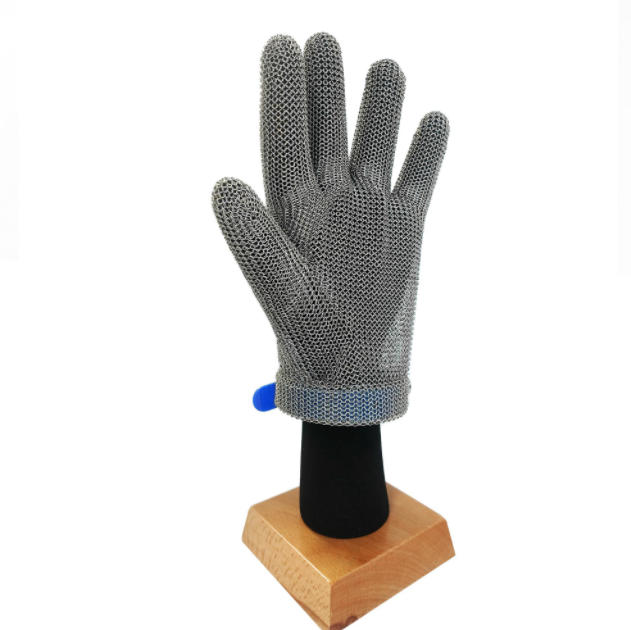
316L stainless steel chainmail gloves are a specific category of metal mesh protective gloves used in meat processing, food handling, and industrial cutting environments that require a high level of cut protection. Compared with 304 stainless steel, 316L offers better corrosion resistance and improved suitability for food contact applications, particularly in facilities that rely on frequent washing and sanitizing. For wholesalers, importers, and distributors, understanding the material properties, product specifications, certification requirements, and supply chain considerations of 316L chainmail gloves is essential to making informed purchasing decisions. This article provides a structured overview covering material science, product standards, manufacturing processes, cost structure, and inventory management for buyers in the protective equipment market.
316L stainless steel is a chromium-nickel-molybdenum austenitic stainless steel with a carbon content controlled below 0.03 percent. The low carbon content provides better resistance to intergranular corrosion after welding. The addition of molybdenum, typically between 2 and 3 percent, significantly improves resistance to pitting and crevice corrosion, which is the primary advantage of 316L over 304.
In chainmail glove manufacturing, 316L stainless steel wire is formed into rings, and each ring is individually welded to create an interlocking mesh structure. Welding quality is critical to final product strength. The EN 1082-1 standard requires that individual rings withstand a tensile force of 100 newtons without breaking or opening. The low-carbon characteristics of 316L reduce the risk of harmful carbide precipitation during welding, helping to preserve the corrosion resistance of the welded joints.
The food processing industry accounts for the largest share of demand for 316L chainmail gloves. The material can contact food directly without causing contamination and can withstand repeated high-temperature washing and chemical disinfection. Some suppliers also offer detectable 316L gloves, where the alloy formulation is adjusted so that glove fragments can be identified by metal detection equipment used in food processing lines, providing an additional layer of food safety assurance.
When sourcing 316L chainmail gloves, buyers should evaluate several technical parameters. Ring diameter is a core specification, with common configurations including an outer diameter of 3.81 millimeters to 4 millimeters and a wire diameter of 0.5 millimeters to 0.53 millimeters. Smaller rings provide higher protection density but may reduce flexibility, while larger rings offer the opposite trade-off.
Gloves are typically available in six sizes from XXS to XL. Different sizes are distinguished by strap colors, for example XXS in dark blue, XS in green, S in white, M in red, L in blue, and XL in orange. This color-coding system supports warehouse management and helps end users identify the correct size quickly.
Wrist closure systems include textile straps with metal snap buttons, self-adjusting stainless steel springs, and elastic bands. The EN 1082-1 standard requires gloves to be fitted with an adjustable wrist strap at least 18 millimeters wide and a quick-release closure. The self-adjusting spring design eliminates the need for external fasteners and provides consistent fit.
Cuff length is another important selection dimension. Standard models cover the hand only, while long cuff models extend to the wrist and part of the forearm. Common long cuff specifications include 8 centimeters, 15 centimeters, and 19 centimeters. Longer cuffs provide broader protection coverage but increase product weight and material cost.
The production of 316L chainmail gloves involves steel wire drawing, ring formation, welding, mesh assembly, cuff attachment, and surface finishing. Welding is typically performed using micro-plasma welding or laser welding to ensure consistent joint strength across each ring.
Quality control should cover every stage of production. Incoming material inspection verifies the grade and diameter of the steel wire. Welded rings should be tested for tensile strength. Assembled mesh should be inspected for missing or damaged rings. Finished products should be tested for cut and puncture resistance.
Electrolytic polishing is an optional surface treatment that removes surface defects and enhances corrosion resistance, but it adds approximately 10 to 15 percent to material cost. Buyers should confirm with suppliers whether this process is used, as it directly affects product service life and cleaning performance.
Production consistency is an important indicator of supplier capability. Buyers are advised to draw multiple samples from the same production batch and test for weld consistency, ring closure integrity, and surface finish quality. Suppliers that can provide inspection records and quality control documentation generally have more mature quality management systems.
As personal protective equipment for professional use, 316L chainmail gloves are regulated in most markets. European distribution requires compliance with Regulation (EU) 2016/425 and CE marking. Chainmail gloves fall under Category 2, requiring type examination by a notified body.
EN 1082-1:1997 is the core harmonized standard for chainmail gloves, specifying requirements for design, penetration resistance, ergonomic characteristics, straps, weight, materials, and marking. The standard applies to chainmail gloves and arm guards for protection against hand knives. For gloves used with powered knives, EN 14328:2005 applies and includes an impact cut resistance test.
Food processing applications require additional compliance considerations. Glove materials must comply with food contact regulations, and some buyers require migration test reports. 316L stainless steel is widely recognized as suitable for food contact due to the corrosion resistance provided by its molybdenum content. Suppliers should be able to provide current test reports and declarations of conformity issued by recognized laboratories.
China is a major manufacturing base for 316L chainmail gloves, with suppliers concentrated in Hebei, Shandong, and other industrial provinces. When evaluating potential suppliers, buyers should verify manufacturing experience and production capacity.
Suppliers with five or more years of dedicated chainmail glove production generally have established processes and quality control systems. In terms of capacity, medium-scale factories produce approximately 10,000 to 30,000 pairs per month, while larger factories equipped with automated ring welding and assembly capabilities can produce more than 100,000 pairs per month. For wholesale buyers with ongoing order requirements, confirming that supplier capacity matches order volume is key to avoiding supply disruptions during peak season.
Hebei Linchuan Safety Protective Equipment Co., LTD specializes in manufacturing safety protective steel gloves for industrial applications, including 316L stainless steel chainmail gloves. The company has established quality control processes covering material inspection, precision welding, and performance testing in accordance with relevant safety standards.
The wholesale price of 316L chainmail gloves is influenced by material costs, processing expenses, surface treatment, and certification costs. The base material cost of 316L is approximately 15 to 25 percent higher than 304 stainless steel, mainly due to the price of molybdenum alloying elements. Welded construction adds approximately 10 to 20 percent to cost compared with non-welded designs, and electrolytic polishing adds another 10 to 15 percent.
Although the unit price of 316L chainmail gloves is higher than synthetic cut-resistant gloves, the extended service life changes the economic calculation. A chainmail glove with a wholesale price of approximately 80 US dollars and a service life of 12 months costs approximately 22 cents per working day. A synthetic level-five glove with a wholesale price of 15 US dollars and a service life of three weeks costs approximately 1 US dollar per working day. For large-volume meat processing operations, the difference in total cost of ownership is significant.
Buyers should also consider repair and maintenance costs. Chainmail gloves can be repaired when individual rings are damaged, further extending service life. Suppliers that offer repair services or replacement ring kits can provide additional value to wholesale customers.
Wholesale distributors serving meat processing facilities should maintain a reasonable size distribution. Sales data indicates that medium, large, and extra-large sizes account for approximately 70 percent of unit sales, small and extra-small account for 20 percent, and the remaining sizes account for 10 percent.
Handedness is another inventory consideration. In predominantly right-handed workforces, left-hand gloves are the primary selling category because the left hand is worn on the non-dominant hand. Wholesale buyers should maintain left-hand glove inventory at three to four times the quantity of right-hand gloves. However, many 316L chainmail gloves are reversible and can be converted for the other hand by turning them inside out, which simplifies inventory management.
Seasonal demand patterns also affect inventory planning. Demand rises from September to December as meat processing facilities stock up for holiday production, and falls from January to March. Distributors should place orders with suppliers three to four months before peak season to ensure inventory availability.
The food processing industry requires all equipment and protective products to maintain strict hygiene standards. The material properties of 316L chainmail gloves allow repeated cleaning and disinfection without degradation.
Recommended cleaning procedures include washing with hot water at approximately 50 degrees Celsius and detergent, followed by rinsing with water at a minimum of 82 degrees Celsius. Disinfection with approved products may follow. Some suppliers offer detectable gloves whose alloy formulation ensures that even small metal particles can be identified by standard metal detection equipment in food processing lines, providing additional food safety assurance.
Buyers should confirm that suppliers can provide documentation showing material compliance with food contact regulations, including applicable migration test reports. The use of 316L stainless steel and the absence of non-stainless components in glove construction are indicators of food-safe design. Proper maintenance procedures extend service life and maintain protection performance.
Hebei Linchuan Safety Protective Equipment Co., LTD manufactures 316L stainless steel chainmail gloves and related metal mesh protective products for industrial and food processing applications. The company's product range includes chainmail gloves made from 304 and 316 stainless steel, available in various mesh sizes, cuff lengths, and closure configurations.
The company's manufacturing processes include precision welding of steel rings, multiple inspection points during production, and final performance testing in accordance with EN 1082 and related standards. Customization options cover different cuff lengths, sizing requirements, and private labeling for wholesale distributors.
Hebei Linchuan focuses on material quality, wearing fit, and compliance with applicable safety standards. For wholesale buyers and distributors seeking a manufacturing partner for 316L chainmail gloves, the company provides responsive customer service and reliable delivery schedules.
Sourcing 316L stainless steel chainmail gloves requires a comprehensive evaluation of product specifications, supplier capabilities, certification compliance, and total cost of ownership. The molybdenum content of 316L provides corrosion resistance advantages and food contact suitability that give the material clear application value in meat processing and food handling. Buyers who understand the technical requirements of end users can make more reasonable decisions in supplier selection and product configuration.
Key indicators for supplier evaluation include verifiable manufacturing experience, production capacity that matches order volume, certification qualifications required for target markets, and demonstrable quality control processes. By focusing on these factors, wholesale buyers can establish reliable supply chains for this specialized protective category and meet the safety requirements of food processing and industrial customers.