
Author: Site Editor Publish Time: 2026-02-27 Origin: Site


In industrial environments where sharp blades, glass shards, and metal offcuts are daily hazards, hand protection is not optional—it is essential. Among the various types of cut-resistant gloves available, stainless steel mesh gloves represent the highest tier of protection, offering cut resistance that fabric-based gloves cannot match. For businesses operating in meat processing, metal fabrication, or glass handling, sourcing these gloves through wholesale channels is the most cost-effective way to equip workforces with reliable safety gear.
This comprehensive guide provides data-driven insights into the stainless steel mesh glove wholesale market, with a focus on technical specifications, international safety standards, and sourcing considerations. Hebei Linchuan Safety Protective Equipment Co., LTD, established in 2008, brings over a decade of manufacturing expertise to this specialized field, producing stainless steel ring mesh products that meet rigorous international requirements.
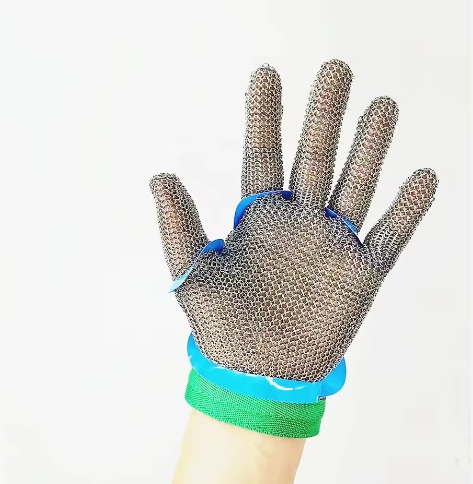
Stainless steel mesh gloves, also known as chainmail gloves or metal mesh gloves, are constructed from interlocking stainless steel rings that form a flexible yet impenetrable barrier against cutting edges. Unlike cut-and-sewn or seamless knitted gloves that rely on high-performance fibers, metal mesh gloves provide physical armor that blades cannot penetrate.
The cut-resistant property of these gloves comes from the mechanical structure of the rings. Each ring is welded or riveted to create a continuous mesh that distributes cutting forces across multiple connection points. When a blade contacts the surface, the rings lock together, preventing the edge from reaching the skin.
The effectiveness depends on several factors:
Ring diameter: Smaller rings provide greater cut resistance but reduce flexibility. Common mesh sizes range from 4mm to 15mm, with the 15mm long cuff variant offering extended wrist and forearm protection.
Wire gauge: Thicker wire increases durability and cut resistance but adds weight.
Material grade: Most manufacturers, including Hebei Linchuan Safety Protective Equipment Co., LTD, use AISI 300 series stainless steel, which offers excellent corrosion resistance and durability.
Data from industry analysis shows that the stainless steel glove market serves several key sectors with distinct requirements:
Food Processing Industry (30% market share)
Meat and poultry processing
Fish filleting and oyster shucking
Commercial butchering operations
In food applications, stainless steel mesh gloves must withstand frequent sanitization while preventing contamination. The open mesh design allows for thorough cleaning and rapid drying, which is essential for compliance with food safety regulations.
Machinery and Metal Fabrication (55% market share)
Sheet metal handling
Automotive assembly
Metal stamping and deburring operations
The machinery sector represents the largest market segment because workers regularly encounter sharp metal edges and heavy components.
Glass and Ceramics Processing
Flat glass handling
Laboratory glassware manufacturing
Construction material cutting
Other Applications (15% combined)
Woodworking and carpentry
Leather goods manufacturing
Textile cutting operations
Security and defense applications
Understanding market dynamics helps wholesale buyers make informed purchasing decisions. The global steel wire gloves market, which includes stainless steel mesh varieties, has demonstrated consistent growth driven by increasing workplace safety awareness and regulatory requirements.
According to market research data, the steel wire gloves market was valued at approximately USD 13.75 billion in 2024. Projections indicate growth to USD 26.50 billion by 2032, representing a compound annual growth rate (CAGR) of 7.75% from 2026 to 2032.
The stainless steel segment specifically accounts for 44.2% of this market, making it the dominant material type due to its durability and corrosion resistance.
The stainless steel mesh glove market shows distinct regional patterns that affect wholesale sourcing and distribution strategies:
| Region | Market Share (2023) | Key Characteristics |
|---|---|---|
| Asia Pacific | 35% | Fastest-growing region; manufacturing hub |
| North America | 28% | Mature market; strict OSHA enforcement |
| Europe | 25% | Strong safety standards; EN standards compliance |
| Latin America | 6% | Emerging market; growing industrialization |
| Middle East & Africa | 6% | Infrastructure-driven demand |
Asia Pacific's position as the largest and fastest-growing market reflects the concentration of manufacturing activities in countries like China and India. For wholesale buyers, sourcing from established Chinese manufacturers such as Hebei Linchuan Safety Protective Equipment Co., LTD offers logistical advantages for serving both domestic Asian markets and export destinations.
The market divides into two main glove configurations based on finger coverage:
Five-finger gloves: Account for 50% of the market. These provide maximum dexterity and are preferred for tasks requiring fine manipulation.
Three-finger (metal) gloves: Represent 45% of the market. These offer adequate protection for most industrial tasks while being more economical and easier to don and doff.
Other designs: Make up the remaining 5%, including mittens and specialized configurations for unique applications.
For wholesale buyers, understanding safety standards is critical for ensuring that products meet regulatory requirements in target markets. Stainless steel mesh gloves must comply with specific testing protocols that differ from those used for fabric-based cut-resistant gloves.
The European standard EN 388:2016 is the primary benchmark for mechanical risks, including cut resistance. It employs two testing methods:
Method A (Coupe Test): Uses a rotating circular blade under 5N load. Results are reported on a scale of 1 to 5 based on the number of cycles required to cut through the material.
Method B (ISO 13997 TDM Test): For materials that dull blades (including stainless steel mesh), the TDM test measures the force in Newtons required to cut through the material with a straight blade. Results are reported as letters A through F:
Level A: 2N to 5N
Level B: 5N to 10N
Level C: 10N to 15N
Level D: 15N to 22N
Level E: 22N to 30N
Level F: ≥30N
The American standard uses a similar cut resistance scale but with numerical levels A1 through A9. Higher levels indicate greater cut resistance, with A9 requiring forces exceeding 6000 grams to cut through the material.
It is essential to recognize that the ISO 13997 test method is not considered suitable for testing materials made from chain mail and metal plates. This technical limitation means that manufacturers and buyers must rely on alternative validation methods, including mechanical performance testing and field validation.
Depending on the target market and application, stainless steel mesh gloves may need to meet other standards:
FDA compliance: For food contact applications in the United States
REACH certification: For European markets, ensuring no hazardous substances are present
CE marking: Required for PPE sold in the European Union
When sourcing stainless steel mesh gloves wholesale, understanding the technical parameters ensures that the products match the intended applications.
High-quality stainless steel mesh gloves are manufactured using AISI 304 or AISI 316 stainless steel. AISI 316 offers enhanced corrosion resistance for food processing applications where exposure to moisture and cleaning agents is constant.
Cut Resistance Level
Stainless steel mesh gloves typically achieve EN 388:2016 Level 5 cut resistance, the highest rating available. This level of protection is unattainable with most textile-based gloves.
Weight and Comfort
Standard stainless steel mesh gloves weigh approximately 200 grams per pair for medium sizes. While heavier than fabric alternatives, ergonomic design features help distribute weight and reduce fatigue during extended wear.
Heat Resistance
Stainless steel mesh provides protection up to 100°C (212°F). This makes these gloves suitable for applications involving warm materials, though they offer limited thermal insulation for prolonged heat exposure.
Chemical Resistance
Stainless steel is inherently resistant to many chemicals and can withstand multiple exposures without degradation. This property is valuable in food processing and laboratory environments.
Stainless steel mesh gloves are available in standard sizes from small to extra-large. Most wholesale suppliers, including Hebei Linchuan Safety Protective Equipment Co., LTD, offer customization options for large-volume orders to accommodate specific hand size distributions.
The fit is critical for both safety and comfort. Gloves that are too loose may slip during use, while overly tight gloves restrict blood flow and cause fatigue. Reputable manufacturers provide sizing charts and sampling programs to ensure proper fit before bulk ordering.
For businesses looking to purchase stainless steel mesh gloves in volume, working with established manufacturers offers advantages in quality consistency, pricing, and customization options.
Wholesale MOQs vary significantly between suppliers. Hebei Linchuan Safety Protective Equipment Co., LTD, as an established manufacturer, can accommodate various order sizes with typical MOQs starting from 100 to 500 pieces depending on product specifications. Some suppliers may consider trial orders for new customers to validate product quality before committing to larger volumes.
Wholesale buyers often require customization to meet specific market needs or branding requirements:
Product Customization
Custom sizing based on target user demographics
Modified cuff lengths (standard 15mm or extended)
Special ring configurations for enhanced protection in specific applications
Branding and Packaging
Logo printing on gloves and packaging
Custom instruction cards and inserts
Specialized packaging for retail presentation
Hebei Linchuan Safety Protective Equipment Co., LTD supports OEM and customization services, with graphic customization available for qualifying orders.
Established manufacturers implement quality control procedures throughout the production process:
Raw material inspection before production
In-process quality checks during manufacturing
100% final inspection before packaging and shipment
For wholesale buyers, requesting third-party inspections or factory audits provides additional assurance of product quality.
Wholesale transactions typically use standard international trade terms:
EXW (Ex Works): Buyer arranges all transportation
FOB (Free on Board): Seller delivers goods to port of shipment
CIF (Cost, Insurance, Freight): Seller arranges and pays for transport to destination port
Shipping methods include sea freight for large volumes, air freight for time-sensitive orders, and courier services for samples or small shipments. Typical lead times range from 3 to 6 days for in-stock items to 5 to 20 days for production orders.
Proper maintenance significantly extends the useful life of stainless steel mesh gloves, improving the return on investment for wholesale purchases.
For food industry applications, regular sanitization is mandatory. Stainless steel mesh gloves can be cleaned using:
Manual washing with warm water and mild detergent
Commercial dishwashers for high-volume operations
High-pressure washers for heavy soil removal
The gloves must be thoroughly dried after cleaning to prevent water spots and maintain appearance. Air drying or low-temperature drying is recommended.
Regular inspection helps identify gloves that need repair or replacement:
Check for broken rings or welds
Verify that all rings are properly aligned
Ensure closure mechanisms function correctly
Look for signs of corrosion or metal fatigue
Gloves showing any structural damage should be removed from service immediately, as compromised mesh cannot provide reliable cut protection.
Store stainless steel mesh gloves in clean, dry environments. For long-term storage, keep them in sealed plastic bags to prevent dust accumulation and minimize exposure to humidity.
While stainless steel mesh gloves have higher initial purchase costs compared to textile alternatives, a total cost of ownership analysis often favors the metal mesh option for high-risk applications.
Wholesale pricing depends on several variables:
Material grade: AISI 316 commands a premium over AISI 304
Construction quality: Welded rings versus riveted construction
Cuff length: Longer cuffs for forearm protection increase material usage
Order volume: Larger orders achieve lower per-unit pricing
Customization: Branding and special packaging add to costs
Stainless steel mesh gloves offer distinct economic advantages:
Durability: With proper care, a single pair can outlast dozens of fabric gloves
Reusability: Unlike disposable options, these gloves are designed for years of service
Injury prevention: Preventing a single severe cut injury justifies significant equipment investment
For food processing facilities where daily glove changes are required, the transition to stainless steel mesh with proper sanitation protocols can substantially reduce annual PPE expenditures.
Q: What is the difference between stainless steel mesh gloves and other cut-resistant gloves?
Stainless steel mesh gloves use interlocking metal rings to create a physical barrier that blades cannot penetrate. Other cut-resistant gloves rely on high-performance fibers that resist cutting but can eventually be severed with sufficient force.
Q: Are stainless steel mesh gloves suitable for all cut hazards?
These gloves excel against slicing and cutting hazards from sharp edges. However, they do not protect against puncture hazards from needles or sharp points, as the rings can separate to allow penetration.
Q: How do I determine the correct size for my workers?
Most manufacturers offer sizing based on hand circumference and length. Request a sizing chart from your supplier and consider ordering sample pairs in various sizes to validate fit before placing a wholesale order.
Q: Can stainless steel mesh gloves be repaired?
Minor damage to individual rings can sometimes be repaired by specialized services, but most facilities replace gloves when structural integrity is compromised. The cost of repair often approaches replacement cost for smaller quantities.
Q: What industries benefit most from stainless steel mesh gloves?
Based on market data, machinery and metal fabrication (55% market share) and food processing (30% market share) are the primary users, followed by glass handling, woodworking, and other industrial applications.
Q: How do I verify that gloves meet required safety standards?
Request certification documentation from your supplier. Reputable manufacturers like Hebei Linchuan Safety Protective Equipment Co., LTD provide documentation of compliance with relevant standards and can arrange third-party testing if required.
Q: What is the typical lead time for wholesale orders?
For standard products in stock, lead times range from 3 to 6 days. For custom orders requiring production, lead times extend to 5 to 20 days depending on quantity and complexity .
Q: Do you offer samples before wholesale orders?
Many suppliers provide samples, sometimes free of charge for standard products. Buyers typically pay shipping costs. This practice allows validation of quality and fit before committing to volume purchases.
The stainless steel mesh glove market continues to expand as industries worldwide recognize the value of superior hand protection. With projected market growth of 7.75% through 2032 and Asia Pacific leading as the largest regional market at 35% share, the wholesale channel remains critical for distributing these essential safety products.
For buyers seeking reliable suppliers, manufacturers like Hebei Linchuan Safety Protective Equipment Co., LTD offer the combination of established production capabilities, quality control systems, and customization options necessary for successful wholesale partnerships. With over a decade of experience since 2008, the company has developed expertise in stainless steel ring mesh products that serve diverse industries from meat processing to metal fabrication.
When evaluating wholesale options, consider the full spectrum of factors discussed in this guide: material specifications, safety standard compliance, customization capabilities, quality assurance procedures, and total cost of ownership. By taking a comprehensive approach to supplier selection, buyers can secure stainless steel mesh gloves that protect workers effectively while delivering long-term value for their organizations.
For specific inquiries about product specifications, pricing, or customization options, contacting suppliers directly with detailed requirements ensures accurate quotations and appropriate product recommendations for your particular applications.