
Author: Site Editor Publish Time: 2026-06-22 Origin: Site


Chainmail gloves are essential personal protective equipment in industries where workers face cut and puncture hazards from sharp blades, glass, or metal edges. Unlike fabric-based cut-resistant gloves that can be discarded after contamination, chainmail gloves are designed for repeated use and require regular cleaning to maintain their protective properties and hygiene standards. Proper cleaning extends the service life of the gloves, prevents corrosion, and ensures compliance with workplace safety and food handling regulations.
For safety managers, procurement officers, and individual users, understanding the correct cleaning procedures for chainmail gloves is as important as selecting the right product. This article provides a comprehensive guide to cleaning stainless steel chainmail gloves, covering hand washing, machine washing, disinfection, drying, storage, and inspection procedures. The information is based on manufacturer recommendations and industry standards applicable to industrial and food processing environments.
Chainmail gloves are exposed to various contaminants depending on the work environment. In meat and poultry processing, gloves accumulate animal fats, blood, protein residues, and bone fragments. In metalworking and glass handling, gloves collect metal shavings, dust, and oils. In food service and pharmaceutical applications, gloves may come into contact with cleaning chemicals, food products, or biological materials. Regular cleaning removes these contaminants and prevents the buildup of substances that can compromise glove performance.
From a hygiene perspective, chainmail gloves used in food processing must be cleaned daily to prevent bacterial growth and cross-contamination. The stainless steel construction is bacteria-proof and resistant to fats and oils, but contaminants can accumulate in the interstices between rings if not properly removed. Regular cleaning also allows for visual inspection of the glove's condition, enabling early detection of damaged or broken rings that could compromise protection.
Proper cleaning also prevents corrosion. While stainless steel grades 304 and 316 offer good corrosion resistance, prolonged exposure to certain chemicals, high chlorine concentrations, or acidic substances can damage the metal over time. Correct cleaning procedures using appropriate cleaning agents and rinsing techniques help maintain the integrity of the metal and extend the glove's service life.
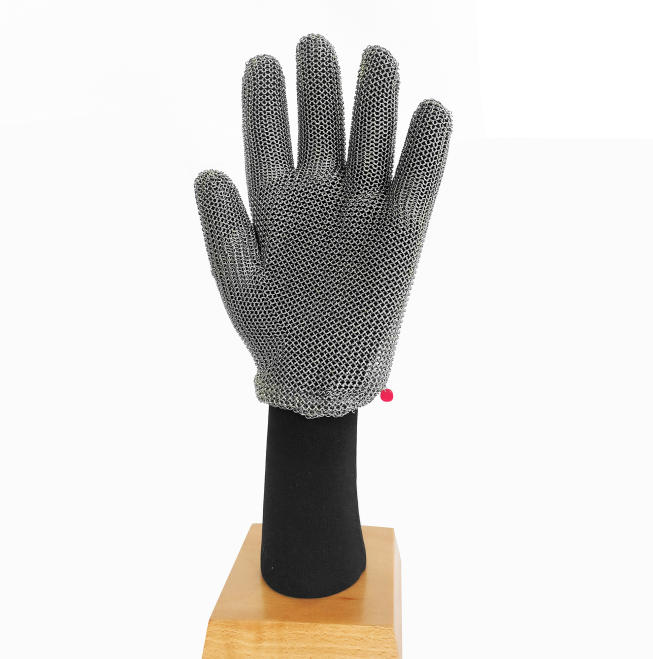
Before beginning the cleaning process, users should inspect the chainmail glove for visible damage. Any glove showing signs of abnormal wear, broken rings, or missing chainmail must be replaced immediately. Only the manufacturer is authorized to repair defective gloves. Cleaning a damaged glove is not recommended, as the cleaning process may worsen existing damage or the glove may not provide adequate protection even after cleaning.
Users should also check the manufacturer's specific cleaning instructions, as different materials and constructions may have specific requirements. While most industrial chainmail gloves are made from stainless steel, some models may have leather components, polyurethane straps, or other materials that require special care. Gloves with plastic or textile straps should be cleaned according to the manufacturer's recommendations for those components.
It is also important to remove any large debris from the glove surface before washing. This can be done by gently shaking the glove or using a soft brush to remove loose particles. Do not knock chainmail gloves against a hard surface to remove debris, as this can damage the rings and weaken the welded closures.
Hand washing is the most common and recommended method for cleaning chainmail gloves, particularly in food processing environments where daily cleaning is required. The process involves scrubbing, rinsing, and disinfecting the glove using specific water temperatures and cleaning agents.
The cleaning procedure begins with preparing a hot soapy water solution. Industry standards recommend using water at approximately 50 degrees Celsius. At this temperature, the water is hot enough to dissolve fats and oils effectively without being so hot as to cause discomfort during handling or damage any non-metallic components. The cleaning solution should include a detergent or cleaning agent commonly used in the butchery and food industry. Mild detergents are preferred, and toxic cleaning products should never be used.
The glove should be scrubbed vigorously using a stiff brush to remove all contaminants from the surface and between the rings. Pay particular attention to areas where debris tends to accumulate, such as between fingers, around the wrist, and in the cuff area. The brushing action dislodges particles trapped in the ring interstices and ensures that all surfaces are cleaned. For gloves with heavy contamination, pressurized jets of hot soapy water can be used as an alternative to brushing.
After scrubbing, the glove must be rinsed thoroughly. Rinsing should be done with water at a minimum temperature of 82 degrees Celsius. The high temperature of the rinse water serves two purposes: it removes soap residue and provides thermal sanitation. Some manufacturers recommend rinsing at temperatures between 82 degrees Celsius and 90 degrees Celsius. The rinse water should be clean and free from contaminants. In food processing applications, the high-temperature rinse is an essential step in meeting hygiene requirements.
Following rinsing, the glove should be disinfected. Disinfection is typically performed using a product authorized for food contact by health authorities. Commonly used disinfectants include peracetic acid-based solutions, quaternary ammonium compounds, or chlorine-based sanitizers at concentrations recommended by the manufacturer. The glove should be immersed or sprayed with the disinfectant for the contact time specified by the product label, usually between one and five minutes. After disinfection, the glove should be rinsed again with potable water to remove any chemical residues, unless the disinfectant is a no-rinse type approved for food contact.
Some industrial facilities use commercial washing machines to clean chainmail gloves, especially when large numbers of gloves are processed daily. Machine washing can be effective if the machine is designed for heavy-duty items and has appropriate temperature controls. However, not all chainmail gloves are suitable for machine washing. Gloves with leather components, elastic cuffs, or plastic straps may be damaged by the mechanical action of a washing machine.
Before machine washing, users should confirm that the glove is machine-washable according to the manufacturer's instructions. The washing cycle should use hot water at approximately 50 to 60 degrees Celsius with a mild detergent. The rinse cycle should use water at 82 degrees Celsius or higher for sanitation. A final disinfection step, either in the machine or after washing, is still recommended. Machine washing should be followed by thorough drying as described in the drying section.
Commercial washing machines used for chainmail gloves should be dedicated to this purpose to avoid cross-contamination with other laundry. The machine drum should be checked for sharp edges that could damage the gloves. It is also advisable to place gloves in mesh bags or pillowcases to reduce abrasion during the wash cycle. Machine washing is generally not recommended for individual users or small workshops due to the specialized equipment required.
Disinfection is a critical step in cleaning chainmail gloves, especially in food processing and healthcare applications where microbial contamination must be controlled. The goal of disinfection is to reduce the number of viable microorganisms on the glove surface to a level that does not compromise food safety or worker health.
Thermal disinfection is achieved through the hot rinse at 82 degrees Celsius or higher. Studies have shown that exposure to water at this temperature for at least 30 seconds reduces bacterial counts by several logarithms. For additional chemical disinfection, products containing peracetic acid are often used in the food industry because they are effective against a broad spectrum of microorganisms and break down into harmless byproducts. Quaternary ammonium compounds are also effective but may require longer contact times.
Chlorine-based sanitizers at concentrations of 50 to 100 parts per million are effective and economical, but they can be corrosive to stainless steel if used at higher concentrations or with extended contact times. It is recommended to use chlorine at lower concentrations and to rinse thoroughly afterwards. For gloves used in non-food applications, a simple alcohol-based sanitizer spray can be used after washing, provided it does not damage any non-metal components.
Disinfection should be performed after every cleaning cycle when gloves are used in high-risk environments. In lower-risk environments, disinfection may be required weekly or monthly. The specific schedule should be determined by a risk assessment based on the type of contaminants, the frequency of use, and applicable regulations.
After cleaning and rinsing, chainmail gloves must be dried properly to prevent moisture-related issues. Stainless steel does not rust easily, but trapped moisture can lead to surface staining or, in the case of lower-grade steel, pitting corrosion. Moisture also promotes the growth of bacteria and fungi if the gloves are stored wet.
The recommended drying method is air drying at room temperature. Gloves should be hung or laid flat in a clean, well-ventilated area away from direct sunlight and heat sources. Direct sunlight can cause discoloration and may degrade any non-metallic components. The drying time varies depending on humidity and air circulation, but typically ranges from two to four hours. For rapid drying, compressed air can be used to blow moisture out from between the rings, followed by air drying.
Machine drying using a tumble dryer is not recommended for chainmail gloves. The high heat can damage welded rings, weaken metal structure, and deform the glove shape. The tumbling action can also cause rings to snag on dryer components, leading to breakage. If a dryer must be used, it should be set to a low heat or air-only cycle, but this is still not recommended by most manufacturers.
Users should ensure that gloves are completely dry before storage or reuse. A simple test is to feel the inside of the glove for any dampness. Residual moisture in the finger areas is common and should be given extra attention. Using a clean, absorbent towel to pat the glove dry can accelerate the process and remove any remaining water droplets.
Cleaning provides an excellent opportunity to inspect chainmail gloves for wear and damage. After drying, the glove should be thoroughly examined for any broken or bent rings, gaps in the weave, or loose connections. Special attention should be given to the welded points of each ring, as these are the most common failure points under stress.
A simple procedure is to hold the glove up to a light source and look for any rings that are separated or missing. The glove can be flexed and twisted to simulate normal use and check for any rings that pop open under tension. Any glove with a broken ring must be taken out of service and either repaired by the manufacturer or replaced. Users should not attempt to repair chainmail gloves themselves, as improper repair can compromise the integrity of the entire glove.
The inspection should also include checking the closure system, whether it is a strap, buckle, or elastic cuff. Ensure that the closure is secure and functional. Leather or fabric components should be checked for cracks or tears. Keeping a log of inspection dates and findings is recommended for traceability, especially in large operations with multiple gloves.
Proper storage of clean, dry chainmail gloves is essential to maintain their condition between uses. Gloves should be stored in a clean, dry area away from direct sunlight, heat sources, and chemicals. The storage environment should have a relative humidity below 60 percent to prevent any residual moisture from causing corrosion. A dedicated storage rack or cabinet is ideal, with gloves hung individually to maintain their shape and allow air circulation.
Gloves should not be stacked or piled on top of each other, as this can cause deformation of the rings and create pressure points that may weaken the welded joints. If gloves must be stored in a drawer or bin, they should be placed flat and not compressed. It is also advisable to store gloves away from corrosive substances such as acids, alkalis, and chlorine compounds, which can damage the metal even in vapor form.
For food processing facilities, storage areas should be separated from food preparation zones to avoid any risk of contamination. Gloves should be clearly labeled with their size and inspection status. A first-in, first-out inventory system helps ensure that gloves are rotated and regularly inspected.
The frequency of cleaning chainmail gloves depends on the type of application and the level of contamination. In meat and poultry processing, gloves must be cleaned and sanitized at least once per shift, often several times a day. The US Department of Agriculture and similar agencies require that equipment and utensils used in food processing be cleaned and sanitized at regular intervals to prevent cross-contamination. Chainmail gloves are considered equipment and must follow the same hygiene protocols.
In glass handling and metalworking environments where contamination is mainly dust and dry debris, cleaning once per week or after each use may be sufficient. However, if gloves become heavily soiled, they should be cleaned immediately to prevent debris from accumulating and causing abrasion to the rings. In pharmaceutical or cleanroom applications, gloves may be cleaned after each use or at the end of each batch, depending on the product being handled.
Some manufacturers provide specific cleaning intervals based on the glove's material and construction. For gloves from Hebei Linchuan Safety Protective Equipment Co., LTD, the recommended cleaning schedule is provided with each product. In general, a minimum of a daily clean is recommended for any glove used in a food or medical environment, while weekly cleaning is acceptable for general industrial use. Users should also consider environmental conditions: high humidity or exposure to saltwater requires more frequent cleaning to prevent corrosion.
Several common mistakes can reduce the lifespan of chainmail gloves or compromise their protective performance. One of the most frequent errors is using harsh chemicals such as bleach, strong acids, or alkaline cleaners. These can attack the chromium oxide layer on stainless steel, leading to pitting and corrosion. Even if the glove appears clean, the chemical damage may weaken the metal over time.
Another mistake is using brushes with metal bristles. Metal bristles can scratch the surface of the rings, removing the protective oxide layer and creating sites for corrosion. Only soft nylon or plastic bristle brushes should be used. Similarly, abrasive scouring pads should be avoided.
Failure to rinse thoroughly is another common issue. Residual detergent can leave a film that attracts dirt and may cause skin irritation for the next user. More importantly, chemical residues can react with food products or cause corrosion if left on the metal. Always rinse with hot water until no soap bubbles are visible.
Skipping the disinfection step in food environments is a serious hygiene violation. While hot rinsing kills many pathogens, a dedicated disinfectant ensures that spores and resistant organisms are eliminated. Users should never assume that hot water alone is sufficient for full sanitation.
Storing gloves while still damp is a frequent oversight. Even stainless steel can develop brown stains from trapped moisture, and leather or fabric components can grow mold. Always allow gloves to dry completely before storage.
Finally, using a damaged glove because the damage seems minor is a hazardous practice. A single broken ring can become a point of weakness where a blade can penetrate, or the broken ring may snag on equipment, causing injury. Any glove with any broken ring must be removed from service immediately.
Leading chainmail glove manufacturers provide detailed cleaning instructions to ensure optimal performance and longevity. Hebei Linchuan Safety Protective Equipment Co., LTD, a recognized manufacturer of stainless steel chainmail gloves, includes cleaning guidelines with every shipment. The company recommends hand washing with mild detergent at 50 degrees Celsius, rinsing at a minimum of 82 degrees Celsius, and air drying in a clean environment.
Hebei Linchuan Safety Protective Equipment Co., LTD also offers technical support to assist users in establishing cleaning protocols that meet their specific regulatory requirements. For clients in the food industry, the company provides documentation on material compliance and cleaning validation to assist with HACCP and FDA inspections. The company's chainmail gloves are manufactured from 304 and 316 stainless steel with welded ring closures, designed to withstand regular cleaning without degradation.
For glove models with leather or plastic components, Hebei Linchuan Safety Protective Equipment Co., LTD specifies alternative cleaning methods to protect these materials. Users are encouraged to contact the company's customer service for tailored advice on cleaning procedures for specialized glove models.
Cleaning chainmail gloves is a straightforward but critical maintenance activity that directly impacts worker safety, product hygiene, and equipment longevity. The key steps are preparation, washing, rinsing, disinfection, drying, inspection, and proper storage. Adhering to recommended temperatures, using appropriate cleaning agents, and avoiding common mistakes will significantly extend the service life of the gloves and ensure that they continue to provide the required level of cut and puncture protection.
For food processing applications, daily cleaning with hot water and disinfectant is mandatory. For general industrial use, regular cleaning based on usage and contamination levels is sufficient. Regardless of the application, regular inspection for damage must be part of every cleaning routine. When in doubt, refer to the manufacturer's instructions. Hebei Linchuan Safety Protective Equipment Co., LTD provides comprehensive cleaning guidelines and support to help customers maintain their chainmail gloves effectively.
By following the procedures outlined in this article, users can ensure that their chainmail gloves remain in optimal condition, protecting workers and meeting regulatory standards for years to come.