
Author: Site Editor Publish Time: 2025-12-04 Origin: Site


Few objects can trace their lineage as directly from the medieval battlefield to the modern workshop as the chainmail glove. Its journey is not merely one of survival, but of profound reinvention, evolving from a symbol of martial nobility into a ubiquitous guardian of the working hand. The story of the chainmail glove is a chronicle of human ingenuity adapting a timeless technology to meet the ever-changing threats of the age.
The genesis of the chainmail glove lies in the crucible of medieval warfare. As sword and axe techniques grew more sophisticated, targeting an opponent’s vulnerable hands became a common tactic. Early knights wore maille mittens—simple sacks of riveted iron rings protecting the back of the hand and wrist. However, the need for weapon control and dexterity spurred innovation.
The true breakthrough was the development of the articulated maille gauntlet in the 13th and 14th centuries. These were masterpieces of tailored armor. Artisans created a "bag" for the hand with a separate, thumb-shaped pocket—a seemingly simple feature that granted critical mobility. The most advanced designs integrated leather palms for grip and finer, more flexible rings on the finger joints. Worn under or over a plate metal couter (elbow defense), these gloves formed part of a comprehensive armoring system, allowing a knight to wield a heavy lance or a delicate rein with equal confidence. Their presence signaled high status, as the labor-intensive process of linking thousands of hand-forged rings made them possessions of the elite.
With the advent of effective firearms, full suits of plate armor, and its integral gauntlets, became increasingly obsolete on the battlefield. For centuries, chainmail retreated to the margins. It found a curious afterlife in dueling cultures, particularly in 18th-century Europe, where fine mail gloves or sleeves were sometimes worn concealed under a shirt to illegally parry an opponent’s smallsword thrust to the wrist. Its durable, cut-resistant properties were also valued by butchers and slaughterhouse workers, a humble but vital thread that kept the technology alive. Here, in the blood-slicked abattoirs, the chainmail glove first transitioned from a weapon of war to a tool of trade.
The chainmail glove’s modern renaissance was driven by the demands of heavy industry. The proliferation of mechanized saws, metal presses, and sharp-edged sheet metal created new, pervasive hazards for factory workers. Traditional leather gloves offered scant protection against high-energy cuts and amputations.
Manufacturers looked to history for a solution. The ancient principle of the dispersed load—where a blade’s force is spread across multiple linked rings, blunting its edge—was perfectly suited to industrial threats. Stainless steel replaced iron, bringing corrosion resistance, easier cleaning, and hygiene. Modern, automated weaving machines could produce gloves at scale and affordable cost. Suddenly, this medieval armor was reborn as Personal Protective Equipment (PPE). It became a common sight in automotive plants, glass factories, and timber mills, saving countless hands from life-altering injuries.
In the late 20th century, the chainmail glove fragmented into a family of highly specialized tools. In fish processing, where speed with razor-sharp fillet knives is paramount, form-fitting, lightweight mail gloves became essential, protecting workers without sacrificing the delicate dexterity needed for their task.
Most remarkably, the technology was thrust into the future by extreme environments. NASA engineers, facing the threat of micrometeoroid orbital debris—tiny particles traveling at hypervelocity—incorporated outer layers of titanium and stainless steel mail into the palms of extravehicular activity (EVA) gloves. Similarly, shark-resistant gloves for divers and researchers used dense, super-strong alloys to transform a medieval defense into a barrier against one of nature's most powerful bites. The gauntlet had literally reached for the stars and plumbed the ocean depths.
Today, the chainmail glove is a democratized essential. Its primary home is no longer the knight’s armory but the workshop, kitchen, and studio. From a chef expertly breaking down a carcass, to a sculptor handling sharp metal or glass, to a landscaper clearing brush, it provides a fundamental layer of confidence. Modern variations include gloves with Kevlar or high-performance polyethylene liners for combined cut and abrasion resistance, polymer coatings for chemical protection, and color-coded rings for quick size identification in commercial kitchens.
The history of the chainmail glove is a testament to the endurance of brilliant design. From the sun-drenched fields of medieval warfare to the fluorescent-lit hum of the contemporary workshop, its core function has remained unchanged: to protect the irreplaceable human hand. It has shed its association with nobility and violence, being reforged instead as a symbol of practical safety, skilled labor, and human resilience. Each time a worker pulls on that familiar, metallic mesh, they are donning not just a tool, but a direct link to centuries of artisans, warriors, and innovators—an unbroken chain of protection spanning a thousand years.
In the silent calculus of workplace safety, few pieces of equipment perform a more vital, yet understated, function than the chainmail glove. Having evolved from its medieval origins, it now operates as a first line of defense in industries where the margin for error is measured in millimeters and the cost of a slip is a permanent injury. Far from being a relic, the modern chainmail glove is a highly specialized, indispensable shield in sectors defined by sharp edges, relentless pace, and inherent danger.
This is not a story of hypothetical use, but of daily, critical application. Here are the key industries where chainmail gloves are not just recommended, but essential.
This is arguably the most widespread and iconic modern application. In environments where speed meets supremely sharp tools, chainmail gloves provide a unique balance of protection and dexterity.
Meat and Poultry Processing: Workers deboning chicken, breaking down beef primals, or trimming pork operate at a relentless pace with razor-sharp knives. A chainmail glove on the non-knife hand acts as a mobile cutting board, allowing handlers to safely guide and hold slippery, unstable meat. It prevents catastrophic lacerations and amputations, protecting tendons and arteries with every precise cut.
Commercial Fishing and Seafood: Fish processors wielding fast, flexible fillet knives face similar hazards. A lightweight, form-fitting stainless steel glove allows for the delicate, controlled movements needed to separate flesh from bone while creating a near-impenetrable barrier against a blade’s errant slip.
High-Volume Culinary Operations: In large restaurant kitchens or catering facilities, butchers and prep chefs handling large quantities of meat rely on chainmail for safety during bulk processing, reducing the severe injury risk that comes with fatigue and repetition.
These industries deal with materials whose very nature is to be rigid and sharply profiled.
Sheet Metal and Stamping: Freshly cut or stamped sheet metal often has burred, razor-sharp edges. Workers handling, sorting, or de-tacking these sheets require protection against deep, slicing wounds. Chainmail gloves are the standard defense when moving panels in automotive, aerospace, or appliance manufacturing.
Glass and Glazing: From handling large panes of architectural glass to working with stained glass or glass art, the hazards are clear. Chainmail protects against the severe, clean cuts that glass can inflict. In glass recycling facilities, they are crucial for hand-sorting and clearing jams, guarding against hidden shards.
Machining and Tool & Die: While not for use near rotating machinery (where they could catch and cause a greater injury), chainmail is vital for handling freshly machined parts with sharp edges, changing blades on slicers or band saws, and managing sharp tooling components.
In outdoor environments, the threats are organic, unpredictable, and often powered.
Chainsaw Operations: For arborists and loggers, the most dangerous tool is also their primary one. A chainmail glove—specifically designed for chainsaw use with cut-resistant fibers like Kevlar® or Dyneema® on the back and chainmail on the palm-side—can mean the difference between a close call and a life-altering amputation. It is engineered to clog a chainsaw’s drive mechanism upon contact, stalling it in fractions of a second.
Brush Clearing and Hedge Trimming: Handling thorny vegetation, operating powerful hedge trimmers, or clearing debris filled with hidden sharp branches are all tasks where chainmail or cut-resistant hybrid gloves protect against lacerations and punctures.
Here, the chainmail glove returns to a role closer to its ancestral roots: defense against intentional harm.
Search and Custody Operations: During searches of persons or properties, officers risk hidden needles (needlestick injuries), broken glass, knives, or other edged weapons concealed in pockets, bags, or vehicles. Specially designed tactical gloves with integrated chainmail or puncture-resistant plates on the palms and fingers provide critical protection during these high-risk, close-contact procedures.
Correctional Facilities: In environments where improvised weapons are a constant threat, these gloves offer essential defense for staff during inmate searches, cell extractions, and riot control.
This is an industry defined by uncertainty and hidden dangers.
Materials Recovery Facilities (MRFs): Workers on sorting lines manually separate recyclables from general waste. They routinely encounter shattered glass, jagged metal cans, sharp plastics, and dangerous "sharps" like discarded needles or broken blades. Chainmail or high-grade cut-resistant gloves are mandatory PPE, forming a constant barrier against the unpredictable contents of the waste stream.
Auto Salvage and Dismantling: Dismantling vehicles exposes workers to sharp, torn metal edges, broken glass, and hazardous components. Chainmail gloves provide reliable protection during this destructive process.
Conclusion: The Common Thread of Resilience
Across these diverse sectors—from the cold rooms of meat packers to the noise of recycling plants, from the artist’s studio to the tactical officer’s duty belt—the chainmail glove serves a singular, profound purpose: to preserve the integrity of the human hand. It enables skilled work to proceed with confidence in the face of ever-present danger. It is a tool that acknowledges risk without surrendering to it. In each ring of its construction, there is an echo of its martial past, but in its daily application, it speaks a modern language of safety, productivity, and resilience. It is not worn for ceremony, but for a simple, powerful guarantee: that at the end of the shift, the worker returns home whole.
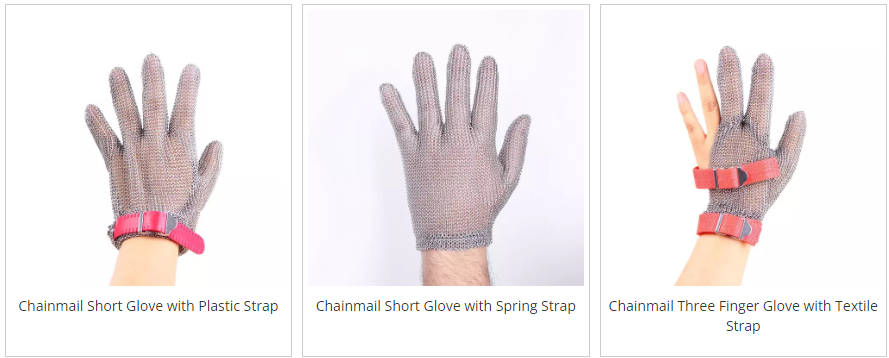
In the world of hand protection, chainmail gloves occupy a unique and demanding position. They stand at the critical intersection where uncompromising safety must meet the nuanced demands of human dexterity and enduring comfort. Unlike many forms of personal protective equipment (PPE), a chainmail glove cannot simply be a passive barrier; it must become a responsive, almost transparent, extension of the hand itself. Achieving this harmony—this delicate balance between protection, dexterity, and comfort—represents the pinnacle of design and manufacturing expertise in the field.
At its core, the primary function of a chainmail glove is to act as an energy-dispersing shield. The fundamental metric is cut resistance, measured against rigorous standards like ANSI/ISEA 105, EN 388, or ISO 13997. The level of protection is determined by:
Material: The choice between hardened stainless steel, lightweight titanium, or specialty alloys dictates baseline strength and weight.
Ring Density and Gauge: Smaller, thicker rings woven tightly offer higher cut resistance but increase stiffness. Larger, thinner rings improve flexibility but may lower the protective rating.
Weave Pattern: The classic European 4-in-1 weave is standard, but variations can enhance coverage or adaptability.
However, true protection is contextual. In a meat-packing plant, the threat is a sharp, controlled blade slice. In metal recycling, it is jagged, unpredictable edges. In forestry, it is a high-energy, chainsaw laceration. Therefore, protection must be task-specific. A glove designed for chainsaw use incorporates chain-drag-resistant fibers to stall the mechanism, while a glass handler’s glove prioritizes puncture resistance. The first step in the balance is defining the exact nature of the threat the glove must neutralize.
A glove that offers perfect protection but renders the hand a clumsy claw is not only inefficient but can be dangerous, as it may lead to user rejection or increased fatigue-induced errors. Dexterity—the preservation of fine motor skills, tactile sensitivity, and range of motion—is therefore not a luxury but a safety requirement.
Advanced manufacturers achieve this through sophisticated engineering:
Anthropometric Design: Gloves are no longer simple tubes. They are patterned based on 3D hand scans, creating pre-curved finger stalls and articulated knuckle zones that mirror the hand’s natural resting posture and movement.
Zoned Construction: This is the most critical innovation. High-risk areas (the palm, thumb crotch) are armored with dense, small-diameter rings. Lower-risk, high-mobility areas (the finger joints, the back of the hand) use larger, more flexible rings or are integrated with advanced cut-resistant textiles. This progressive ring sizing is the key to unlocking movement.
Precision Tailoring: A perfect fit is paramount. A glove that is too large will slide, creating dangerous gaps and reducing control. A glove that is too small will restrict circulation and movement. Offering a comprehensive size range, including half-sizes and gender-specific lasts, is essential for true dexterity.
Comfort is the factor that determines whether a glove will be worn consistently for an entire shift. Discomfort leads to removal, and an unused glove provides zero protection. Modern chainmail glove design addresses comfort on multiple fronts:
Weight Management: Utilizing titanium or advanced alloys can reduce weight by up to 40% compared to traditional steel, drastically lowering muscle fatigue in the hands, wrists, and forearms over long periods.
The Inner Ecosystem: The liner is where the hand lives. Modern liners are engineered for moisture management (using fabrics like CoolMax® to wick sweat), thermal regulation (for hot or cold environments), and impact absorption (gel or foam padding in the palm). A breathable, comfortable liner prevents maceration and keeps the hand dry.
Ergonomic Mitigation: Features like padded cuffs distribute pressure, rolled edges prevent chafing, and seamless interior construction eliminates points of friction that can cause blisters or hot spots during repetitive motions.
The ultimate goal is not to maximize any single attribute in isolation, but to optimize their synergy. A perfectly balanced chainmail glove creates a powerful positive cycle:
Confidence: The wearer trusts the protection, allowing them to focus on the task.
Efficiency: Unimpeded dexterity enables faster, more precise work with less compensatory strain.
Compliance: All-day comfort ensures the glove stays on, making safety a sustainable habit.
Performance: This combination reduces the risk of injury, lowers long-term musculoskeletal disorders, and increases overall productivity.
Company Strengths
As a professional manufacturer with over two decades of expertise in the safety protection industry, Hebei Linchuan Safety Protective Equipment Co., Ltd. has always placed advanced craftsmanship and innovative spirit at the core of our development. Our chainmail gloves are manufactured using high-grade 304 stainless steel and imported titanium alloys. Through our proprietary Five-Step Precision Weaving Process and Closed-Loop Heat Treatment Technology, we ensure each glove not only exceeds 8,000 standard cut-resistance test cycles but also delivers a 30% improvement in wearer dexterity. Our 18-Step Quality Control Protocol, spanning from raw material inspection to final packaging, coupled with a quality management system certified to ISO 9001, ANSI/ISEA 105, and CE standards, has earned our products an exceptional reputation in demanding global markets such as North American seafood processing and European automotive manufacturing.
We understand that protective needs vary significantly across industries, which is why we have built an industry-leading Scenario-Based R&D System. Hebei Linchuan not only supplies standardized protective gear but also specializes in developing customized solutions. Whether it's gloves integrated with CoolMax® liners for high-heat environments or models with anti-static coatings for precision electronics assembly, our R&D team has successfully delivered personalized protection upgrades for over 120 global enterprises. Supported by our self-operated cross-border logistics and digital supply chain system, we can complete the entire process from requirement confirmation to sample delivery within 15 days. We build enduring customer trust through agile responsiveness and reliable delivery, supporting the entire product lifecycle.
FAQ
Q1: What level of cut protection do your gloves provide?
A1: Our standard series gloves are all certified to ANSI/ISEA 105 Cut Resistance Level 5 (with a cut resistance index exceeding 4200 grams-force), and some titanium-enhanced models can achieve Level 6. All products come with third-party test reports. We can also provide testing data according to EN 388:2016 or ISO 13997 standards upon request.
Q2: How do you ensure glove flexibility and comfort?
A2: We employ three core technologies: 1) Ergonomic 3D Tailoring, optimizing joint mobility areas based on hand modeling; 2) Progressive Ring-Size Weaving, using 4mm high-density rings on the palm for maximum protection and 6mm rings on finger joints for enhanced flexibility; 3) A Modular Liner System, offering various replaceable liners (moisture-wicking, shock-absorbing, thermal) to ensure comfort during extended 8-hour shifts.
Q3: Can you customize chainmail gloves for special sizes or functions?
A3: Absolutely. We offer a complete customization service: 1) We support millimeter-accurate hand measurement, providing a full size range from XS to XXXL and accommodating special hand shapes. 2) We can integrate up to 15 functional modules, including anti-slip silicone coating, conductive fingertips, and magnetic fixation. 3) We accept small-batch, flexible orders starting from 500 pairs and provide free sample testing.
Q4: How should I properly clean and maintain the gloves?
A4: We recommend rinsing daily after use with lukewarm water and a mild detergent, avoiding strong acids or alkalis. Immediately after washing, use compressed air to blow out moisture from the rings and hang the gloves to air-dry in a well-ventilated area. For monthly deep maintenance, soak the gloves in olive oil (below 60°C) for 20 minutes, then wipe clean to lubricate the rings. Do not use wire brushes or dry in an oven.
Q5: What is the typical service life of the gloves?
A5: Under normal use and with regular maintenance, our standard glove models typically last 6-8 months in the food processing industry and 4-6 months in metal fabrication. We offer a Free Damage Diagnostic Service. If a single glove suffers localized damage, you can return it to us for targeted repair (e.g., replacing a section of rings), extending the product's life by over 30%.