
Author: Site Editor Publish Time: 2026-02-26 Origin: Site


In industrial environments where sharp tools and cutting hazards are present, hand protection represents a critical component of workplace safety protocols. Among the various types of protective equipment available, cut-resistant chainmail gloves occupy a specific niche requiring maximum mechanical barrier protection. These products, constructed from interlinked metal rings, provide physical defense against lacerations from knives, blades, and sharp materials across multiple industries including food processing, manufacturing, and material handling.
Hebei Linchuan Safety Protective Equipment Co., LTD manufactures stainless steel chainmail protective gloves designed for industrial and food processing applications. This article examines the technical specifications, material science, performance standards, and practical applications of cut-resistant chainmail gloves based on current industry data and regulatory frameworks.
The fundamental component of modern chainmail protective gloves is stainless steel wire, selected for its combination of mechanical strength and corrosion resistance. The material properties directly influence the protective performance and service life of the equipment.
Stainless steel chainmail gloves typically utilize wire diameters ranging from 0.50 mm to 0.53 mm, with specific dimensions engineered to achieve desired protection levels while maintaining flexibility. The ring construction follows precise specifications: inner diameters of approximately 2.75 mm to 3 mm, with corresponding outer diameters of 3.81 mm to 4 mm depending on the wire gauge employed.
The mechanical properties of stainless steel provide several functional advantages in protective glove applications. The material exhibits yield strength sufficient to resist deformation under normal cutting forces encountered in butchery and food processing operations. Unlike fabric-based cut-resistant materials that may experience fiber separation under repeated stress, stainless steel rings maintain structural integrity through interlocking mechanical connections.
While stainless steel represents the predominant material for food industry applications, alternative metal compositions offer different performance characteristics for specific use cases.
Stainless steel gloves provide corrosion resistance essential for wet environments, including meat processing facilities, seafood operations, and commercial kitchens where frequent washdowns occur. The material resists rust formation when exposed to moisture, sanitizing chemicals, and organic materials, maintaining both protective function and hygienic properties. Testing data indicates that stainless steel chainmail maintains compliance with food safety regulations including FDA and HACCP requirements when properly maintained.
Carbon steel variants offer higher tensile strength at lower material cost but require more rigorous maintenance protocols. These gloves must be kept dry and oiled regularly to prevent oxidation, limiting their applicability in wet processing environments. Carbon steel chainmail finds primary application in dry industrial settings such as metal fabrication, recycling operations, and glass handling where moisture exposure is minimal.
Alloy steel combinations represent engineered approaches to balance strength, weight, and flexibility requirements. These materials incorporate specialized metallurgical formulations to achieve specific performance targets, though they remain susceptible to moisture damage without appropriate care protocols.
Chainmail gloves manufactured by Hebei Linchuan Safety Protective Equipment Co., LTD and other producers typically weigh between 300 and 600 grams depending on size and coverage configuration . The RTCMG-01 model, for example, utilizes wire diameter of 0.53 mm to achieve cut resistance while maintaining manageable weight for extended wear periods.
Weight distribution and ergonomic design significantly influence user acceptance and prolonged use compliance. The interlinked ring construction allows natural hand movement while providing continuous coverage, though the inherent mass of metal construction imposes physical considerations for all-day wear applications. Some designs incorporate padded cuffs or adjustable straps to improve comfort and fit security.
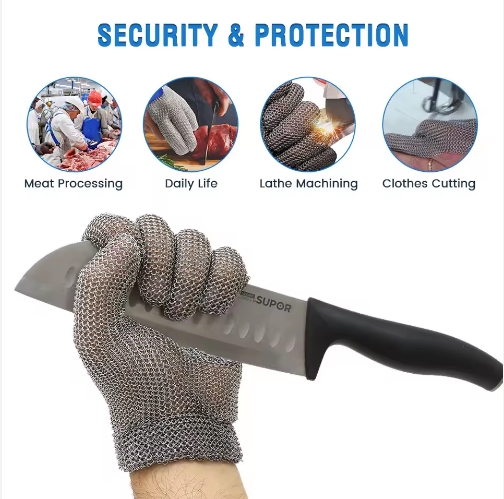
Proper fit represents a critical factor in chainmail glove protective performance. Inadequate sizing may expose skin through gaps or restrict movement, compromising both safety and functionality. Manufacturers including Hebei Linchuan Safety Protective Equipment Co., LTD offer comprehensive size ranges to accommodate diverse hand dimensions.
The size classification system typically includes XXS through XXL options with color-coded identification straps facilitating quick size recognition. Standard sizing parameters include:
| Size | Color Code | Palm Circumference (inches) | Palm Length (mm) |
|---|---|---|---|
| XXS | Brown | 5.0-5.5 | 200 |
| XS | Green | 6.0-6.5 | 200 |
| S | White | 7.0-7.5 | 215 |
| M | Red | 8.0-8.5 | 220 |
| L | Blue | 9.0-9.5 | 230 |
| XL | Orange | 10.0-10.5 | 240 |
Measurement protocols specify assessment across the knuckles of the dominant hand, excluding the thumb, to determine appropriate sizing. Properly fitted gloves should be snug without restricting circulation or movement, minimizing potential exposure points while maintaining tactile sensitivity for task performance.
Chainmail protective equipment extends beyond basic hand coverage to include varying degrees of wrist and forearm protection. Standard glove configurations include wrist-length models for tasks requiring maximum dexterity, while extended versions incorporate chainmail cuffs or full forearm coverage for applications with elevated risk exposure.
The RTCMG-01 model exemplifies the standard five-finger configuration with adjustable wrist closure. Package components typically include the glove, protective tensioner, and instructional materials, with individual box packaging for inventory management and hygiene maintenance.
Chainmail gloves intended for protection against hand knives and cutting tools in Europe must comply with EN 1082-1:1997, the standard specifying requirements for gloves and arm protectors designed to resist cuts and stabs from hand knives. This certification verifies that the product meets minimum performance thresholds for cut resistance when tested according to defined protocols.
Certified gloves undergo testing that simulates real-world cutting conditions, measuring the force required to penetrate the material with standardized blades under controlled conditions. The EN 1082-1 standard specifically addresses protection against manually operated knives rather than powered cutting equipment or serrated blades, establishing appropriate application boundaries for certified products.
Two primary classification systems govern cut resistance ratings internationally, each employing distinct testing methodologies and rating scales.
ANSI/ISEA 105 (American Standard) utilizes the ASTM F2992-15 test method, which measures the force required to cut through a material with a straight blade under specified conditions. The 2016 revision expanded the classification system to nine levels (A1 through A9) with smaller increments between levels, accommodating the range of cut-resistant materials available in the market.
A1-rated gloves withstand 200-499 grams of cutting force, while A9-rated products require more than 6000 grams for blade penetration. Chainmail gloves typically achieve ratings at the higher end of this scale due to the physical barrier properties of metal construction.
EN 388 (European Standard) employs both the Coup Test and the TDM Test for gloves manufactured after 2016. The standard requires representation of both test results, with the Coup Test yielding numerical ratings 1-5 and the TDM Test producing letter designations A through F, where F represents the highest cut resistance level.
The EN 388 rating appears as a series of characters (for example, 4X43C), with the third number indicating Coup Test results and the final letter representing TDM Test performance. This dual-testing approach provides more comprehensive cut resistance characterization than earlier single-test methodologies.
Food industry applications require chainmail gloves to meet sanitation and materials safety standards beyond mechanical protection requirements. Products intended for food contact must comply with relevant regulations including:
US FDA certification for materials permitted for food contact applications
LFGB (German Food and Feed Code) compliance for food-safe materials
CE certification under PPE Directive 89/686 for protective equipment
These certifications verify that materials will not contaminate food products and can withstand sanitation procedures without degradation that might compromise protective function.
The meat processing sector represents the largest application category for cut-resistant chainmail gloves. Workers performing slaughtering, deboning, trimming, and portioning tasks face continuous exposure to sharp knives in high-throughput environments where hand protection is essential.
In slaughterhouse operations, workers handle knives continuously throughout shifts, creating sustained laceration risk. Chainmail gloves provide defense against accidental blade contact while maintaining sufficient dexterity for precise cutting motions . The corrosion-resistant properties of stainless steel prove particularly valuable in these environments, where exposure to blood, fat, and frequent washdowns would rapidly degrade non-stainless materials.
Data from industry applications indicates that chainmail gloves reduce laceration incidents when incorporated into comprehensive safety programs. The gloves function as the final layer of defense, providing mechanical barrier protection when cutting technique or attention falters during repetitive tasks.
Retail and commercial butcher shops utilize chainmail gloves for both primary cutting tasks and secondary operations such as equipment cleaning and tool handling. Butchers performing intricate cuts require protection that does not compromise the tactile feedback necessary for precise work.
The ambidextrous design of many chainmail glove models allows single-glove protection for the non-knife hand, which typically faces greater exposure risk during cutting operations. Users can reverse gloves for either hand, with color-coded straps maintaining size identification regardless of orientation.
Seafood processing facilities present unique challenges combining sharp cutting tools with naturally hazardous materials including shells, fins, and bones. Workers handling finfish, crustaceans, and mollusks face cut hazards from both tools and product materials.
The wet environment characteristic of seafood processing demands corrosion-resistant protection. Stainless steel chainmail gloves maintain protective function despite continuous moisture exposure, while their non-porous construction prevents absorption of fish oils and organic materials that could harbor bacteria. Quick-drying properties facilitate sanitation between uses and at shift changes.
Beyond food processing, chainmail gloves protect workers in diverse industrial settings including:
Glass handling operations require protection against sharp edges from cut glass and broken materials. Workers handling flat glass, glassware, or fiberglass products benefit from chainmail protection that resists penetration from glass shards.
Metal fabrication facilities utilize chainmail gloves for tasks involving sheet metal with burred edges, wire handling, and operations where sharp metal edges present laceration hazards. Carbon steel variants may be specified for dry fabrication environments where their higher strength provides advantages.
Leather and textile cutting operations in garment manufacturing and related industries employ chainmail gloves to protect workers operating cutting tools on stacked materials. The gloves provide protection against both blade contact and material edges.
Most chainmail glove models feature ambidextrous design, allowing use on either hand through simple reversal. This configuration provides flexibility in application and simplifies inventory management, as single SKUs can serve both hand requirements.
The ambidextrous design incorporates symmetrical construction that maintains fit and function regardless of orientation. Size identification systems using colored straps remain visible and functional from either side, ensuring proper sizing information remains accessible.
Secure attachment prevents glove displacement during use, maintaining continuous protection. Common closure systems include:
Polyurethane straps with adjustable fit that secure around the wrist, protected by chainmail overlay to prevent strap damage
Snap button closures allowing quick donning and doffing while maintaining secure fit during use
Stainless steel buckles providing all-metal construction for complete corrosion resistance and durability
The closure system must withstand repeated flexing and tension without failure while maintaining adjustment integrity throughout the work shift.
Chainmail gloves require specific maintenance protocols to preserve protective function and hygienic condition. Cleaning procedures typically involve washing with water and mild detergent, followed by thorough air drying. Harsh chemicals and bleach should be avoided as they may compromise metal integrity.
For carbon steel variants, additional maintenance including light machine oil application after cleaning and drying prevents rust formation. Stainless steel gloves require less intensive maintenance but still benefit from regular cleaning to remove organic materials and prevent residue buildup.
Regular inspection represents a critical maintenance component. Users should examine gloves for damaged links, deformation, or wear that might compromise protection. Products showing any signs of structural compromise should be replaced immediately.
Selecting appropriate chainmail protection requires assessment of multiple factors beyond cut resistance ratings. Edge sharpness, force of contact, task duration, and environmental conditions all influence optimal product selection.
For wet processing environments, stainless steel construction proves essential regardless of cost considerations, as carbon steel would rapidly corrode and fail. Dry industrial applications may benefit from carbon steel's higher strength at lower cost, provided appropriate maintenance protocols can be maintained.
Task requirements for dexterity influence ring size and wire gauge selection. Finer rings with smaller diameters provide increased cut resistance but may reduce flexibility, while larger rings improve comfort and range of motion. Applications requiring fine motor control, such as fish filleting or precision butchery, benefit from flexible chainmail designs using thinner wire and optimized ring geometry.
Chainmail gloves provide specific protection against cuts from knives and sharp edges but do not address all hand safety hazards. Important limitations include:
No protection against puncture from pointed objects such as needles, bones, or sharp probes
No defense against crushing injuries from heavy objects or machinery
No electrical insulation properties; metal construction conducts electricity
Limited protection against serrated blades or powered cutting equipment
These limitations require comprehensive risk assessment and integration of chainmail protection within broader safety programs rather than reliance on gloves as sole protective measures.
Correct sizing optimizes both protection and comfort. Gloves that are too large may shift during use, creating gaps or interfering with grip, while excessively tight gloves restrict circulation and cause fatigue.
Manufacturer size charts provide selection guidance based on palm circumference measurements. Hebei Linchuan Safety Protective Equipment Co., LTD offers comprehensive sizing from XXS through XXL with color-coded identification to assist proper selection. The sizing system enables users to match glove dimensions to individual hand measurements for optimal fit.
Certified manufacturers implement quality management systems ensuring consistent product quality. Hebei Linchuan Safety Protective Equipment Co., LTD operates as an audited supplier with profile certification from SGS and BV, international inspection and verification organizations.
Quality control protocols include 100% inspection before delivery, with dedicated expertise teams verifying product conformance to specifications. This inspection regime ensures that each glove meets dimensional requirements, ring integrity standards, and finish quality expectations.
Standard packaging configurations protect products during storage and transport while facilitating inventory management. Each glove typically receives individual packaging in waterproof bags within boxes, with multiple boxes packed in cartons for bulk shipment.
The RTCMG-01 model includes in each package: the glove, PE bag, tensioner (random color), instruction sheet, and identification photo. This comprehensive packaging ensures users receive all components necessary for proper use and maintenance.
Delivery timeframes vary based on stock status, with in-stock items shipping within 3-6 days and production orders requiring 5-20 days depending on quantity and specifications. Manufacturers offer various delivery terms including EXW, FOB, CFR, CIF, DDU, and DDP to accommodate international shipping requirements.
Cut-resistant chainmail gloves represent a specialized category of personal protective equipment providing mechanical barrier protection against lacerations from hand knives and sharp materials. Products manufactured by Hebei Linchuan Safety Protective Equipment Co., LTD and other certified producers incorporate stainless steel construction with wire diameters of 0.50-0.53 mm, achieving certified protection levels under EN 1082-1 and other applicable standards.
Material selection significantly influences performance characteristics, with stainless steel providing corrosion resistance essential for food processing applications while carbon steel offers higher strength for dry industrial environments. Comprehensive sizing systems from XXS through XXL accommodate diverse hand dimensions, with color-coded identification facilitating proper selection.
Performance certification under ANSI/ISEA 105 and EN 388 standards provides objective cut resistance characterization, though these ratings must be considered alongside application-specific factors including edge sharpness, contact force, and environmental conditions. Understanding both the protective capabilities and limitations of chainmail equipment enables appropriate selection and integration within comprehensive safety programs.
Regular maintenance including cleaning, inspection, and proper storage extends service life and maintains protective function. Users should replace gloves showing any signs of damage or wear to ensure continuous protection. When properly selected, fitted, and maintained, cut-resistant chainmail gloves provide effective hand protection across diverse industrial and food processing applications.