
Author: Site Editor Publish Time: 2025-10-23 Origin: Site


Chainmail gloves serve as a protective solution in professional and domestic kitchens where cutting tasks involving sharp knives are frequent. These gloves are designed to reduce the risk of accidental cuts while maintaining a reasonable degree of manual dexterity. This article outlines the construction, materials, and tested performance of chainmail gloves.
1. Materials and Construction
Modern chainmail gloves for culinary use are typically constructed from high-strength stainless steel rings or a combination of stainless steel and other cut-resistant materials like high-performance polyethylene (HPPE). The rings are interlocked in a dense pattern (often a European 4-in-1 or similar weave) to form a flexible mesh. Stainless steel (e.g., AISI 304 or 316) is preferred for its corrosion resistance, strength, and compliance with food contact material standards.
Some manufacturers integrate stainless steel with synthetic fibers like Dyneema® or Spectra®. These composite materials enhance cut resistance while reducing the overall weight and improving the flexibility of the glove.
2. Performance and Testing Standards
The cut resistance of chainmail gloves is quantitatively assessed using standardized international test methods. The most common standard is the EN ISO 13997:1999 (or its equivalents, such as ASTM F2992-15), which measures the material's resistance to a cutting blade under a specified load. The result is often expressed as a level on a standardized scale.
For instance, the EN 388:2016 standard includes a cut resistance scale from A to F (with F offering the highest protection), specifically for protective gloves against mechanical risks. While full chainmail gloves typically exceed the highest levels (Level 5) of the Coupon Cut Test (EN 388:2016), their performance is more accurately captured by the ISO 13997 test, which can assign a higher, more specific rating.
Independent tests on all-stainless steel chainmail gloves have shown they can withstand significant force from sharp blades, effectively preventing the blade from penetrating to the skin. Gloves incorporating HPPE can achieve high cut protection levels (e.g., Level 5 on the EN 388 scale) with a lighter and more flexible design.
3. Applications and User Considerations
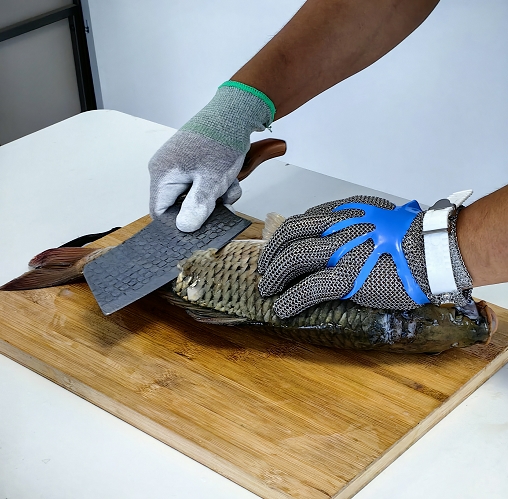
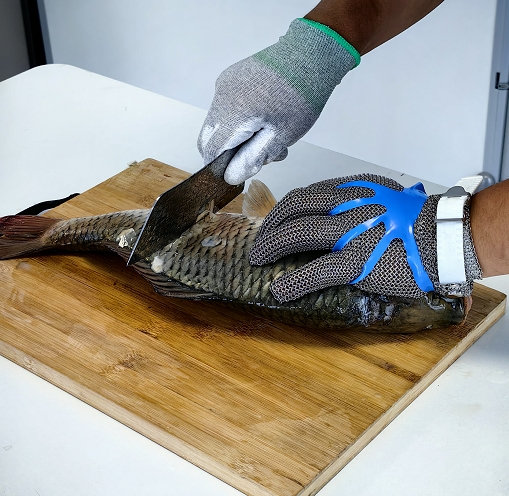
These gloves are primarily used by professionals such as butchers, fish filleters, and chefs for tasks like deboning, slicing, and dicing. Proper fit is important to ensure protection without compromising grip or control. Most models are designed to be worn on the non-knife-holding hand. It is important to note that while chainmail gloves offer high cut resistance, they are not designed to protect against punctures from pointed instruments like needles or awls.
Maintenance involves regular cleaning and sanitizing, as with any kitchen tool, to ensure hygiene. The stainless steel construction allows for easy washing and is generally dishwasher safe.
4. Conclusion
Chainmail gloves are a practical engineering solution for mitigating cut injuries in the kitchen. Their effectiveness is rooted in the material properties of stainless steel and advanced synthetic fibers, validated through standardized mechanical tests. For food industry professionals, selecting a glove with a certified cut resistance level appropriate for their specific tasks is a key step in enhancing workplace safety.
Reference
International Organization for Standardization. (2016). *EN 388:2016 - Protective gloves against mechanical risks*.
International Organization for Standardization. (1999). *EN ISO 13997:1999 - Protective clothing - Mechanical properties - Determination of resistance to cutting by sharp objects*.
ASTM International. (2015). *ASTM F2992-15 - Standard Test Method for Measuring Cut Resistance of Materials Used in Protective Clothing with TDM-100 Test Machine*.
Hebei Linchuan Safety Protective Equipment Co., LTD. (2023). Product Specifications for LC-CutResist Series Chainmail Gloves.