
Author: Site Editor Publish Time: 2026-05-22 Origin: Site


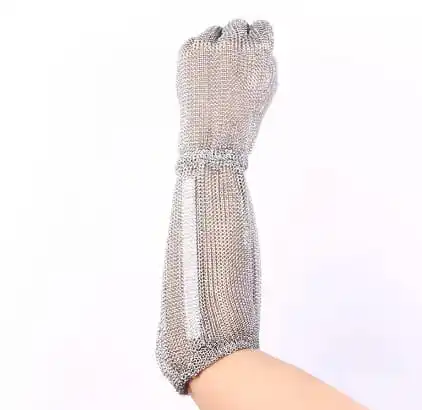 Hebei Linchuan Safety Protective Equipment Co., LTD recognizes that for wholesale distributors and industrial meat processors, the selection of chainmail gloves is a decision based on material science, compliance standards, and long-term cost-of-ownership. This article provides a technical overview of stainless steel mesh protection, industrial standards, and the economic variables of wholesale procurement.
The efficacy of a chainmail glove is determined by the quality of its primary component: the stainless steel wire. For professional butchery, two specific grades of austenitic stainless steel are standard.
AISI 304 Stainless Steel: The most common material used in the construction of chainmail gloves is AISI 304. This alloy contains approximately 18% chromium and 8% nickel. It provides a robust balance of tensile strength and resistance to oxidation. In wholesale environments where cost-efficiency is paramount, 304-grade gloves offer a reliable solution for standard meat processing environments.
AISI 316L Stainless Steel: For environments involving high salinity or acidic exposure (such as seafood processing or specialized poultry brining), AISI 316L is preferred. The addition of molybdenum (2-3%) significantly enhances the material's resistance to pitting and crevice corrosion. Hebei Linchuan utilizes 316L for premium-tier safety products to ensure longevity in corrosive industrial cleaning cycles.
Ring Weaving Technology: The mechanical integrity of the glove depends on the "4-in-1" weaving pattern. Wire Diameter: Typically 0.5mm. Ring Outer Diameter: Standardized at 3.81mm or 4.0mm. Welding Quality: Each individual ring is plasma-welded or laser-welded. A high-quality wholesale product must show no signs of "open rings," which are the primary failure point during high-impact knife slips.
Wholesale buyers must evaluate products based on objective laboratory testing rather than marketing claims. The two most recognized standards for chainmail gloves are:
EN 1082-1: European Standard: This standard specifically addresses "Protective clothing — Gloves and arm guards protecting against cuts and stabs by hand knives." Impact Test: A blade is dropped with a specific kinetic energy (usually 2.45 Joules) onto the mesh. Requirement: The penetration of the knife tip must not exceed a specified depth (often 10mm for the glove). Wholesale Implication: Products manufactured by Hebei Linchuan are designed to meet or exceed EN 1082-1, ensuring that bulk shipments comply with EU import regulations.
ANSI/ISEA 105: North American Standard: In the United States, cut resistance is measured by the amount of force required for a blade to cut through the material. While textile gloves are rated from A1 to A9, stainless steel chainmail consistently reaches the highest level of protection against sharp edges, providing the "mechanical barrier" necessary for deboning and carving operations.
The wholesale demand for chainmail gloves is driven by several distinct sectors within the food industry.
Large-Scale Slaughterhouses: In facilities processing hundreds of head of cattle or hogs per hour, speed is essential. Increased speed correlates with a higher risk of accidental contact with knives or automated saws. Chainmail gloves provide a "failsafe" layer that prevents catastrophic injury.
Poultry Processing: The deboning of poultry requires intricate, repetitive knife movements. The lightweight 0.5mm wire used in Hebei Linchuan gloves ensures that workers maintain the dexterity required for high-yield processing without sacrificing safety.
Seafood Industry: As mentioned previously, the seafood industry requires 316L stainless steel. The combination of water exposure and sharp fins/shells makes chainmail the only viable long-term protection.
A safety glove that is uncomfortable will not be worn correctly, leading to "PPE non-compliance." Professional-grade chainmail gloves incorporate several ergonomic features:
- Ambidextrous Design: Most modern chainmail gloves can be turned inside out to fit either the left or right hand. For wholesale inventory management, this reduces the number of Stock Keeping Units (SKUs) required.
- Adjustable Wrist Straps: Straps are available in TPU (Thermoplastic Polyurethane), textile, or metal "claw" closures. TPU is often preferred in wholesale for its antimicrobial properties and ease of replacement.
- Sizing Consistency: Standardized sizing (XXS to XL) is critical. Hebei Linchuan follows international sizing charts to ensure that industrial clients can accurately kit their workforce.
Chainmail gloves are unique because they are non-porous. Unlike fiber-based cut-resistant gloves, stainless steel does not harbor bacteria within the material itself.
Cleaning Protocols: To maintain food safety standards (such as HACCP compliance), gloves must be cleaned after every shift:
1. Vigorous Washing: Using hot water (approximately 82°C / 180°F).
2. Detergents: Use of food-grade soaps or degreasers.
3. Sanitization: Compatibility with chlorine-based or quaternary ammonium sanitizers.
4. Storage: Air-drying in a clean, ventilated area.
Because the rings are stainless steel, they can withstand thousands of cleaning cycles without degrading, which is a key data point for calculating the Total Cost of Ownership (TCO) for wholesale purchasers.
For distributors and large-scale facilities, the "per-unit" price is only one part of the economic equation.
Durability vs. Disposable PPE: While synthetic cut-resistant gloves may have a lower initial cost, they must be replaced frequently due to wear, odor, and hygiene issues. A single stainless steel chainmail glove from Hebei Linchuan can last for years if properly maintained. Over a 24-month period, the cost of one chainmail glove is approximately 15-20% of the cost of the multiple synthetic replacements required to provide equivalent protection.
Supply Chain Reliability: Hebei Linchuan Safety Protective Equipment Co., LTD operates as a direct manufacturer. For wholesale clients, this eliminates middleman markups and ensures a consistent supply of replacement parts (such as straps and tensioners).
As a specialized manufacturer, Hebei Linchuan Safety Protective Equipment Co., LTD implements a multi-stage Quality Assurance (QA) protocol for every wholesale order:
1. Raw Material Testing: Spectrographic analysis of the stainless steel wire to verify chromium and nickel content.
2. Tensile Strength Verification: Ensuring the wire can withstand the stresses of industrial use.
3. Visual Inspection: 100% inspection of welded rings to ensure no gaps or sharp burrs.
4. Sizing Calibration: Batch testing to ensure consistency across the production line.
Sustainability is becoming a procurement requirement for many global corporations. Stainless steel is 100% recyclable. At the end of its multi-year life cycle, a chainmail glove can be processed as high-grade scrap metal. This contrasts with synthetic fibers which often end up in landfills due to biological contamination and non-recyclable polymer blends.
The wholesale market for butcher chainmail gloves requires a partner that understands the technical nuances of the meat industry. Safety is not merely a product; it is a measurable metric of reduced downtime and protected human capital.
Hebei Linchuan Safety Protective Equipment Co., LTD provides the industrial-grade solutions required for modern food processing. By focusing on AISI 304 and 316L stainless steel, adhering to EN 1082-1 standards, and maintaining rigorous manufacturing controls, we ensure that our wholesale partners receive products that perform under the most demanding conditions.