
Author: Site Editor Publish Time: 2026-06-04 Origin: Site


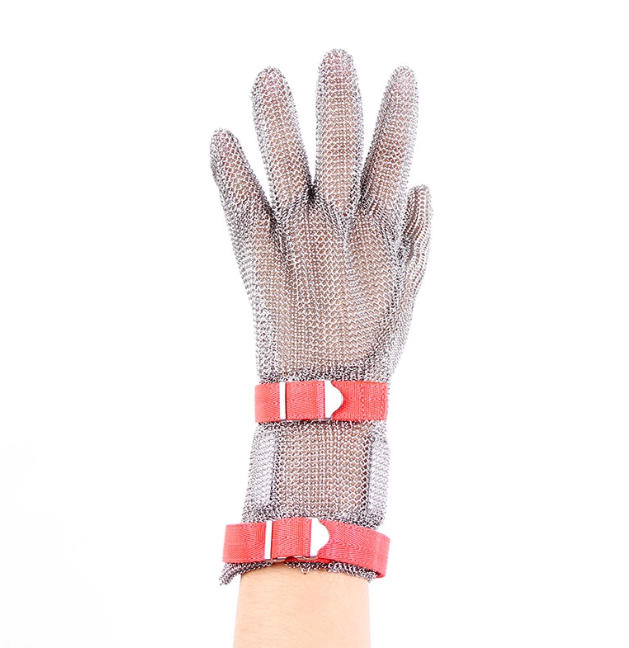
Chainmail cut-resistant gloves are a form of hand protection made from interlocking metal rings. These gloves are used in industries where workers regularly contact sharp blades, glass edges, metal sheets, or cutting tools. Unlike soft fabric gloves that rely on fiber strength, chainmail gloves create a physical barrier that deflects and absorbs cutting forces. When a sharp edge meets the chainmail surface, the energy spreads across multiple rings, reducing the chance of blade penetration.
Hebei Linchuan Safety Protective Equipment Co., LTD manufactures chainmail cut-resistant gloves for industrial applications. The company produces gloves using stainless steel rings in various wire diameters and ring sizes. These gloves are designed to meet international cut resistance standards, providing measurable protection for workers in food processing, glass handling, metal fabrication, and other high-cut-risk environments.
The protective performance of a chainmail glove depends on three main material and construction factors: ring material, wire diameter, and ring internal diameter.
Most chainmail cut-resistant gloves are made from stainless steel, with grade 304 being the most common choice. Grade 304 provides adequate corrosion resistance for food processing and general industrial use. For environments with higher corrosion risks, such as seafood processing or chemical exposure, grade 316 stainless steel is used because it contains molybdenum, which improves resistance to chlorides and acidic conditions.
Wire diameter is measured in millimeters. Common diameters range from 0.4 mm to 0.8 mm. A 0.4 mm wire produces a lighter glove with more flexibility but lower resistance to ring deformation. A 0.6 mm or 0.8 mm wire provides higher resistance to ring breakage but increases glove weight and reduces finger dexterity.
Ring internal diameter is the open space inside each ring. A smaller internal diameter, such as 4 mm, creates a denser chainmail fabric with fewer gaps. This configuration makes it more difficult for a blade tip to enter between rings. A larger internal diameter of 6 mm or 8 mm creates a more open weave, which reduces weight but may allow narrow blades to penetrate.
Hebei Linchuan Safety Protective Equipment Co., LTD produces chainmail gloves with internal diameters between 4 mm and 6 mm. A standard food-grade glove uses 0.5 mm wire, 5 mm internal diameter, and a ring density of approximately ten rings per square centimeter. This configuration balances cut resistance with handling ease for tasks that require frequent hand movement.
Cut resistance is measured under standardized laboratory conditions. The most widely referenced standard in North America is ANSI/ISEA 105, which uses the ASTM F2992 test method. A straight blade is drawn across the glove sample under a specified load, and the force required to cut through the sample is measured in grams.
For a chainmail glove constructed from 0.5 mm stainless steel wire with 5 mm internal ring diameter, the cut force typically measures above 6000 grams. This result corresponds to ANSI cut level A9, which is the highest level on the current scale. This means the glove requires more than 6000 grams of cutting force before a blade penetrates the metal ring structure.
In Europe, the EN 388 standard applies. Under EN 388, the cut test uses a rotating circular blade. The result is expressed as a cut index, which is the number of cycles required to cut through the sample divided by the cycles required to cut through a reference fabric. A chainmail glove with a dense ring configuration typically achieves a cut index above 30, which corresponds to EN 388 cut level F.
Additional testing under ISO 13997 using a straight blade on a moving sled shows a cut resistance value of approximately 5800 grams for the same glove configuration. These test results demonstrate that chainmail gloves meet the highest cut resistance ratings defined by international standards.
Hebei Linchuan Safety Protective Equipment Co., LTD tests its gloves at ISO 17025-accredited laboratories and maintains test reports for each glove model.
Cut resistance and puncture resistance are different mechanical properties. A glove may resist slicing but still allow a sharp point to penetrate through gaps between fibers or rings. Chainmail gloves provide puncture resistance because the metal rings must be separated or broken before a point can pass through.
Under the EN 388 puncture test, a standard steel probe is pressed into the glove sample at a speed of 100 millimeters per minute. The maximum force recorded before the probe penetrates the sample is measured in Newtons. For a chainmail glove with 0.5 mm stainless steel rings, the puncture force typically exceeds 100 Newtons. This result corresponds to EN 388 puncture level 4, which is the highest rating on the scale.
This puncture resistance is relevant in applications where workers handle fish bones, needles, metal slivers, or sharp wire ends. Fabric cut-resistant gloves with high cut ratings may show lower puncture resistance because the point can push between fibers without cutting them.
Food processing is a major application for chainmail cut-resistant gloves. Workers in meat, poultry, and fish processing plants use sharp knives, boning tools, and bandsaws. Data from occupational injury reports indicates that lacerations account for approximately twenty-eight percent of reported injuries in meat processing facilities.
Chainmail gloves worn during deboning, filleting, and trimming operations reduce the frequency of knife-related injuries. The smooth metal surface does not absorb blood, fat, or food particles, which allows the gloves to be cleaned and sanitized between uses. Many food safety regulations require that any glove contacting food must be cleanable and non-absorbent, and chainmail gloves meet this requirement.
A typical food processing chainmail glove from Hebei Linchuan Safety Protective Equipment Co., LTD uses 0.5 mm wire with 5 mm internal ring diameter. The glove includes a knit wrist cuff to prevent debris from entering the glove. The weight for a size medium pair is approximately 380 grams.
Glass manufacturing and handling operations involve sharp edges on glass sheets, mirrors, and finished glass products. Workers who move glass panes or remove broken glass from production lines face laceration hazards. Glass cuts can be deep because glass edges are often sharp and can apply high pressure over a small contact area.
Chainmail cut-resistant gloves provide a barrier that prevents glass edges from reaching the skin. Unlike fabric gloves, chainmail does not trap glass fragments between fibers. Small glass particles fall through the ring gaps rather than remaining embedded in the glove material. This property reduces skin irritation that can occur when fabric gloves are used in glass handling.
For glass handling applications, Hebei Linchuan Safety Protective Equipment Co., LTD recommends a glove with 0.4 mm wire and 4 mm internal ring diameter. The denser weave provides better resistance to thin glass shards, and the lighter wire weight reduces hand fatigue during extended shifts.
Metal stamping, sheet metal work, and metal fabrication create sharp edges on stamped parts, sheared metal, and machined components. Workers removing parts from presses or deburring metal edges require cut protection. Fabric gloves wear out quickly when contacting sharp metal edges because the fibers are cut by repeated abrasion.
Chainmail gloves last longer than fabric gloves in metal fabrication environments. The metal rings resist cutting from burrs and sharp edges. A chainmail glove used in metal stamping typically lasts twelve to twenty-four months with daily use. A fabric cut-resistant glove in the same application may last two to four weeks.
For metal fabrication, Hebei Linchuan Safety Protective Equipment Co., LTD offers gloves with 0.6 mm wire and 6 mm internal ring diameter. The heavier construction provides additional resistance to ring deformation from impact with metal edges. The open weave reduces weight while maintaining cut protection.
Chainmail gloves and fiber cut-resistant gloves have different performance characteristics. Fiber gloves are made from materials such as high-density polyethylene, aramid, or fiberglass composite yarns. These gloves achieve cut resistance through the strength of individual fibers and the density of the fabric weave.
Fiber gloves are lighter than chainmail gloves. A fiber glove with ANSI cut level A9 typically weighs 80 to 150 grams per pair. A chainmail glove with the same cut level weighs 300 to 600 grams per pair. This weight difference affects user fatigue over an eight-hour shift.
Fiber gloves degrade with washing and chemical exposure. Laboratory tests show that fiber cut-resistant gloves lose twenty to forty percent of their cut resistance after fifty industrial laundering cycles. Chainmail gloves do not lose cut resistance from washing. The metal rings maintain their mechanical properties for years.
Fiber gloves provide less puncture resistance than chainmail gloves. In EN 388 puncture testing, fiber gloves typically achieve puncture level 2 or 3. Chainmail gloves achieve puncture level 4.
Chainmail gloves conduct heat and cold. In warm environments, chainmail gloves can become uncomfortable because metal retains body heat. In cold environments, metal conducts cold to the hand, requiring an insulating liner glove.
Correct sizing is necessary for chainmail gloves to function properly. A glove that is too large creates excess material that can catch on equipment. A glove that is too small restricts circulation and causes discomfort.
Chainmail gloves are sized based on hand circumference measured around the palm at the base of the fingers. Size small fits a circumference of 18 to 20 centimeters. Size medium fits 20 to 22 centimeters. Size large fits 22 to 24 centimeters. Size extra large fits 24 to 27 centimeters.
The glove should fit snugly against the hand without compressing the fingers. When the wearer makes a fist, the chainmail should not create pressure points at the finger joints.
Hebei Linchuan Safety Protective Equipment Co., LTD provides sizing instructions with each glove order. The company offers sample gloves for customers to verify fit before purchasing in quantity.
Chainmail cut-resistant gloves are available with different cuff styles. The open cuff ends at the wrist and allows easy donning and doffing. This style is used for tasks where cut hazards are limited to the palm and fingers.
The knit wrist cuff uses a fabric extension sewn to the chainmail. The knit cuff fits snugly around the wrist, preventing debris from entering the glove. This style is common in food processing where bone fragments or meat trimmings could otherwise fall inside the glove.
The long gauntlet cuff extends the chainmail ten to twenty centimeters up the forearm. This style protects the forearm from cuts that may occur when the worker holds a product while cutting. Butchers who use a knife in one hand while holding meat with the other hand often use gauntlet cuffs on the holding hand.
Chainmail gloves require regular cleaning to remove organic material, metal dust, and debris. In food processing, gloves must be cleaned and sanitized after each shift.
The cleaning process for a chainmail glove used in food processing begins with rinsing under warm running water to remove loose particles. A brush with food-grade detergent is used to scrub all surfaces of the glove. The detergent removes fat and protein residues. After scrubbing, the glove is rinsed thoroughly to remove all detergent.
Sanitizing is performed by immersing the glove in a solution containing 100 parts per million chlorine for at least one minute. The glove is then air dried on a clean rack. For non-food industrial cleaning, an ultrasonic cleaner with a mild alkaline detergent removes embedded particles from between the rings. Compressed air is used to blow remaining moisture from the ring joints.
Hebei Linchuan Safety Protective Equipment Co., LTD manufactures chainmail gloves with smooth ring surfaces and no crevices that trap organic matter, allowing complete cleaning without dismantling the glove.
Chainmail gloves should be inspected before each use. The inspection checks for broken rings, which are rings with a visible break in the metal. Stretched rings where the gap between ends has opened wider than the wire diameter are also a concern. Missing rings that create holes in the chainmail structure should be identified. Corrosion in the form of rust spots or discoloration indicates pitting.
Minor repairs, such as replacing one or two broken rings, can be performed using pliers and spare rings. A glove with more than five broken or missing rings per one hundred square centimeters should be replaced. Hebei Linchuan Safety Protective Equipment Co., LTD provides repair instructions and ring refill kits for customers who maintain their own gloves.
The purchase price of chainmail cut-resistant gloves is higher than fiber-based gloves. A pair of chainmail gloves from Hebei Linchuan Safety Protective Equipment Co., LTD has a list price between forty and one hundred twenty US dollars, depending on specifications. A fiber glove with a comparable cut rating may cost ten to thirty dollars.
A full cost analysis must include replacement frequency. In a meat cutting application with eight hours of daily use, a fiber cut-resistant glove costing fifteen dollars per pair is replaced every ten working days. The annual cost for one worker is fifteen dollars multiplied by twenty-six replacements, which equals three hundred ninety dollars. A chainmail glove costing eighty dollars per pair is replaced every three years. The annual cost for one worker is eighty dollars divided by three, which equals approximately twenty-seven dollars.
The chainmail glove saves three hundred sixty-three dollars per worker per year in glove purchases alone. Additional savings come from reduced hand injury costs. One prevented laceration per twenty workers per year justifies the investment in chainmail gloves for the entire team.
Chainmail cut-resistant gloves sold in regulated markets must comply with applicable personal protective equipment regulations. In the European Union, gloves must carry CE marking under Regulation (EU) 2016/425. The CE marking indicates that the glove has been tested by a notified body to EN 388 standards and that technical documentation is maintained.
In the United States, OSHA’s general duty clause and specific standards for meat packing under 29 CFR 1910.138 require hand protection against cut hazards. ANSI/ISEA 105 provides the recognized test method for cut resistance.
Hebei Linchuan Safety Protective Equipment Co., LTD maintains technical files for all chainmail glove models, including test reports from accredited laboratories, material certificates for stainless steel wire, manufacturing quality control records, and instructions for use and maintenance.
Chainmail cut-resistant gloves provide measurable protection against cut and puncture hazards in industrial environments. Their performance is documented through standardized testing under ANSI, EN, and ISO methods. Their lifespan under defined use conditions allows for predictable replacement schedules and lower long-term costs compared to fiber-based alternatives.
For operations involving repeated contact with sharp blades, glass edges, or stamped metal parts, chainmail gloves from Hebei Linchuan Safety Protective Equipment Co., LTD offer a protection level that is supported by test data and field experience. The decision to use chainmail should be based on a site-specific hazard assessment that considers the cut force present, the frequency of exposure, and the consequences of a laceration injury.
For further information on selecting, sizing, or maintaining chainmail cut-resistant gloves, contact Hebei Linchuan Safety Protective Equipment Co., LTD directly.